Roof Insurance Claims in Virginia: A Homeowner's Guide
Filing a roof insurance claim often happens under pressure, with little idea whether you are doing it correctly. The paperwork uses unfamiliar language, the adjuster shows up on a schedule you do not control, and the amount you are offered may or may not reflect what the repair actually costs.
The short version: a roof insurance claim in Virginia will generally be paid when the damage came from a sudden, covered event such as wind or hail, and will generally be denied when the roof simply wore out. Everything else, the amount, the timeline, and how smoothly it goes, comes down to documentation and sequence.
This guide walks a homeowner in Staunton, Waynesboro, Fishersville, or anywhere in Augusta County through what your policy actually covers, how the process runs, and the specific mistakes that cost people money.
Quick Answer: The Claim Process in Seven Steps
| Step | What Happens | Timing |
|---|---|---|
| 1. Document the storm | Note the date, photograph visible damage from the ground | Same week |
| 2. Get an independent inspection | A contractor assesses whether damage exceeds your deductible | Before filing |
| 3. File the claim | Contact your insurer with the storm date and documentation | Promptly |
| 4. Adjuster inspection | Insurer sends an adjuster; your contractor should be present | 1 to 3 weeks after filing |
| 5. Receive the scope of loss | Written estimate of what the insurer will pay | Days after inspection |
| 6. Supplement if needed | Missing line items are submitted for reconsideration | As needed |
| 7. Work completed, depreciation released | Final invoice submitted, remaining funds paid | After the job |
What Virginia Homeowners Insurance Actually Covers
The dividing line in every roof claim is sudden damage versus gradual deterioration. Insurance is built to protect against events, not against time.
Typically covered:
- Wind damage, including lifted, creased, or missing shingles after a storm
- Hail damage, including granule loss and fractured shingle mats
- Impact damage from a fallen tree or limb
- Water damage inside the home resulting from a covered roof failure
- Weight of snow or ice causing structural damage
Typically not covered:
- A roof that has reached the end of its service life
- Damage traced to deferred maintenance, such as clogged gutters causing rot
- Manufacturing defects, which fall to the material warranty instead
- Poor installation by a previous contractor, which falls to that workmanship warranty
- Gradual leaks that were visible and left unaddressed
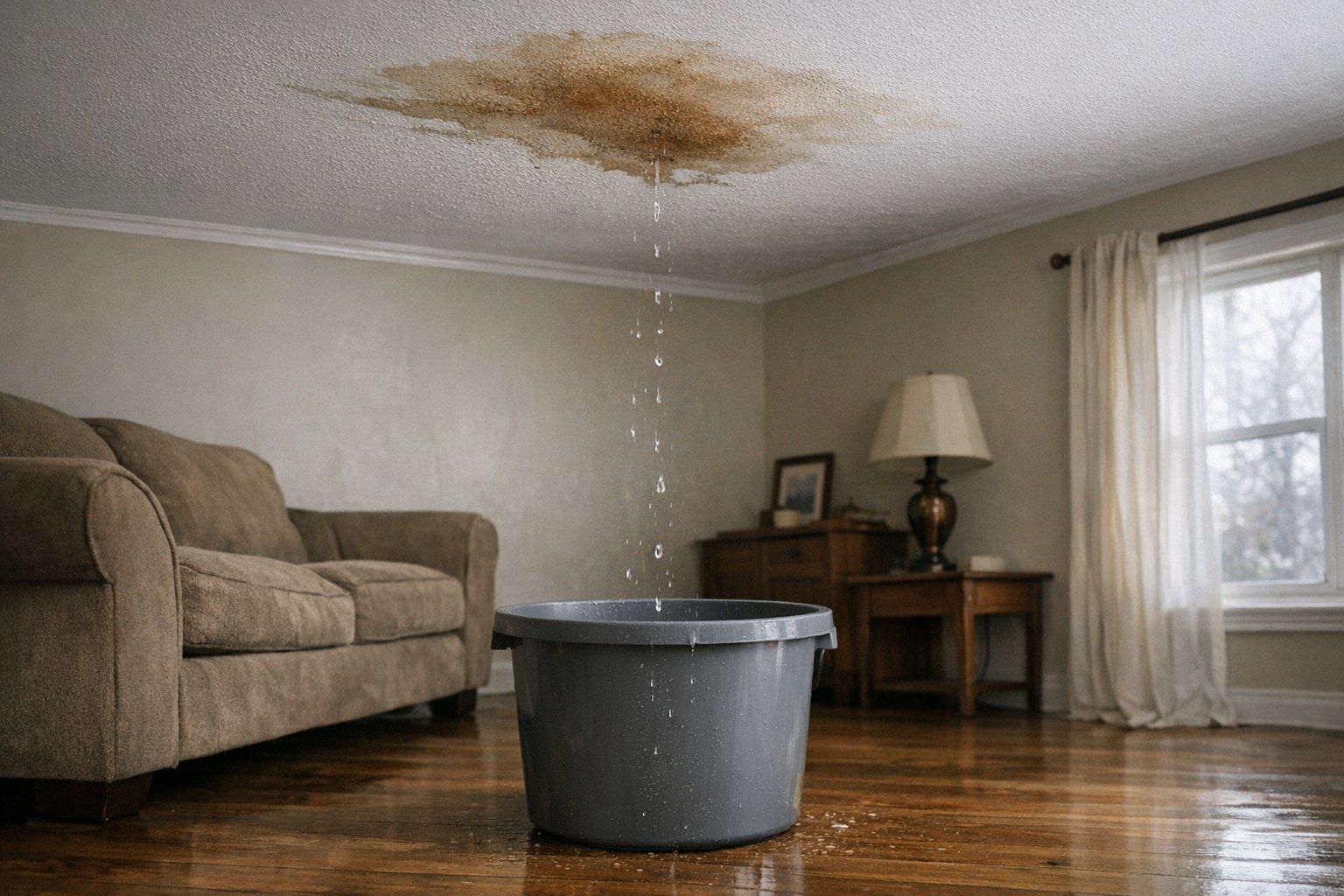
That last category is where homeowners get caught. A leak you noticed two winters ago and worked around with a bucket is a maintenance issue by the time you file. The same leak reported promptly after the storm that caused it is a claim. Timing changes the category.
RCV vs ACV: The Difference That Determines Your Check
Two homeowners in Fishersville can have identical damage, identical roofs, and receive very different payouts. The reason is almost always how their policy values the loss.
Replacement Cost Value (RCV) pays what it costs to replace the roof at today's prices. It usually arrives in two parts. The insurer first sends the actual cash value, then releases the withheld depreciation once you complete the work and submit the final invoice. Total payout, minus your deductible, covers the job.
Actual Cash Value (ACV) pays replacement cost minus depreciation, and that is the end of it. On a roof that is eighteen years into a twenty-five year life, depreciation is substantial. The check may cover a fraction of the replacement, with the rest coming out of pocket.
Check your declarations page for which one applies to the roof specifically. Some Virginia policies write the dwelling on RCV but schedule the roof separately on ACV, particularly for older roofs. Insurers have moved in this direction in recent years, and many homeowners do not know their coverage changed at renewal.
Also find your wind and hail deductible. Many Virginia policies apply a separate percentage-based deductible to wind and hail losses rather than the flat dollar amount used for everything else. A one percent deductible on a $400,000 dwelling is $4,000, not the $1,000 you might be expecting. This single number often determines whether filing is worthwhile.
The Adjuster Visit: What to Expect
The adjuster inspection is the moment the claim is decided, and it is shorter than most homeowners expect.
After a regional storm, insurers often bring in adjusters covering large territories with heavy caseloads. They are working through many roofs. They are generally fair, but they are moving quickly, and anything not clearly documented can be missed.
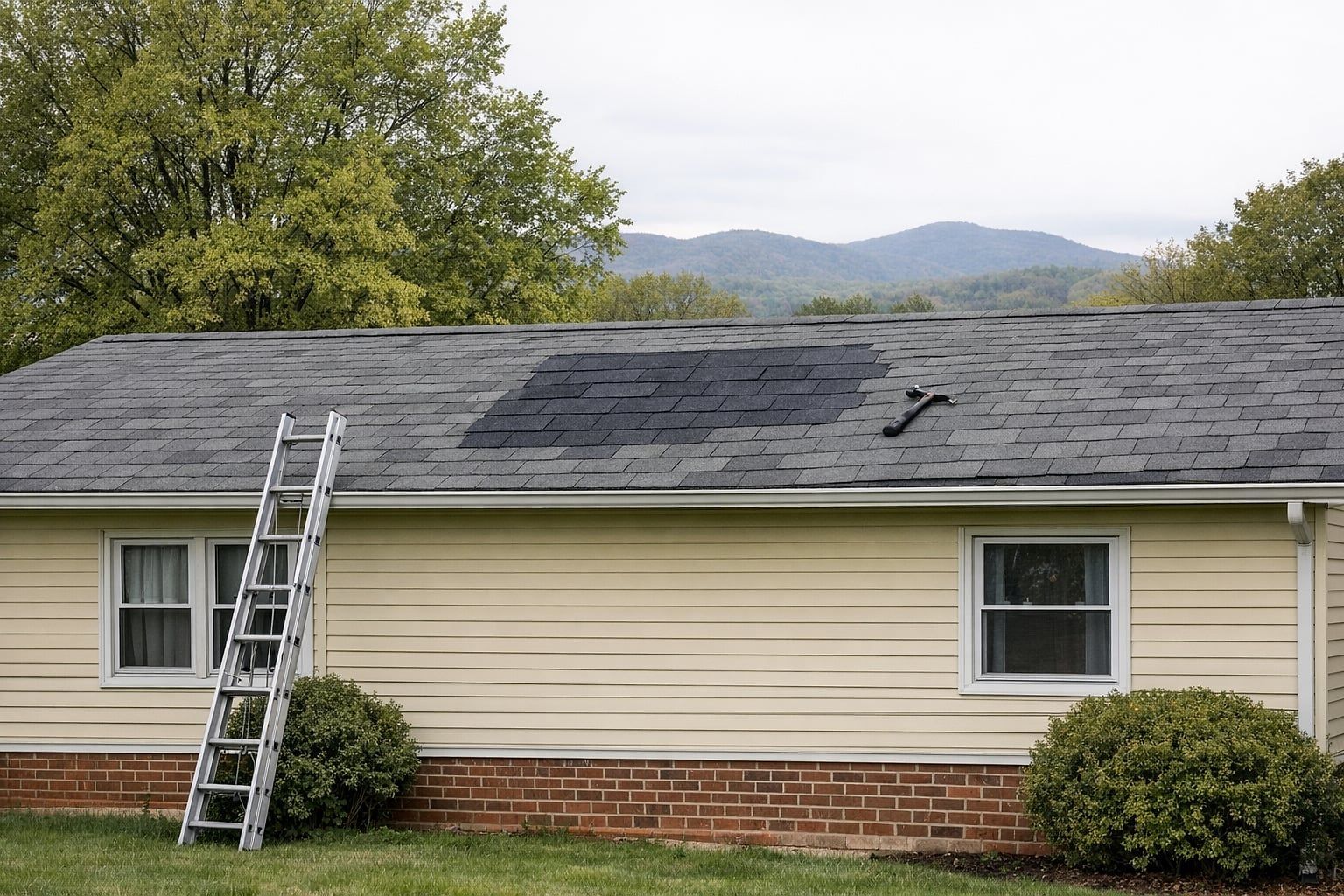
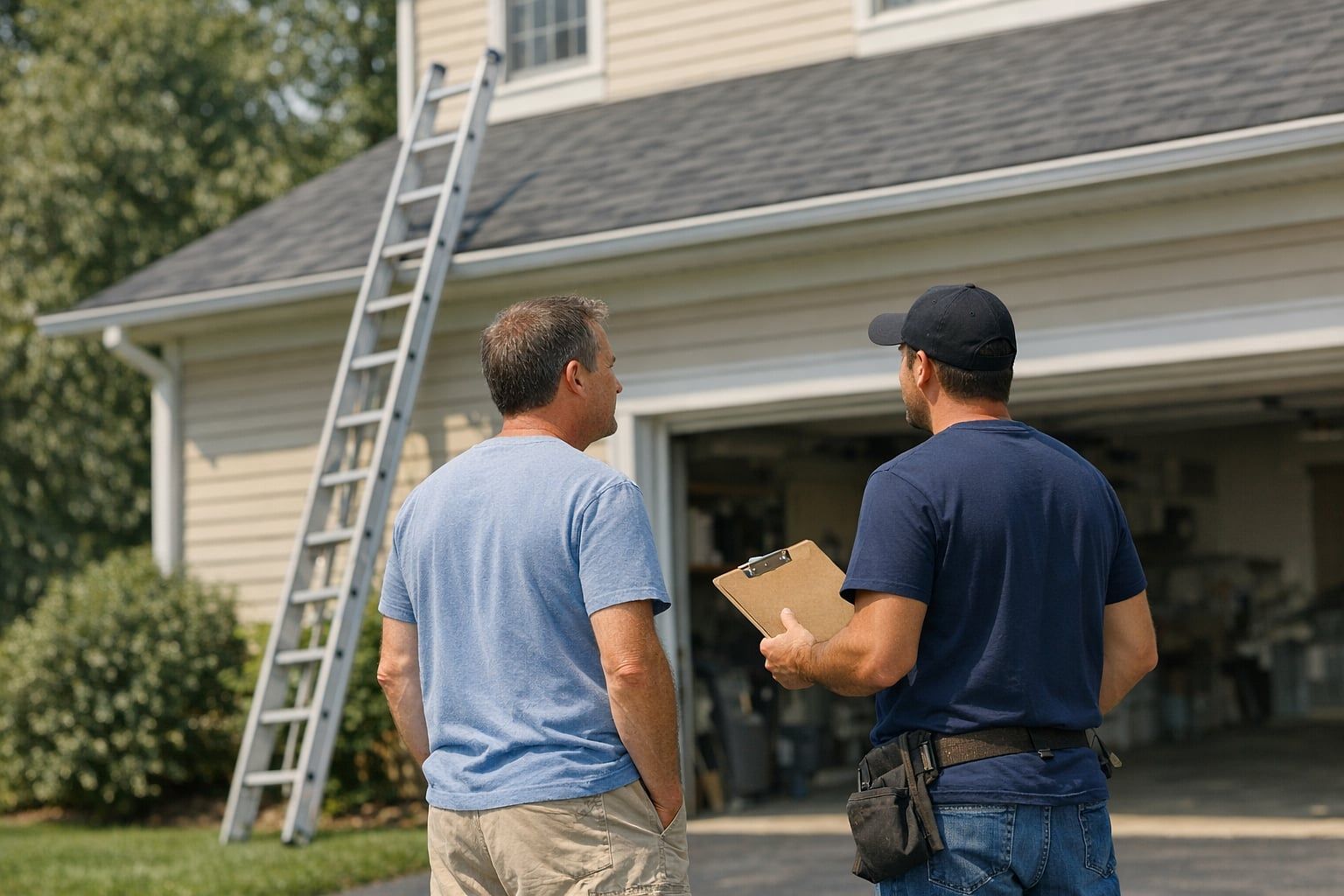
The most useful thing you can do is arrange for your roofing contractor to be present. This is standard practice and adjusters expect it. A contractor who has already inspected the roof can walk it alongside the adjuster, point to marked test squares, and raise items the adjuster has not yet reached. Two sets of eyes on a roof produce a more complete scope than one.
What the adjuster will assess:
- Whether damage is consistent with the reported storm date
- How many impacts or damaged shingles appear per test square
- Whether damage affects one slope or the full roof
- The condition and age of the roof overall
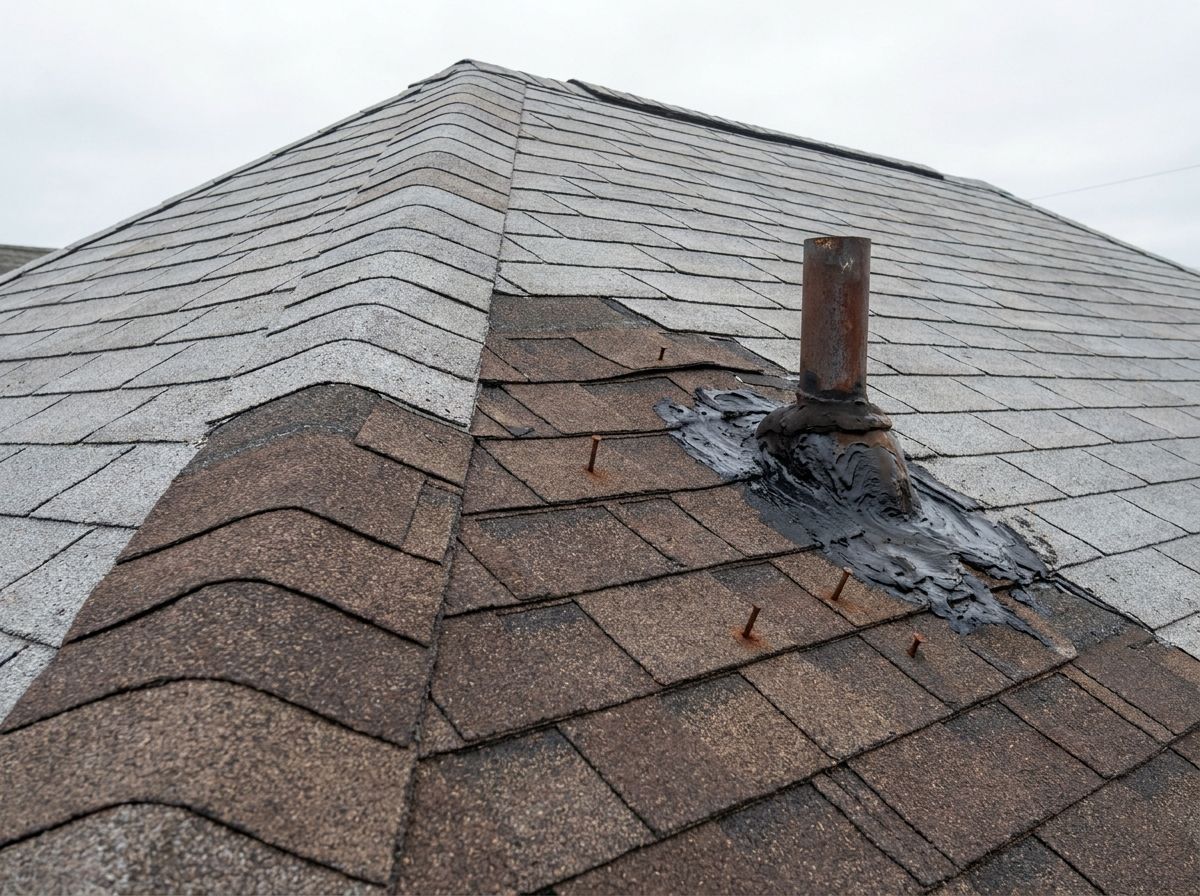
- Related components: flashing, vents, gutters, siding, and any interior water damage
Have your documentation ready and organized. Photos with dates, the inspection report from your contractor, and any receipts for emergency work such as tarping. Emergency mitigation is typically reimbursable, and keeping those receipts matters.
Reading the Scope of Loss
After the inspection you receive a scope of loss, the insurer's itemized estimate. Read it line by line, because omissions are common and correctable.
A complete roof replacement scope should include:
- Tear-off and disposal of existing material, priced per layer
- New underlayment
- Ice and water shield in valleys and along eaves
- Drip edge
- Starter strip and ridge cap
- Shingles matching the grade of what was there
- Flashing around chimneys, skylights, and walls
- Ridge vent or other ventilation
- Permit fees where applicable
Items that are frequently left out on the first pass include drip edge, ice and water shield, ridge vent, and flashing. If your contractor's estimate includes them and the insurer's does not, that difference is submitted as a supplement with documentation. This is a normal part of the process, not a dispute.
If a claim is denied and you believe the denial is wrong, Virginia homeowners can request reconsideration, ask for a second inspection, or invoke the appraisal clause in their policy, which brings in an independent appraiser. The Virginia Bureau of Insurance also accepts consumer complaints.
Documenting Damage Before the Adjuster Arrives
The adjuster sees your roof once. Everything you gather before that visit either supports the claim or leaves a gap the insurer is entitled to fill with its own judgment. A few habits make a real difference for homeowners in Staunton, Waynesboro and across Augusta County.
- Write down the storm date and time. A local news report or weather service record of hail or high wind on that date ties the damage to a specific event.
- Photograph from the ground first. Dented gutters, downspouts, window screens and AC fins are safe to photograph and corroborate what is on the roof.
- Photograph inside. Ceiling stains, wet insulation and active drips, with something in the frame for scale.
- Keep every receipt. Tarping and other emergency work are usually reimbursable when they are documented.
- Stay off the roof. A fall costs far more than any claim, and our inspections are free.
The roof itself is the job of the inspection: marked test squares, slope-by-slope photographs and a written scope. Our guide on how to file a storm damage roof claim in Virginia walks through the order of steps, and our hail damage roof repair guide for Augusta County explains what hail bruising looks like and why it is hard to see from the ground.
Mistakes That Cost Homeowners Money
- Filing before knowing the damage exceeds the deductible. A claim that comes in below deductible pays nothing and still appears in your claims history. Inspect first.
- Waiting months to report. The longer the gap, the harder it is to tie damage to a specific storm, and the easier it is to classify as wear.
- Accepting the first scope without reading it. Missing line items are common and routinely corrected on request.
- Signing a contractor's contingency agreement before understanding it. Some obligate you to that contractor regardless of the claim outcome. Read what you sign.
- Working with a contractor who offers to cover your deductible. This is generally insurance fraud in Virginia and exposes you along with them.
- Cashing the check and not doing the work. On an RCV policy the withheld depreciation is only released once the work is completed and documented. Skip the work and you forfeit that portion.
- Letting the mortgage company's process stall the job. Claim checks over a certain amount are often made out jointly to you and your lender. Start that endorsement paperwork early.
Why Virginia Homeowners Choose Baber Enterprises
As a family-owned roofing company serving Augusta County since 1984, for more than 40 years, we have helped Shenandoah Valley homeowners through storm damage and the claims that follow. Three generations of our family have worked on roofs in this Valley, and that continuity matters when a warranty question surfaces years after the job.
As a GAF Master Elite contractor, a certification held by less than two percent of roofing companies nationwide, we can offer enhanced manufacturer warranties that most contractors are not authorized to provide. Holding that status requires meeting GAF's ongoing standards for licensing, insurance, and installation quality.
- Three generations of roofing experience in the Shenandoah Valley
- GAF Master Elite certification, held by less than 2% of contractors nationwide
- Experienced with Virginia claims and willing to meet your adjuster on site
- Thorough documentation, including photographs and marked test squares
- Manufacturer-backed warranties plus a written workmanship warranty
- Licensed and insured in Virginia
- Financing options for qualified homeowners, with pre-qualification that does not affect your credit score
- Straight answers, including when a claim is not worth filing
We serve homeowners throughout Staunton, Waynesboro, Fishersville, Stuarts Draft, Verona, Augusta County, and the surrounding Shenandoah Valley.
Schedule Your Free Roof Inspection in Augusta County, VA
If a storm has come through and you are trying to decide whether to file, the right first move is an inspection that tells you what you are actually dealing with. We provide free, no-pressure roof inspections for homeowners across Augusta County, Staunton, Waynesboro, Fishersville, and the surrounding Valley.
We will document the condition of your roof, give you an honest read on whether the damage is likely to exceed your deductible, and if you decide to file, we can meet your adjuster on site. If the work goes forward, we will explain the costs plainly and talk through financing if spreading the cost over time would help.
Call our Staunton office at (540) 885-6514 to speak with someone local, or request your free inspection online.
Frequently Asked Questions
How do I file a roof insurance claim in Virginia?
Start by documenting the storm date and photographing visible damage. Get an independent roof inspection before you file so you know whether the damage exceeds your deductible. Then contact your insurer, and arrange for your contractor to attend the adjuster's inspection.
Will my insurance rates go up if I file a roof claim?
Possibly. Weather-related claims are generally treated differently from at-fault claims, but multiple claims in a short period can affect rates or renewal. This is one reason to inspect first rather than filing a claim that may fall below your deductible anyway.
What is the difference between RCV and ACV on a roof claim?
Replacement cost value pays what replacement costs today, releasing withheld depreciation once the work is finished. Actual cash value pays replacement cost minus depreciation for the roof's age, with no further payment. On an older roof, ACV can leave a large gap.
How long do I have to file a roof insurance claim in Virginia?
Policies generally require prompt notice rather than setting one fixed deadline, and waiting works against you. Damage becomes harder to tie to a specific storm as months pass, which makes it easier for an insurer to classify as ordinary wear rather than a covered loss.
What if my roof insurance claim is denied?
You can request reconsideration with additional documentation, ask for a second inspection, or invoke your policy's appraisal clause to bring in an independent appraiser. Virginia homeowners can also file a complaint with the State Corporation Commission's Bureau of Insurance.
Should my roofing contractor meet the insurance adjuster?
Yes, and adjusters expect it. A contractor who has already inspected the roof can walk it with the adjuster, point out documented damage, and flag items that might otherwise be missed in a short visit. It generally produces a more complete scope of loss.
Does insurance cover a roof that is just old?
No. Insurance covers sudden damage from a specific covered event, not the gradual end of a roof's service life. A twenty-five year old roof in Waynesboro that is simply worn out is a replacement the homeowner funds, unless a storm causes qualifying damage.