Emergency Roof Leak Repair in Waynesboro VA: What to Do First
If your roof is leaking right now in Waynesboro, the first job is not the roof. It is the inside of the house: contain the water, protect the ceiling and the wiring, and photograph everything before you touch it. The roof repair comes second, and it goes better when the first hour went well.
That order surprises people, because the instinct is to get up there and find the hole. In heavy rain, on a wet slope, in the dark, that is how a leak turns into an injury. Most of what decides the final cost of a leak happens indoors in the first hour, and almost none of it requires a ladder.
This guide walks through what to do first, what can wait until morning, how to tell a temporary fix from a permanent one, and where insurance fits in. We have been repairing roofs across Waynesboro, Staunton and the rest of Augusta County since 1984.
Roof Leak Quick Answer: The First Steps in Order
- Stay off the roof. Wet shingles, wind and poor light make a roof the most dangerous place on the property during a storm.
- Catch the water. Buckets, towels and plastic sheeting under the drip. Move furniture, rugs and electronics out of the way.
- Relieve a bulging ceiling. If drywall is sagging with trapped water, a small controlled puncture into a bucket prevents a much larger collapse.
- Kill power to wet circuits. If water is near light fixtures, outlets or a ceiling fan, switch off that circuit at the panel.
- Photograph everything. The stain, the drip, the damaged contents and the outside of the roof from the ground, with dates.
- Call a roofer for an inspection before you call your insurance carrier, so you know what you are actually claiming.
The First Hour: Protect the Inside of the House
Water that comes through a roof does not stay where it enters. It runs along the underside of the decking, follows a rafter, soaks into insulation and finally shows up as a stain or a drip somewhere that may be several feet from the actual hole. By the time you see it, it has already been travelling. Your job in the first hour is to stop it from travelling any further through the house.
- Contain the drip. Put a bucket directly under it and a towel or a scrap of wood inside the bucket so the splashing does not spread the water across the floor.
- Clear the area. Move furniture, rugs, electronics and anything made of paper or fabric. Contents damage often costs more than the roof repair.
- Check the attic if it is safe to reach. If you have a walkable attic with a floor and good lighting, a bucket under the drip at the decking level stops water before it reaches the ceiling. Do not step between joists.
- Deal with a bulging ceiling. A sag in the drywall means water is pooling on top of it. Put a bucket underneath and make a small hole at the lowest point with a screwdriver. A controlled drain is far better than the whole panel letting go.
- Shut off power to wet areas. If water is anywhere near a light fixture, ceiling fan or outlet, turn off that circuit at the breaker panel and leave it off until it has been checked.
- Start drying. Fans and a dehumidifier, once the active leak is contained, reduce the chance of mold in the days that follow.
None of this fixes the roof. All of it limits the bill.
Safety Lines You Should Not Cross
We say this plainly because every roofer in the Shenandoah Valley has heard the story of a homeowner who went up in the rain. Add wind gusts off the Blue Ridge and a ladder footed on soft ground, and the risk is not worth any amount of water damage.
- No roof access during rain, wind, ice or darkness. Wait for dry daylight, and even then leave the roof to someone with fall protection.
- No ladders near power lines. Service drops often run close to the roof edge on older Waynesboro homes.
- No standing in water near outlets or cords. If the floor is wet and the circuit is live, stay out of the room until the breaker is off.
- No walking on attic insulation. The drywall below will not hold your weight.
- No tar or caulk on a wet roof. It will not bond, and it can hide the real entry point from whoever comes to fix it properly.
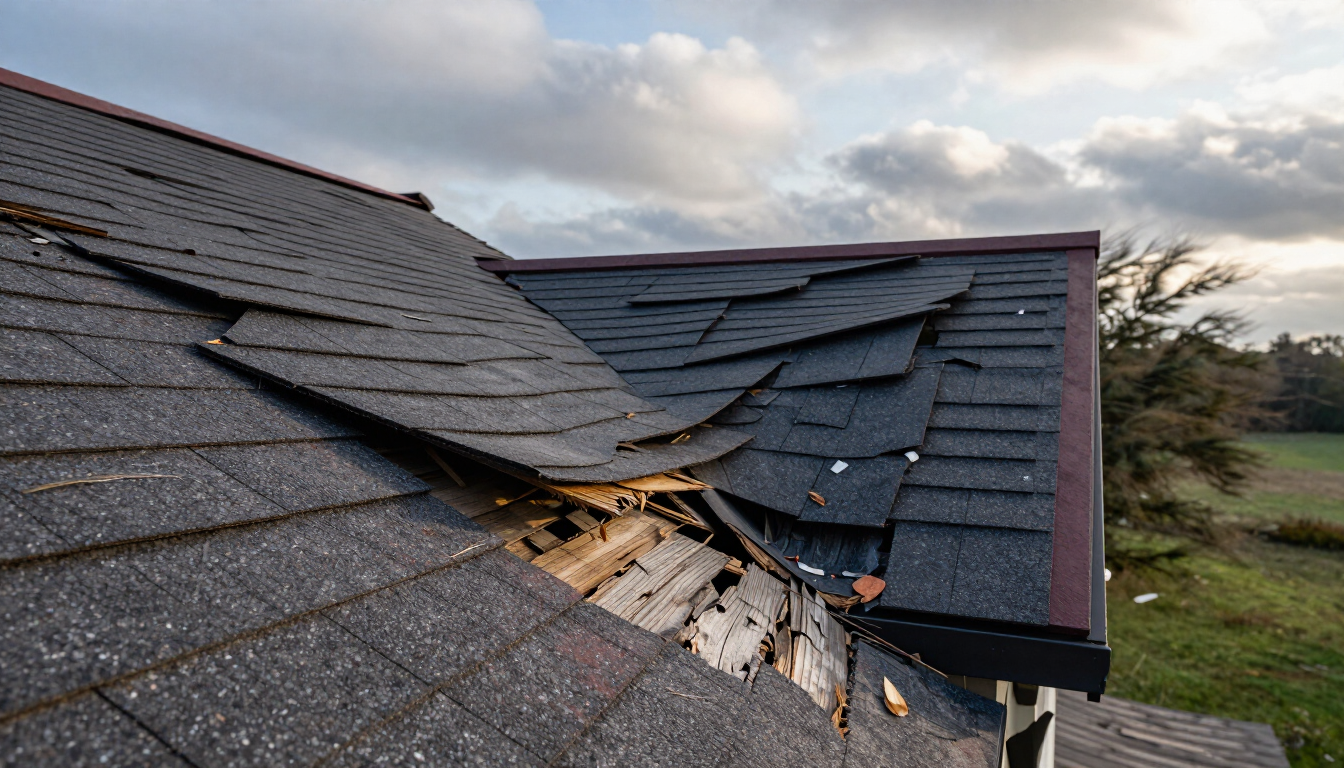
If a tree or large limb is on the roof, keep people out of the rooms below and leave the limb where it is until the roof has been looked at.
Find Where the Water Is Coming From, From the Ground
You do not need to be on the roof to give a roofer useful information. A few observations from the yard and from inside the house can cut down the time it takes to find the leak, and they make your insurance documentation stronger.
- Note where the water appears inside. Which room, how far from the exterior wall, and whether it is near a chimney, a skylight, a bathroom vent or a valley where two roof slopes meet.
- Look at the roof from the ground. Missing shingles, lifted tabs, a dark patch, debris in a valley, or a bent piece of flashing are all visible from the yard with a phone zoom.
- Check the gutters and downspouts. In the fall, leaves from the maples and oaks around Waynesboro pack gutters quickly. Water that backs up out of a full gutter can run under the roof edge and look like a roof leak.
- Notice when it leaks. Only in wind-driven rain from one direction points to flashing or siding. Every rain points to a hole. Only after snow points to ice damming.
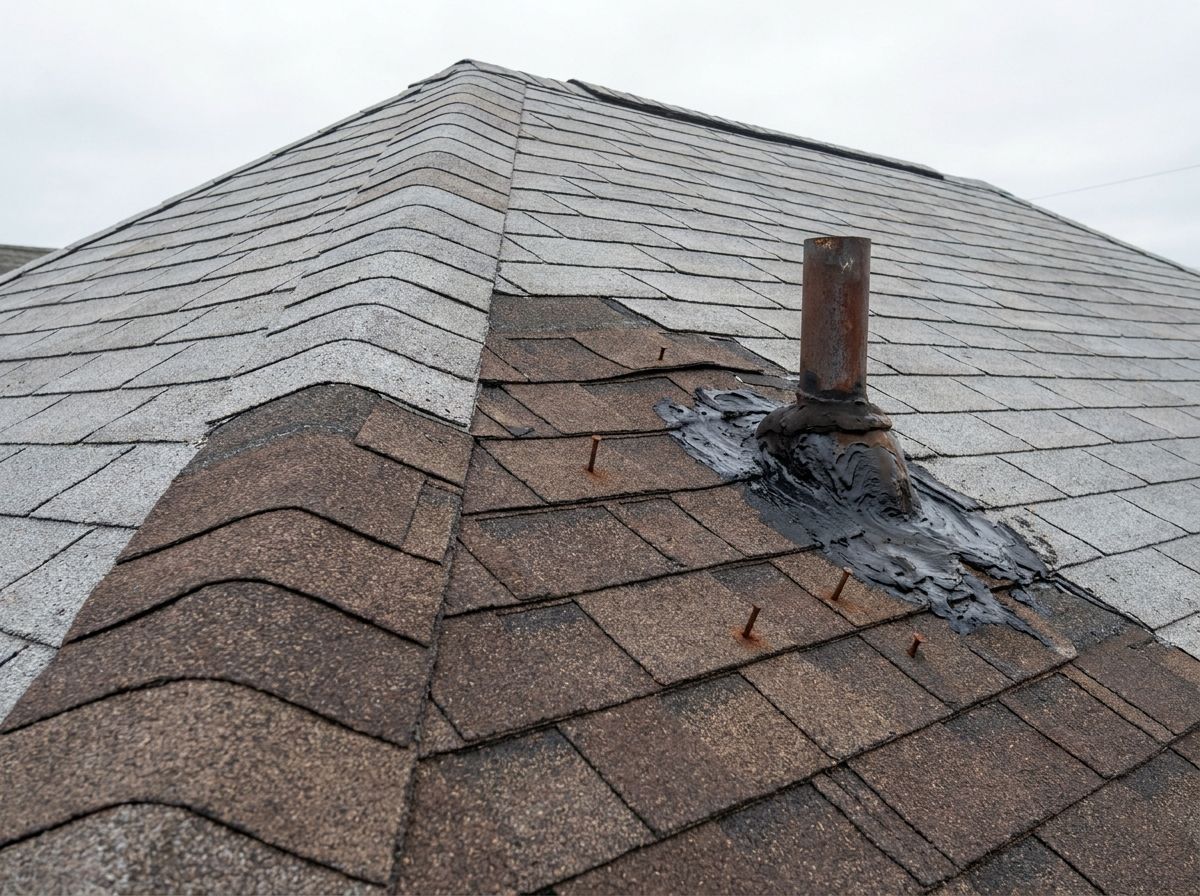
The most common entry points we find on Waynesboro and Staunton homes are the same ones found on roofs everywhere: cracked rubber pipe boots, chimney flashing that has pulled away from the masonry, valleys, and shingles lifted or torn off in a wind event.
Temporary Fix vs Permanent Repair
After a leak there are two jobs: keeping more water out, and fixing the reason it got in. They are often done on different days.
| Step | What it does | What it does not do |
|---|---|---|
| Interior containment | Stops water from spreading through the house | Does nothing to the roof |
| Temporary dry-in (tarp or patch) | Keeps rain out of an opening until a proper repair is scheduled | Not a lasting fix; tarps degrade and can blow loose |
| Spot sealant | Can slow a small leak around a fastener or flashing edge | Hides the cause and rarely lasts a season |
| Permanent repair | Replaces failed shingles, boots or flashing and any rotted decking | Will not save a roof that is at the end of its life |
| Replacement | Resets the whole system when damage or age is widespread | Not needed for a contained problem on a healthy roof |
The key point in that table is the decking. Shingles are the visible layer, but underneath them sits the plywood or plank sheathing that holds everything together. Once it has been wet for a while it softens and stops holding nails, and a patch over it fails again.
This is also where you decide between repair and replacement. A leak on an otherwise healthy roof is a repair. A leak on a roof that has curling shingles, heavy granule loss and a history of patches is often the roof telling you it is done. Our roof repair service in Waynesboro and Staunton starts with that question rather than assuming the answer.
Why Roofs Leak Around Waynesboro
Waynesboro sits right at the foot of the Blue Ridge, and the weather that comes over the mountains shapes how roofs fail here.
- Summer thunderstorms bring short, heavy downpours and strong gusts that lift shingle tabs and break the seal strip underneath them.
- Fall leaf drop clogs gutters and valleys across Waynesboro, Fishersville and Stuarts Draft, forcing water back up under the roof edge.
- Freeze and thaw cycles through the Shenandoah Valley winter open small gaps around flashing and pipe boots a little more each year.
- Ice dams form when snow melts on a warm upper roof and refreezes at a cold eave, pushing meltwater under the shingles.
- Older housing stock in the established neighborhoods of Waynesboro and Verona often has original chimney flashing that has long outlived the shingles around it.
A roof that gets a look once a year, and after any storm that drops limbs in your yard, rarely surprises its owner.
Will Insurance Pay for the Leak?
This is often the first question homeowners ask, and the honest answer depends on why the roof leaked. Homeowners policies in Virginia generally cover sudden, accidental damage, such as wind tearing shingles off or a falling limb punching through the decking. They generally do not cover leaks caused by age, wear or a maintenance problem that developed slowly.
- Document before you clean up. Photos of the interior damage, the contents and the exterior from the ground, all dated.
- Get an inspection before you file. You need to know whether the damage is storm-related and whether it is likely to exceed your deductible. A claim that comes in under the deductible pays nothing and still goes on your record.
- Keep receipts for emergency measures. Reasonable steps to prevent further damage, such as a tarp, are usually expected by carriers and often reimbursable.
- Be wary of anyone offering to cover your deductible. That is insurance fraud, and it makes you part of it.
Our guide on how to file a storm damage roof claim in Virginia covers the whole process in detail. If wind or hail caused the leak, our storm damage roofing team documents the damage the way carriers need to see it. And if the leak turns out to be wear rather than storm damage, financing is available so a needed repair or replacement does not have to wait for the budget.
Why Waynesboro Homeowners Call Baber Enterprises
We are a family-owned roofing company, now in our third generation, and we have been working on roofs in this valley for more than 40 years. We work from two offices, one on West Main Street in Waynesboro and one on Parkersburg Turnpike in Staunton, and between them we cover Augusta County, Fishersville, Stuarts Draft, Verona and north into Harrisonburg.
- In business since 1984. Over 40 years and three generations of the same family, so we are still here when a warranty question comes up years later.
- GAF Master Elite certified. Master Elite is a manufacturer certification from GAF, and it is held by under 2% of roofing contractors. It is GAF's designation, earned from the manufacturer, not a title we gave ourselves.
- 25-year workmanship warranty. The manufacturer covers the materials. We cover the work, in writing.
- Free roof inspections. You find out what actually caused the leak, and if the roof needs nothing more than a small repair, we tell you that.
- Financing available. For the times a leak reveals a bigger job than the budget planned for.
- Insurance documentation. We photograph and record storm damage in the form adjusters work from.
Call Our Waynesboro Office About a Roof Leak
If water is coming through your ceiling, contain it, photograph it, and then call our Waynesboro office at (540) 712-3512. Tell us where the water is showing up and what the weather was doing when it started. We will set up a free roof inspection, find where the water is actually getting in, and give you a written scope that separates the temporary fix from the permanent repair. If the damage looks storm-related, we will document it for your insurance carrier. If it does not, we will tell you that too, along with your financing options.
Frequently Asked Questions
What should I do first when my roof starts leaking?
Protect the inside of the house before anything else. Put a bucket under the drip, move furniture and electronics, switch off power to any wet circuits, and photograph the damage. Stay off the roof until it is dry and daylight, then call a roofer for an inspection to find the actual entry point.
Should I put a hole in a ceiling that is bulging with water?
Usually yes, carefully. A sagging ceiling means water is pooling above the drywall. Place a bucket underneath and make a small hole at the lowest point with a screwdriver. A controlled drain causes far less damage than the whole section collapsing, and it relieves the weight on the ceiling.
Can I fix a roof leak myself with sealant?
Sealant can slow a very small leak around a fastener, but it rarely lasts and it often hides the real cause. It also will not bond to a wet roof. Most leaks come from failed flashing, cracked pipe boots or damaged shingles, and those need the failed part replaced, along with any soft decking underneath.
Does homeowners insurance cover a leaking roof in Virginia?
It depends on the cause. Sudden damage from wind, hail or a falling limb is generally covered. Leaks from age, wear or poor maintenance generally are not. Get the roof inspected and the damage documented before you file, so you know whether the claim is storm-related and likely to exceed your deductible.
How do I know where my roof is leaking from?
The stain inside is rarely directly below the hole, because water runs along the decking and rafters first. Note which room, how close it is to a chimney, vent, skylight or valley, and whether it leaks in every rain or only wind-driven rain. A roofer uses those clues during the inspection to trace the entry point.
Is a roof leak a sign I need a new roof?
Not necessarily. A single leak on a healthy roof is usually a repair. If the roof also shows curling shingles, heavy granule loss, several old patches or soft spots, the leak may be a sign the whole system is near the end of its life. An inspection tells you which situation you are in.