Best Roofing Companies in Charlottesville VA: 2026 Guide
The best roofing company in Charlottesville is not the one with the most advertising or the lowest bid. It is the one that holds up on five things you can check yourself: a verifiable Virginia license and insurance, a manufacturer certification with real requirements behind it, a written workmanship warranty, a track record and local presence you can confirm, and a written, itemized scope from someone who has actually been on your roof.
Search results for roofers in Charlottesville give you names, star ratings and not much else. Ratings tell you how a company finishes jobs, not how its roofs are holding up years later. A website tells you nothing about how a crew flashes a chimney or handles soft decking. The useful question is not who is best in general, but which company is best for the roof you actually have.
We are one of the companies you may come across. We are based in Staunton, with a second office in Waynesboro, and Charlottesville is part of our service area. So read this guide with that in mind. It is the comparison framework we would hand a neighbor, and it works the same whichever companies end up on your list.
Charlottesville Roofing Companies: Quick Comparison Checklist
| What to compare | Why it matters | How to verify it |
|---|---|---|
| Virginia contractor license | Legal requirement and a basic filter | Look up the license number with the state board |
| Liability and workers' compensation insurance | Protects you if someone is hurt or property is damaged | Ask for a certificate sent directly from the insurer |
| Manufacturer certification | Shows a manufacturer has checked the contractor | Confirm it on the manufacturer's own website |
| Workmanship warranty | Covers the installation, not the product | Get the warranty document, not a verbal figure |
| Track record and local presence | Decides who answers when a problem shows up years later | A physical address and years in business you can check |
| Written itemized scope | Makes estimates comparable line by line | Compare the scopes, not just the totals |
| A real inspection | A driveway guess is not a diagnosis | Ask to see their roof photos |
Licensing, Insurance and the Basics
Every company on your list should clear the basics before you compare anything else. These are not differentiators. They are the entry ticket, and crews that knock on doors after a storm do not always have them.
- Virginia contractor license. Ask for the number and check it yourself. The license should be in the company's name, not just one person's.
- General liability insurance. This covers damage to your property during the job, from a dropped bundle to a cracked driveway.
- Workers' compensation. Roofing is dangerous work. If an uninsured worker is injured on your roof, the question of who pays can land on you.
- Certificates from the insurer. Ask for proof of insurance sent directly from the insurance company, not a photocopy that could be years out of date.
- A written contract. Scope, materials, price, payment schedule and warranty terms, all on paper before any work starts.
If a company is reluctant to provide any of these, that tells you most of what you need to know. A legitimate contractor sends them without being asked twice.
Credentials That Actually Mean Something
Roofing comes with plenty of badges, and they are not equal. Some require a manufacturer to check the contractor and keep checking. Others amount to little more than buying a product line. The difference is worth understanding before you weigh one company against another.
- Ask what the credential required. Ask the contractor, and the manufacturer, what it took to earn the credential and what it takes to keep it.
- Ask how many contractors hold it. A credential everyone has does not separate anyone.
- Verify it independently. Manufacturers publish their certified contractor lists. It takes a minute to check.
- Ask who does the installing. A credential belongs to a company. If the work is subcontracted, ask who will actually be on your roof.
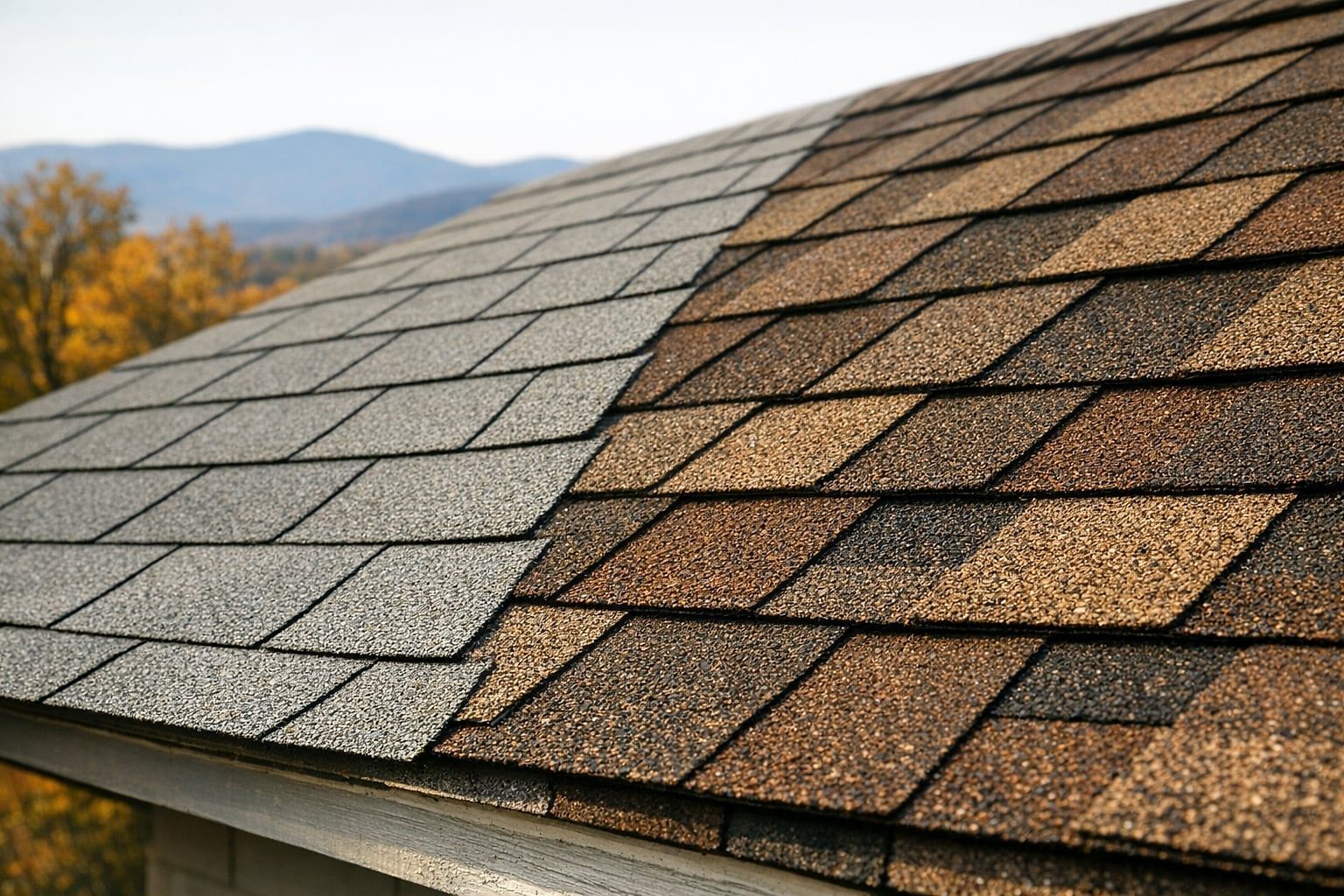
- Match the credential to the product. A certification from one manufacturer says nothing about a different maker's product, so make sure the badge and the materials on the estimate line up.
As a separate, plain fact about us: we are GAF Master Elite certified. Master Elite is a manufacturer certification from GAF, and it is held by under 2% of roofing contractors. It is GAF's designation, not a title we gave ourselves.
Warranties: The Two You Need to Compare
Two companies can both say "warranty" and mean entirely different things, which is why this is where comparisons most often go wrong.
- The material warranty comes from the shingle manufacturer and covers defects in the product. Every legitimate shingle has one, so it rarely separates contractors.
- The workmanship warranty comes from the contractor and covers how the roof was installed. Nails placed wrong, flashing cut short, a valley detailed badly: none of that is the shingle's fault, and none of it is covered by the material warranty.
- Ask how long the workmanship warranty runs and get it in writing.
- Ask what happens to it if the company closes. A long warranty is only worth what you can actually collect on.
- Ask whether it transfers if you sell the house.
For reference, our workmanship warranty runs 25 years on GAF shingle roofs and 10 years on metal roofs. Whoever you hire, put their workmanship terms side by side with ours and with everyone else's.
Local Presence and Distance in Charlottesville
Roofing failures are delayed. A bad roof does not show itself the week the crew leaves. It shows up in the third hard rain of the next spring, or the winter after that. That is why the question "who answers the phone in five years?" matters more in roofing than in most trades.
- A physical address. Somewhere you could visit, not a PO box or a phone number that forwards to another state.
- Years in business you can check. Look at how long the company has existed under its current name.
- Ties that are hard to walk away from. A long-established local business has more at stake in a dispute than a crew passing through after a storm.
- Familiarity with local conditions. Roofs in central Virginia deal with summer storms, freeze and thaw, and ice dams at the eaves. Someone who has worked through a few local winters knows where roofs here fail.
- Honest scheduling. Ask how the company handles a job that is some distance from its base, and how quickly it can get back for a warranty call.
Our offices are in Staunton and Waynesboro, and Charlottesville is part of our service area. Whoever you are considering, ask how they schedule the work, how follow-up visits are handled, and how quickly they return for a warranty call. What we bring is a family-owned company, now in its third generation, in business since 1984. That is more than 40 years, and it is a fact you can check.
Questions to Ask on the Estimate Visit
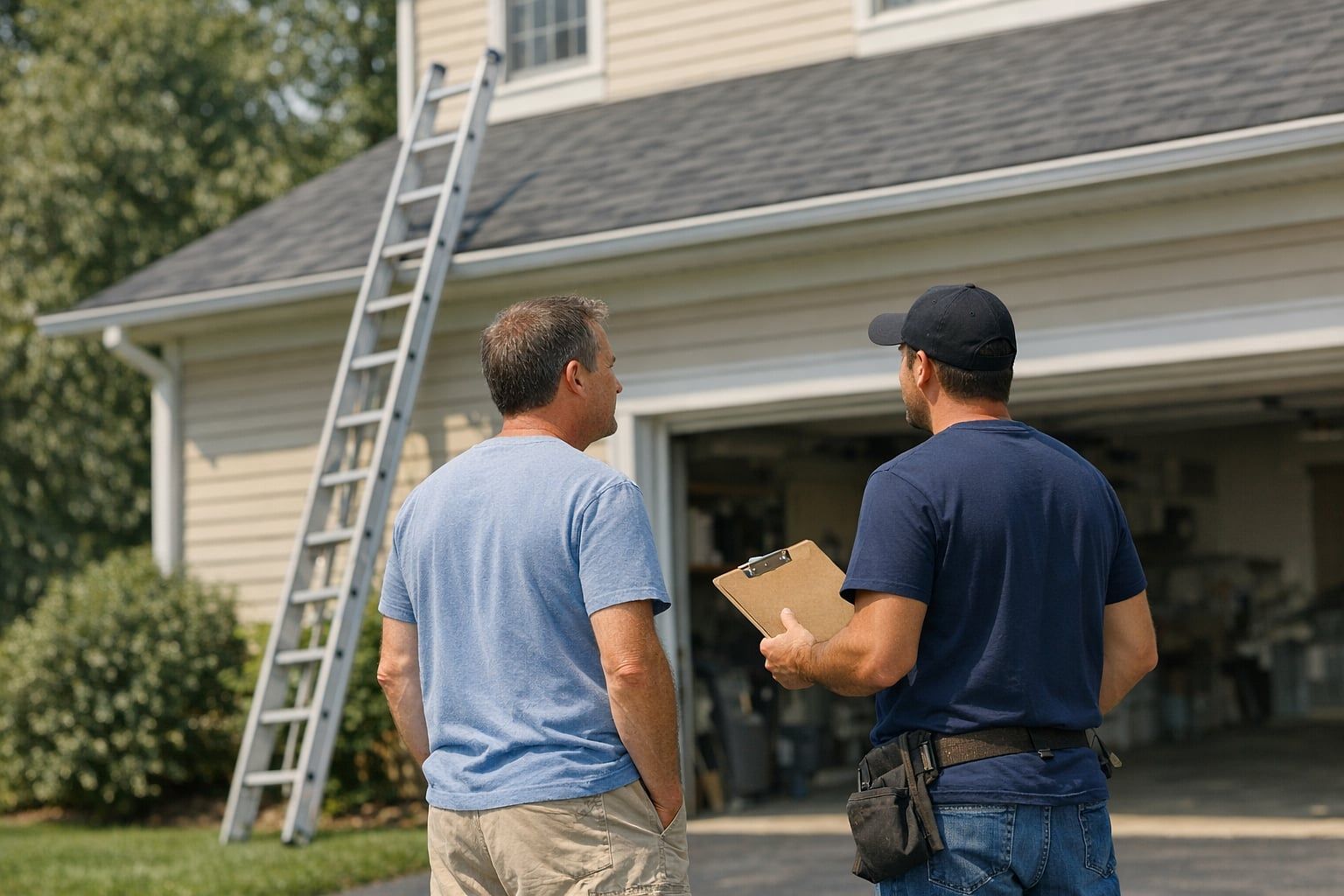
Comparing companies gets much easier when you ask every one of them the same questions. Their answers will usually differ more than their prices.
- Did you get on the roof, and can I see the photos? This one question separates a real inspection from a sales visit.
- What failed, and what caused it? A contractor who cannot explain the cause has not diagnosed the problem.
- What is urgent and what can wait? A company willing to tell you something can wait until spring is showing you how it operates.
- Who does the work: your crew or a subcontractor? Neither answer rules a company out, but you should know.
- How do you handle soft decking? Missing decking terms are the most common reason one estimate looks cheaper than another.
- What is not included? Disposal, permits, gutters and interior repairs are the usual omissions.
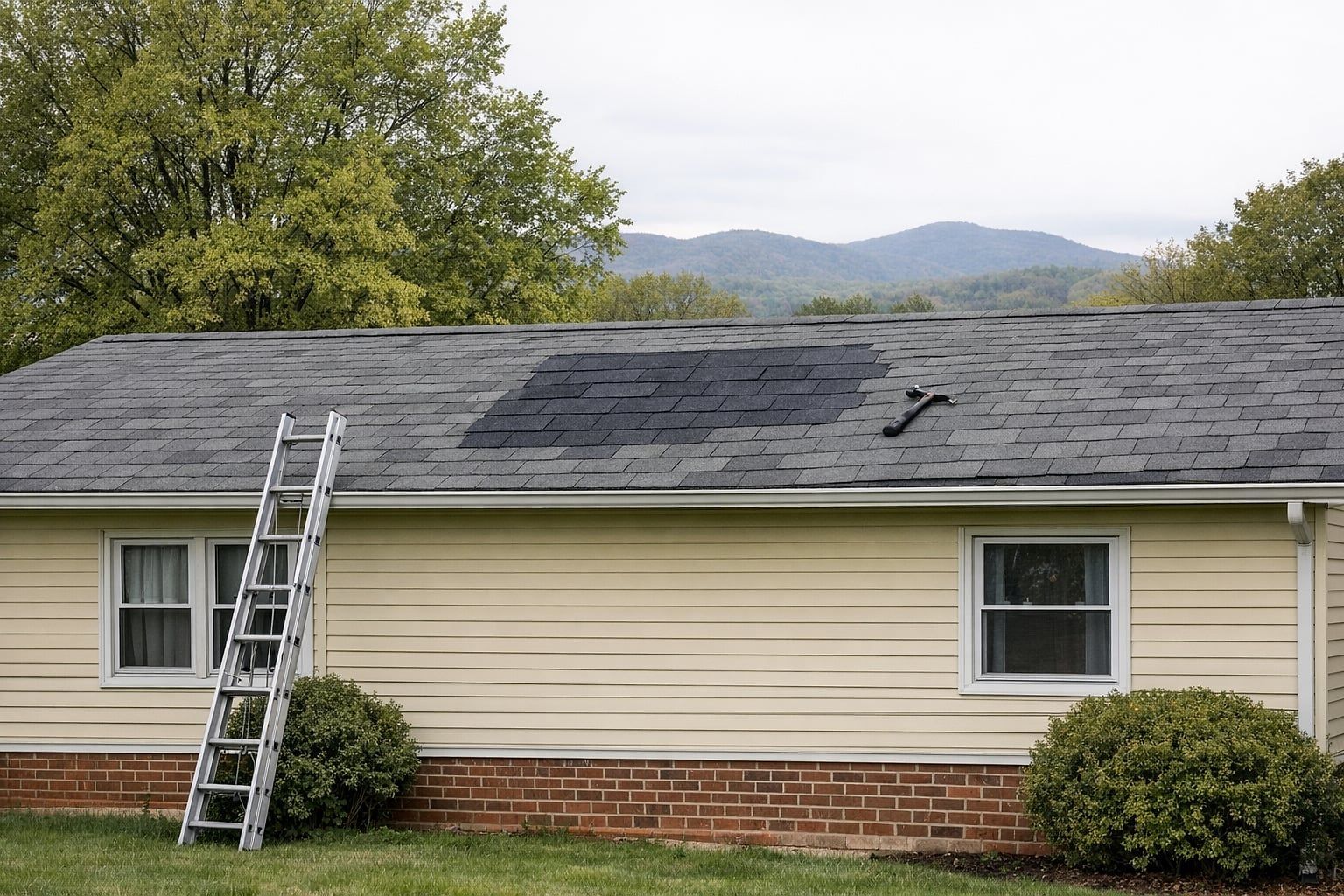
Older roofs can hide damaged decking or extra layers that only come to light during tear-off. An estimate that addresses those items up front is not padding the job. It is telling you the truth in advance. Our guide to red flags when choosing a roofing contractor in Virginia covers the warning signs worth knowing before you sign.
How a Company Handles Storm Damage and Insurance
If your roof was damaged in a storm, how a contractor handles insurance becomes one of the most important points of comparison, and practices vary widely.
- What good looks like. They inspect the roof, photograph the damage, give you a written assessment and support you through the claim. The claim stays yours the whole time.
- Inspection before the call. Knowing whether the damage is storm-related and likely to exceed your deductible before you file avoids a claim that pays nothing and still goes on your record.
- Documentation for the adjuster. Damage recorded the way carriers need to see it is most of the battle on a storm claim.
- What should worry you. A company that wants to take over your claim, asks you to sign over your insurance benefits before an inspection, or offers to cover your deductible. That last one is insurance fraud, and it puts your coverage at risk.
Our guide on how to file a storm damage roof claim in Virginia walks through the process step by step. And if the work is not an insurance job, financing is available, so you do not have to choose the cheapest estimate just to make the numbers work.
Why Charlottesville Homeowners Consider Baber Enterprises
Here is what you can verify about us, so you can put it next to everyone else on your list.
- In business since 1984. More than 40 years, three generations of one family, with offices in Staunton and Waynesboro.
- GAF Master Elite certified. Master Elite is a manufacturer certification from GAF, and it is held by under 2% of roofing contractors. It is GAF's designation, earned from the manufacturer, not a title we gave ourselves. It requires rigorous training and proven quality, and it gives our customers access to GAF's Golden Pledge warranty.
- 25-year workmanship warranty on GAF shingle roofs (10 years on metal roofs).
- Free roof inspections.
- Financing available for homeowners who want the complete job without waiting.
Get a Roofing Estimate in Charlottesville
If you are comparing roofing companies in Charlottesville and want us on your list, call our Staunton office at (540) 885-6514. We offer free roof inspections, and the checklist above works the same on us as on everyone else. You can also read more about our roofing services in Charlottesville.
Frequently Asked Questions
How do I find the best roofing company in Charlottesville?
Compare companies on five things you can verify: a Virginia contractor license and insurance, a manufacturer certification with real requirements, a written workmanship warranty, a track record and local presence you can check, and a written itemized scope from someone who actually inspected your roof. A company strong on all five is a safe choice.
How many roofing estimates should I get in Charlottesville?
Three is a sensible number for most homeowners. It is enough to see where scope and pricing cluster and to spot an estimate that is missing something. Ask every company the same questions so the written scopes can be compared line by line rather than total to total.
What does GAF Master Elite mean?
GAF Master Elite is a manufacturer certification from GAF, held by under 2% of roofing contractors. It is awarded by the manufacturer rather than chosen by the contractor. You can confirm whether a company holds it on GAF's own website before you hire anyone.
Does Baber Enterprises serve Charlottesville?
Yes. Charlottesville is part of our service area. We are based in Staunton with a second office in Waynesboro, and we have been in business since 1984. Call our Staunton office at (540) 885-6514 to schedule a free roof inspection in Charlottesville.
Is the cheapest roofing estimate the best choice?
Only if it describes the same complete job as the others and comes from a licensed, insured contractor with a written workmanship warranty. Low totals often leave out decking, flashing or disposal, which come back later as change orders once the old roof is already off.
What is the difference between a material warranty and a workmanship warranty?
The material warranty comes from the manufacturer and covers defects in the product. The workmanship warranty comes from the contractor and covers how the roof was installed. Installation problems are not covered by the material warranty, so the workmanship terms are the ones to compare closely between companies.