How to File a Storm Damage Roof Claim in Virginia
How to File a Storm Damage Roof Claim in Virginia
If a storm has damaged your roof, the short answer is this: document the damage immediately, get a professional roof inspection before you call your insurer, then file the claim with photographs and an itemized scope of work in hand. Homeowners who do those three things in that order tend to have a much smoother claim than those who phone the insurance company first and hope the adjuster catches everything.
It is rarely that simple in practice, though, and the reason is that a roof claim is really two separate arguments. The first is whether the storm caused the damage at all, rather than age or wear. The second is how much of the roof has to be replaced to put things right. Insurers evaluate both, and a homeowner standing in the driveway with a phone camera is not well equipped to argue either one.
Baber Enterprises has been working with Shenandoah Valley homeowners and their insurance carriers for more than 40 years, across three generations of the same family. What follows is the process as it actually runs in Augusta County, and the places where claims tend to go wrong.
Quick Answer: The Storm Damage Roof Claim Process
| Step | What you do | When |
|---|---|---|
| 1. Make it safe | Stop active water entry, move belongings, photograph everything before you touch it | Immediately |
| 2. Get inspected | Have a roofing contractor document the damage and produce a written scope | Within a few days |
| 3. File the claim | Notify your carrier with the date of loss, photographs and the contractor's report | As soon as you have the report |
| 4. Meet the adjuster | Have your roofer present on the roof at the same time as the adjuster | Carrier schedules it |
| 5. Review the scope | Compare the carrier's line items against your contractor's, and supplement gaps | On receipt |
| 6. Schedule the work | Approve the repair or replacement and set a build date | After settlement |
Step 1: Make the Property Safe and Document Everything
Before anything else, stop the water. Most policies require you to take reasonable steps to prevent further damage, and a homeowner who leaves a hole open for a week may find the additional interior damage disputed. Tarping is a legitimate emergency expense on most policies, so keep the receipt.
Documentation is the part homeowners under-do. Photograph before you move or clean anything:
- The exterior from all four sides, taken from ground level
- Any debris, branches or hail on the ground and in the gutters
- Interior stains, wet insulation, and damaged contents, with the date visible if possible
- Close-ups of any shingles, flashing or ridge cap in the yard
- The tarp or emergency repair once it is in place
Write down the date and approximate time of the storm. Carriers verify weather events against station data, and a claim filed with the wrong date of loss is one of the easier ones for an adjuster to question. If you are not certain, say so rather than guessing.
Step 2: Get a Roof Inspection Before You Call Your Insurer
This is the step that changes outcomes, and it is the one most homeowners skip. Calling the carrier first means the adjuster sets the scope, and you are then negotiating against a document you had no part in writing.
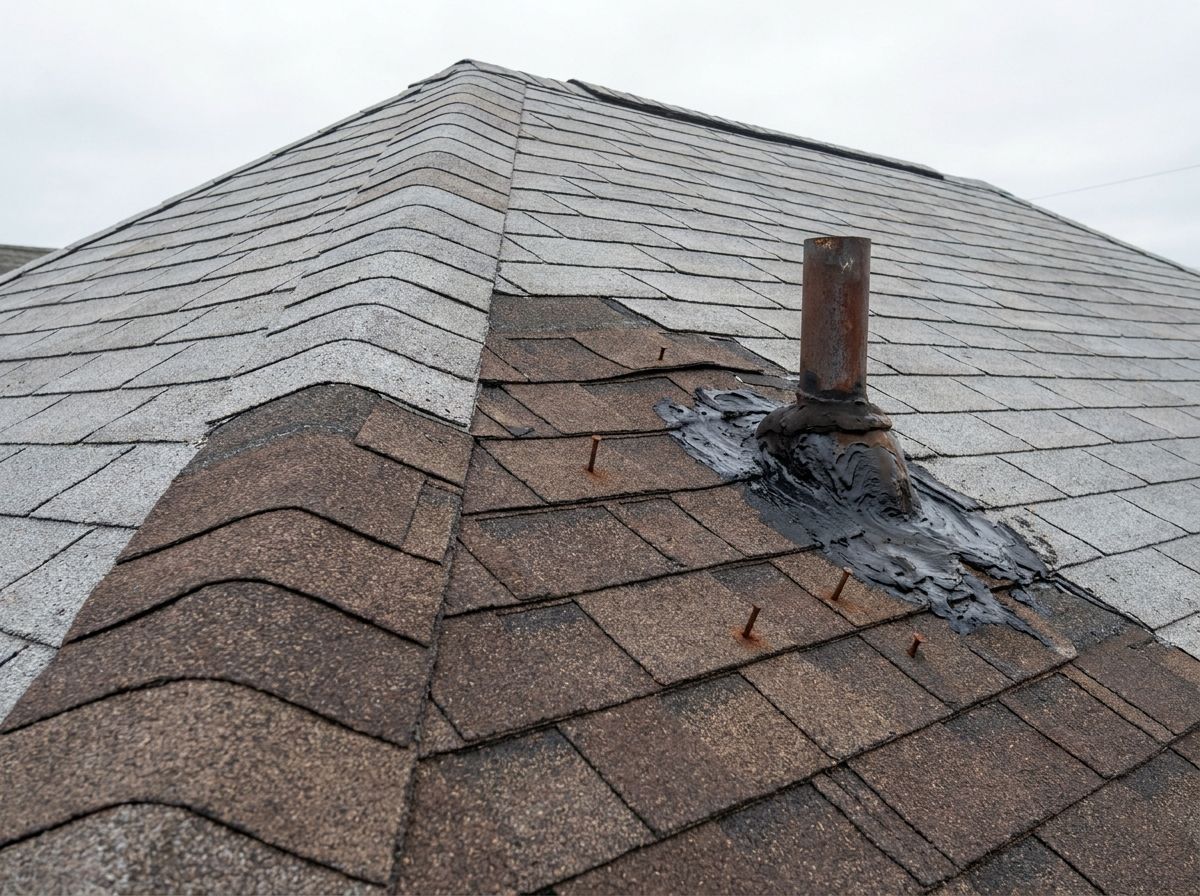
An inspection carried out before the claim is filed gives you your own record of what the storm did. A roofer walking the roof will find things that are invisible from the driveway:
- Hail bruising, which shows as soft dark spots where the granules have been knocked loose but the shingle has not torn
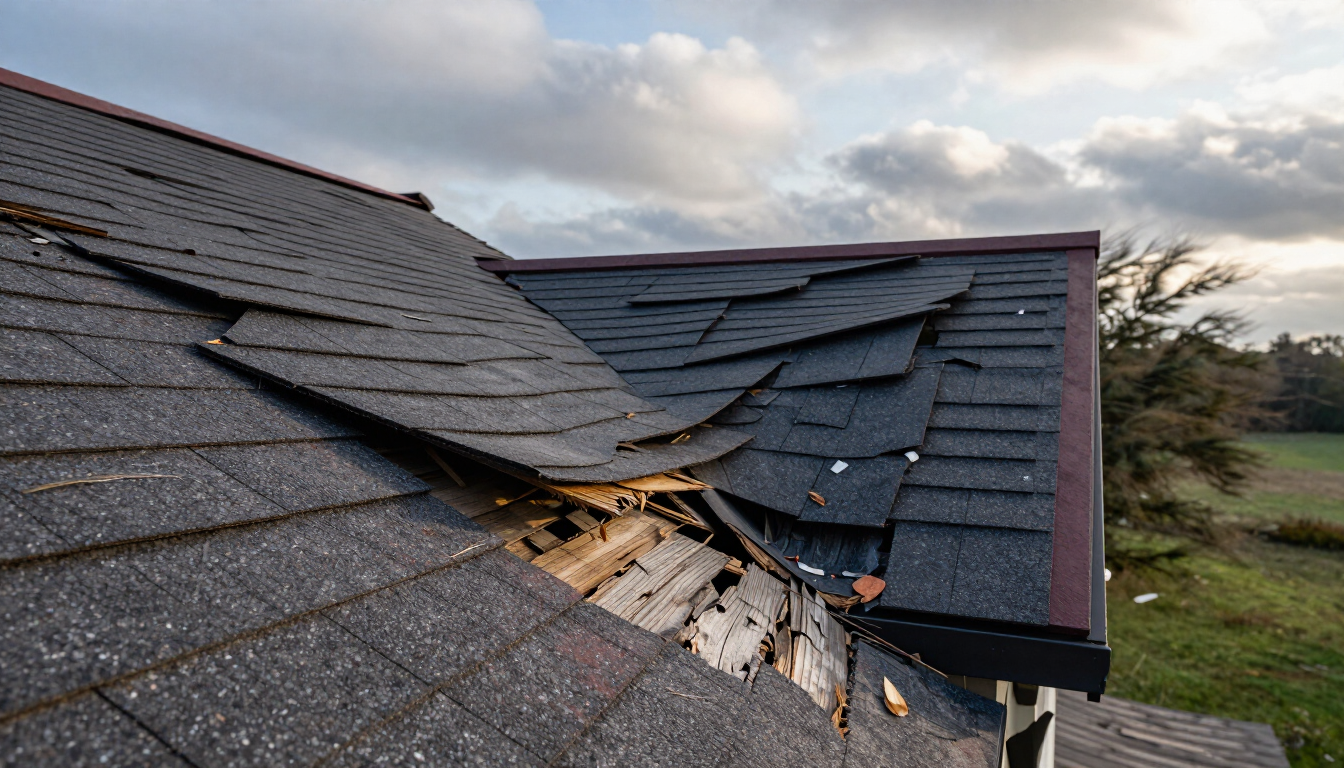
- Creased shingles, where wind has lifted and folded a tab that then lies back down looking intact
- Damaged or displaced flashing around chimneys, valleys and sidewalls
- Compromised ridge cap and hip shingles, which take wind damage first
- Dented gutters, vents, and drip edge, which help corroborate a hail event
Baber Enterprises inspects roofs at no charge across Staunton, Waynesboro, Fishersville, Stuarts Draft and Verona. If the damage does not justify a claim, that is a useful answer too, because a withdrawn or denied claim still appears on your record. For a fuller picture of what counts as storm damage rather than ordinary ageing, our guide to wind damage versus normal wear covers the distinction in detail.
Step 3: File the Claim and Prepare for the Adjuster
With photographs and a written scope in hand, notify your carrier. Report the date of loss, describe the damage plainly, and say that you have had the roof inspected. You are not required to accept the first assessment, and you are entitled to have your contractor present.
When you file, have these ready:
- Your policy number and the date of loss
- The photographs taken in step one
- Your contractor's written inspection report and itemized scope
- Receipts for tarping or any emergency work already done
- The age of the roof and any prior repair history, if you know it
Ask the carrier when the adjuster will be on site, then arrange for your roofer to be there at the same time. Two people on the roof together, looking at the same shingle, resolves far more than two reports written a fortnight apart. Most disagreements we see are not bad faith, they are simply the result of one party seeing something the other did not.
Step 4: Understand What Your Policy Actually Pays
Two policy terms decide most of what you receive, and many homeowners only learn which one they have after a storm.
Replacement cost value pays what it costs to replace the roof today, usually in two parts: an initial payment, then the withheld depreciation released once the work is complete and invoiced. Actual cash value pays the depreciated value of the roof and stops there, which on an older roof can be a fraction of the replacement cost.
Alongside that, check:
- Your deductible, and whether wind and hail carry a separate, higher one
- Whether that deductible is a flat sum or a percentage of the dwelling coverage
- Any roof surfacing endorsement that schedules payouts by roof age
- Code upgrade or ordinance coverage, which pays for bringing the deck and underlayment up to current code
- The notice deadline in your policy, which is a contractual term and not something to leave until you have a free weekend
Read the declarations page rather than relying on memory. Percentage deductibles in particular surprise people, because the figure scales with the insured value of the house.
Step 5: Review the Scope, Then Schedule the Work
When the settlement arrives it comes as a line-item estimate. Compare it against your contractor's scope, line by line. Omissions are common and usually mundane rather than adversarial: drip edge, ice and water shield in the valleys, ridge vent, pipe boots, or the correct number of squares.
Where something is missing, your roofer submits a supplement with photographs and, if relevant, the manufacturer's installation requirements. Insurers pay supplements routinely when the documentation is there. A shingle warranty is void if the material is not installed to specification, so the requirement is not a preference, it is a condition of the product being warrantable at all.
Once the scope is agreed, set a build date. If the settlement leaves a gap you had not planned for, Baber offers financing so the deductible or an upgrade does not have to come out of savings all at once.
What Waiting Costs You
The reason to move promptly is not urgency for its own sake, it is that delay quietly weakens the claim. Three things happen when a damaged roof sits.
The first is that water keeps moving. A creased shingle admits a small amount at every rain, and decking that has been wet repeatedly eventually needs replacing, which turns a straightforward re-roof into a larger job. The second is evidential. As weeks pass, the line between storm damage and ordinary weathering blurs, and an adjuster looking at a roof three months after the event has a fair argument that some of what they are seeing came later.
The third is contractual. Policies carry notice requirements and suit limitation periods, and a homeowner who waits can find the question of whether the storm caused the damage has become moot. None of this means rushing into a contract with the first company that knocks on the door after a hailstorm. It means getting the roof looked at and the claim opened while the evidence is fresh, then taking the time you need over who does the work.
Why Augusta County Homeowners Work With Baber Enterprises
Storm claims put a homeowner between an insurer and a contractor, and the contractor's credentials matter more than usual, because the insurer is being asked to pay for that contractor's scope.
- More than 40 years in the Shenandoah Valley, across three generations of the same family. We are not a storm-chasing outfit that arrives after a hail event and leaves before the warranty matters.
- GAF Master Elite certified. GAF restricts this to contractors who hold proper licensing and insurance, maintain a documented record of workmanship, and meet ongoing training requirements. Fewer than two percent of roofing contractors in North America qualify, and it is the tier that unlocks GAF's strongest warranty coverage.
- 25-year workmanship warranty on our installation, which is separate from the manufacturer's material warranty.
- Free inspections across Staunton, Waynesboro, Fishersville, Stuarts Draft, Verona and the rest of Augusta County, including before you decide whether to file.
- Financing available for deductibles, upgrades, or anything the settlement does not reach.
- Two local offices , in Staunton and Waynesboro, so the person who inspected your roof is reachable while the claim is open.
If you are still deciding who to work with, our guide to top-rated roofing contractors in Augusta County sets out the credentials worth verifying on any company you consider, ours included.
Talk to a Roofer Before You Call Your Insurer
If a storm has come through Staunton, Waynesboro or anywhere in Augusta County and you think your roof took damage, have it looked at before you open the claim. Call Baber Enterprises at (540) 885-6514 and we will schedule a free inspection.
You will get a written report with photographs, a plain assessment of whether the damage justifies a claim, and an itemized scope you can hand to your adjuster. If we think you should not file, we will tell you that. If you should, we will be on the roof with the adjuster when they come out, and we will handle the supplement if the first scope comes back short.
Frequently Asked Questions
Should I call my insurance company or a roofer first after storm damage?
Call a roofer first. An inspection before the claim gives you your own documented record of the damage and an itemized scope, so you are not negotiating against an assessment you had no part in writing. It also tells you whether the damage justifies a claim at all, which matters because a withdrawn or denied claim still shows on your record.
How long do I have to file a storm damage roof claim in Virginia?
Your deadline is set by your policy rather than by a single statewide rule, and policies vary in both the notice requirement and the suit limitation period. Check your declarations page for the exact terms. As a practical matter, file as soon as you have an inspection report, because delay makes it harder to show the storm caused the damage.
Will filing a roof claim raise my premium?
It depends on your carrier, your claim history, and whether the event was widespread. Weather claims are generally treated differently from claims where the homeowner was at fault, but no contractor can tell you what your insurer will do. Ask your agent directly before you file, which is another reason to get the roof inspected first.
What is the difference between replacement cost value and actual cash value?
Replacement cost value pays what it costs to replace the roof today, typically in two payments, with the withheld depreciation released once the work is finished. Actual cash value pays only the depreciated value and stops there. On an older roof the gap between the two can be substantial, so check which one your policy carries.
Can I claim for hail damage if my roof still looks fine from the ground?
Often yes. Hail bruising knocks granules loose and damages the mat underneath without tearing the shingle, so it is close to invisible from ground level while still shortening the roof's life considerably. That is precisely the damage a roof inspection is for, and dented gutters or vents usually corroborate it.
What happens if my insurance company denies the claim or pays too little?
An underpaid scope is usually corrected with a supplement rather than an appeal. Your contractor submits the missing line items with photographs and, where relevant, the manufacturer's installation requirements, and insurers pay these routinely when the documentation supports them. Outright denials can be reviewed, and you can request the adjuster's report and a re-inspection.
Do I still pay my deductible if insurance covers the roof?
Yes. The deductible is your share and it is deducted from the settlement, so it is owed regardless of who does the work. Be cautious of any contractor offering to waive or absorb it. Baber offers financing if the deductible is difficult to cover in one payment.