How to Choose Between 3 Roofing Estimates
When you have three roofing estimates on the kitchen table, the right one is rarely the cheapest or the most expensive. It is the one that describes the most complete job, in writing, from a contractor whose warranty you can actually collect on. Put the three side by side on scope, materials, decking, warranty and credentials, and the comparison usually settles itself.
The trouble is that three estimates for the same roof almost never describe the same job. One quotes a tear-off with new underlayment and flashing. Another quotes shingles over the existing layer. A third leaves the decking line blank. The totals look comparable only because the work does not.
This guide shows homeowners in Staunton, Waynesboro, Harrisonburg and across Augusta County how to line up competing roofing estimates so you are comparing like with like, which questions to send back to each contractor, and how to spot the gaps that turn a low bid into a high final invoice. We have been in business since 1984, and we would rather you choose well than choose us by default.
Comparing Roofing Estimates: Quick Answer
| Compare this | A complete estimate shows | A gap to ask about |
|---|---|---|
| Scope of work | Tear-off, number of layers, disposal, cleanup | "Install new roof" with no detail |
| Materials | Shingle line, underlayment, drip edge, flashing metal | "Architectural shingles" with no product named |
| Decking | How rotted sheathing is handled and priced per sheet | No mention of decking at all |
| Flashing and vents | Replace or reuse, item by item | Silence, which usually means reuse |
| Warranty | Material and workmanship terms, in writing, with duration | A verbal promise |
| Credentials | License, insurance certificate, manufacturer certification | "Fully insured" with nothing to show |
| Payment | Reasonable deposit, balance on completion | Full payment up front |
Step One: Make the Three Estimates Comparable
Before you look at a single total, read each scope from top to bottom and write down what it includes. Most homeowners skip this and jump to the bottom line, which is exactly where a thin estimate looks best. Build a simple worksheet with one row per item and one column per contractor.
- Tear-off or overlay. Is the old roof coming off down to the decking, or are new shingles going over the existing layer? These are different jobs with different lifespans.
- Number of layers removed. Some roofs carry two layers. Removing both is more labor and more disposal.
- Underlayment. Synthetic underlayment, ice and water shield at the eaves and valleys, or nothing named at all.
- Drip edge and starter strip. Small line items that are easy to leave out and expensive to add later.
- Ventilation. Ridge vent, box vents or none. Poor attic ventilation shortens shingle life.
- Cleanup and disposal. Dumpster, magnetic nail sweep and haul-away should be written in.
Once every row is filled in, the differences between the three totals usually start to make sense. If one estimate is noticeably lower, look for the blank rows in its column. That is where the difference lives.
Step Two: Look Hard at Materials
A roof is a system, not just shingles. Two estimates can name the same shingle and still be putting very different roofs on your house, because the parts underneath and around the shingles decide how the roof handles Shenandoah Valley weather: summer storms, winter freeze and thaw, and the occasional ice dam at the eaves.
- Ask for product names. A manufacturer and a product line for the shingles, the underlayment and the ridge cap. Vague descriptions are where substitutions hide.
- Check whether components match. Manufacturer warranties are often stronger when the shingles and accessories come from the same system.
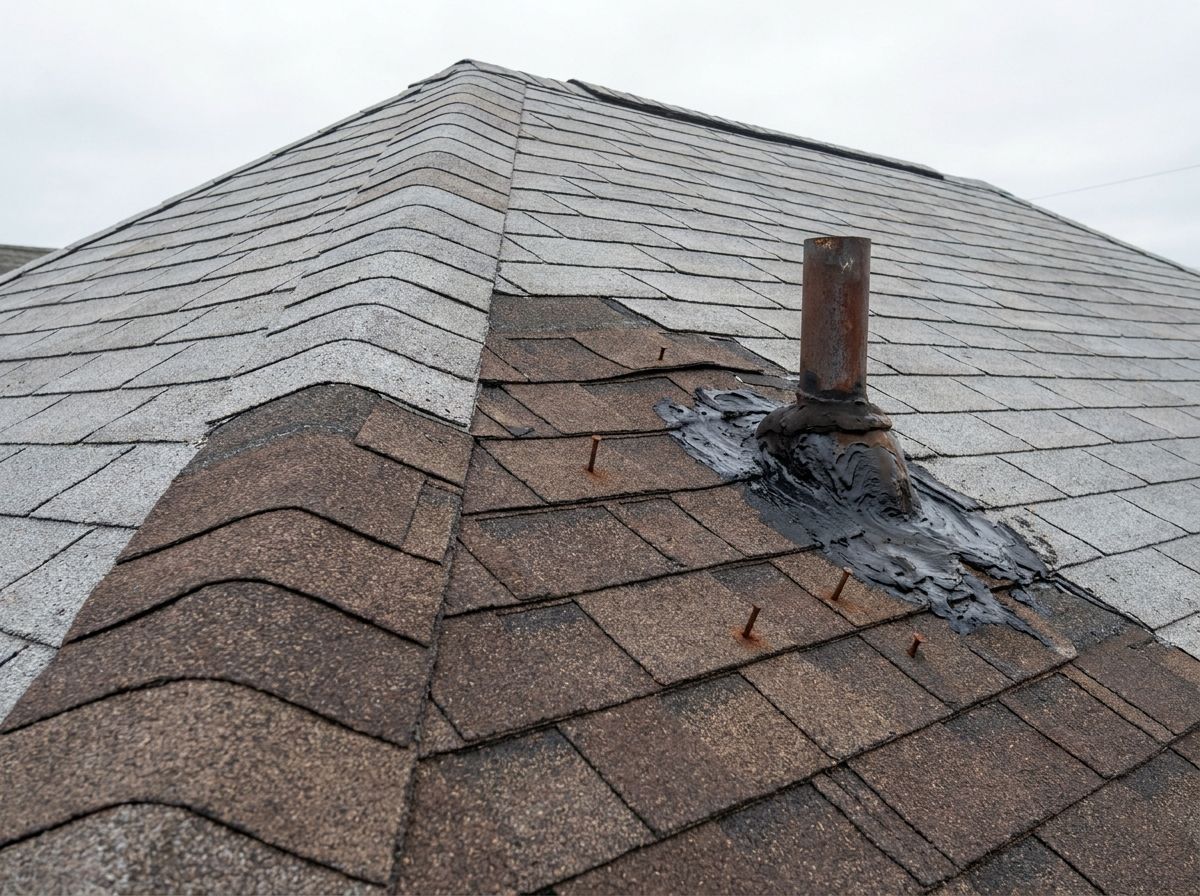
- Ask about flashing. Chimney, wall and valley flashing is where most leaks start. New flashing should be written in, not assumed.
- Compare material types fairly. A standing seam metal estimate and an asphalt shingle estimate are not competing for the same job. Decide on the material first, then compare like with like.
- Ask about color and availability. Not a quality issue, but a scheduling one if the product is back-ordered.
Step Three: The Decking Line Tells You the Most
Decking is the plywood or plank sheathing under the shingles. Nobody can see its condition until the old roof is off, which makes it the single biggest unknown in any estimate. How each contractor handles that unknown tells you a lot about how the job will go.
- A good estimate names it. It explains how damaged decking will be identified and replaced, and states how the cost is calculated.
- A vague estimate ignores it. That does not mean the decking is fine. It means the cost will appear later, on a change order, with the roof already open.
- Ask each contractor the same question. "If you find soft decking, what happens, and how will I know?" Their answers should be specific.
- Ask for photos. A contractor who replaces decking should be willing to show you what came off.
On an older home, the decking may be original plank boards, and the way it is handled matters. An estimate that addresses it plainly is not padding the job. It is telling you the truth in advance.
Step Four: Compare Warranties You Can Actually Use
Every roof carries two warranties, and estimates often blur them. The material warranty comes from the manufacturer and covers defects in the product. The workmanship warranty comes from the contractor and covers how it was installed. Many early roof problems trace back to installation rather than the product, which makes the workmanship warranty the one worth reading closely.
- Get both in writing with the duration stated for each.
- Ask what voids them. Some manufacturer warranties require registration or a certified installer.
- Ask who honors the workmanship warranty. A warranty from a company that will not be around in ten years is worth very little.
- Check whether the warranty transfers if you sell the house.
This is where local history matters. A long workmanship warranty is only as good as the company behind it, and a contractor who has worked in the same valley for decades is a different bet from one who arrived after the last storm.
Step Five: Check Credentials and Red Flags
Credentials are the part of the comparison that cannot be judged from the estimate alone. Ask for proof, and expect a legitimate contractor to send it without hesitation.
- Virginia contractor license in the company's name.
- Certificate of insurance for general liability and workers' compensation, sent directly from the insurer if you ask.
- Manufacturer certification where one is claimed, which you can usually confirm on the manufacturer's own site.
- A local address and phone number you can visit or call.
- No pressure to sign the same day , and no offer to absorb your insurance deductible.
Our guide to red flags when choosing a roofing contractor in Virginia goes deeper on the warning signs, including out-of-area storm-chaser crews.
Questions to Send Back to Each Contractor
Once your worksheet shows the gaps, send the same short list of questions to all three contractors. Asking everyone the same thing is the fastest way to turn three different documents into one fair comparison, and the way each company answers is part of the evaluation.
- "Is this a full tear-off, and how many layers are you removing?"
- "Which shingle, underlayment and ridge cap products are you installing?" Ask for the manufacturer and product line, not a category.
- "Are you replacing the flashing and pipe boots, or reusing them?"
- "How do you handle soft decking, and how will I be told before it is replaced?"
- "What does your workmanship warranty cover, for how long, and is it in writing?"
- "Who will be on the roof, and who do I call if there is a problem during the job?"
- "How long will the job take, and what happens if weather interrupts it?"
Pay attention to how quickly and how plainly the answers come back. A contractor who answers in writing, names products and explains the decking process is showing you how the job itself will be run. One who goes quiet, gets vague or responds with a price drop instead of an answer is showing you something too. The way a company handles questions before the contract usually matches the way it handles problems after it.
When Insurance Is Paying: Comparing Estimates Against the Adjuster
If your roof is being replaced after storm damage, the comparison changes. The insurance carrier issues its own estimate, and your contractor's estimate should be measured against it line by line, not against a competing bid.
- Ask each contractor to work from the adjuster's scope. Items the adjuster missed, such as flashing, drip edge or code-required underlayment, should be documented and submitted as a supplement.
- Your out-of-pocket cost is your deductible. On a covered claim, a contractor should not be competing on price below the insurance scope. If one is, ask what is being left out.
- Documentation wins claims. A contractor who photographs and records damage in the format carriers use will usually get a more complete scope approved.
And if the roof is not an insurance job and the right estimate is not the cheapest one, financing is available so you can choose the complete scope rather than the affordable gap.
Why We Welcome a Side-by-Side Comparison
We are happy to be one of your three estimates, and we would rather be compared carefully than chosen on a single number. Here is what you can verify about us.
- In business since 1984. More than 40 years, three generations of one family, two offices in Staunton and Waynesboro.
- GAF Master Elite certified. Master Elite is a manufacturer certification from GAF, and it is held by under 2% of roofing contractors. It is GAF's designation, earned from the manufacturer, not a title we gave ourselves. It requires rigorous training and proven quality, and it gives our customers access to GAF's Golden Pledge warranty.
- 25-year workmanship warranty on GAF shingle roofs (10 years on metal roofs).
- Free roof inspections.
- Financing available for homeowners who want the complete job without waiting.
Get a Third Roofing Estimate in Staunton or Augusta County
If you have two estimates and want a third, or you have three and cannot make them line up, call our Staunton office at (540) 885-6514. We offer free roof inspections, and you can use the worksheet above to compare any estimate you receive, ours included. You can also read about roof financing options if the complete scope is more than you planned for, or review our guide to filing a storm damage roof claim in Virginia if insurance is involved.
Frequently Asked Questions
How many roofing estimates should I get?
Three is a sensible number for most homeowners. It is enough to see where the scope and pricing cluster, and to spot an estimate that is missing something, without turning the process into weeks of appointments. More than three rarely adds new information if the first three are written in detail.
Why are my roofing estimates so different?
Usually because they describe different jobs. One may include a full tear-off, new flashing and ice and water shield, while another overlays existing shingles and reuses old flashing. Line each scope up item by item before comparing totals, and the gap usually explains itself.
Should I choose the cheapest roofing estimate?
Only if it describes the same complete job as the others and comes from a licensed, insured contractor with a written workmanship warranty. A low total often reflects missing items such as decking, flashing or disposal, which reappear later as change orders once the roof is already open.
What should a roofing estimate include?
A written scope covering tear-off, materials by product name, underlayment, flashing, ventilation, decking replacement terms, cleanup and disposal. It should also state material and workmanship warranties, the payment schedule, and the contractor's license and insurance details. Anything missing is worth a direct question.
How do I compare roofing estimates for an insurance claim?
Compare each contractor's scope against the adjuster's estimate rather than against each other. A good contractor documents items the adjuster missed and submits them as a supplement. On a covered claim your out-of-pocket cost is normally the deductible, so be cautious of anyone bidding below the insurance scope.
Is it rude to ask a roofer to explain their estimate?
Not at all. A reputable contractor expects questions and should be able to explain every line, including how decking is handled and what the warranty covers. If a roofer is reluctant to explain the estimate or pushes you to sign quickly, treat that as useful information.
How long should I take to decide between roofing estimates?
Long enough to line up the scopes and get answers to your questions, which is usually a few days to a week. Unless water is actively coming in, there is rarely a reason to sign the same day. A reputable contractor will hold a written estimate for a reasonable period.