Questions to Ask Before Hiring a Roofer in Waynesboro, VA
Most homeowners hire a roofer once or twice in their lives. That puts you at a natural disadvantage: the contractor across the kitchen table has had this conversation a thousand times, and you have had it once. The questions you ask are the main tool you have for closing that gap.
The short answer on what to ask: focus on licensing, insurance, warranty terms, and who is physically doing the work. Those four areas separate a contractor who will still be reachable in year eight from one who will not. Price matters, but price without those answers tells you very little.
Below are the questions worth asking, organized by what they protect you from, along with what a solid answer sounds like and what should give you pause.
Quick Answer: The 12 Questions
| # | Question | What You Are Protecting |
|---|---|---|
| 1 | Are you licensed in Virginia, and what class? | Legal standing to do the work |
| 2 | Can your insurer send me a certificate of insurance directly? | Liability if someone is hurt |
| 3 | Do you carry workers' compensation? | Your exposure for crew injuries |
| 4 | Are you manufacturer certified, and at what tier? | Warranty eligibility |
| 5 | What warranty covers workmanship, not just materials? | Installation errors |
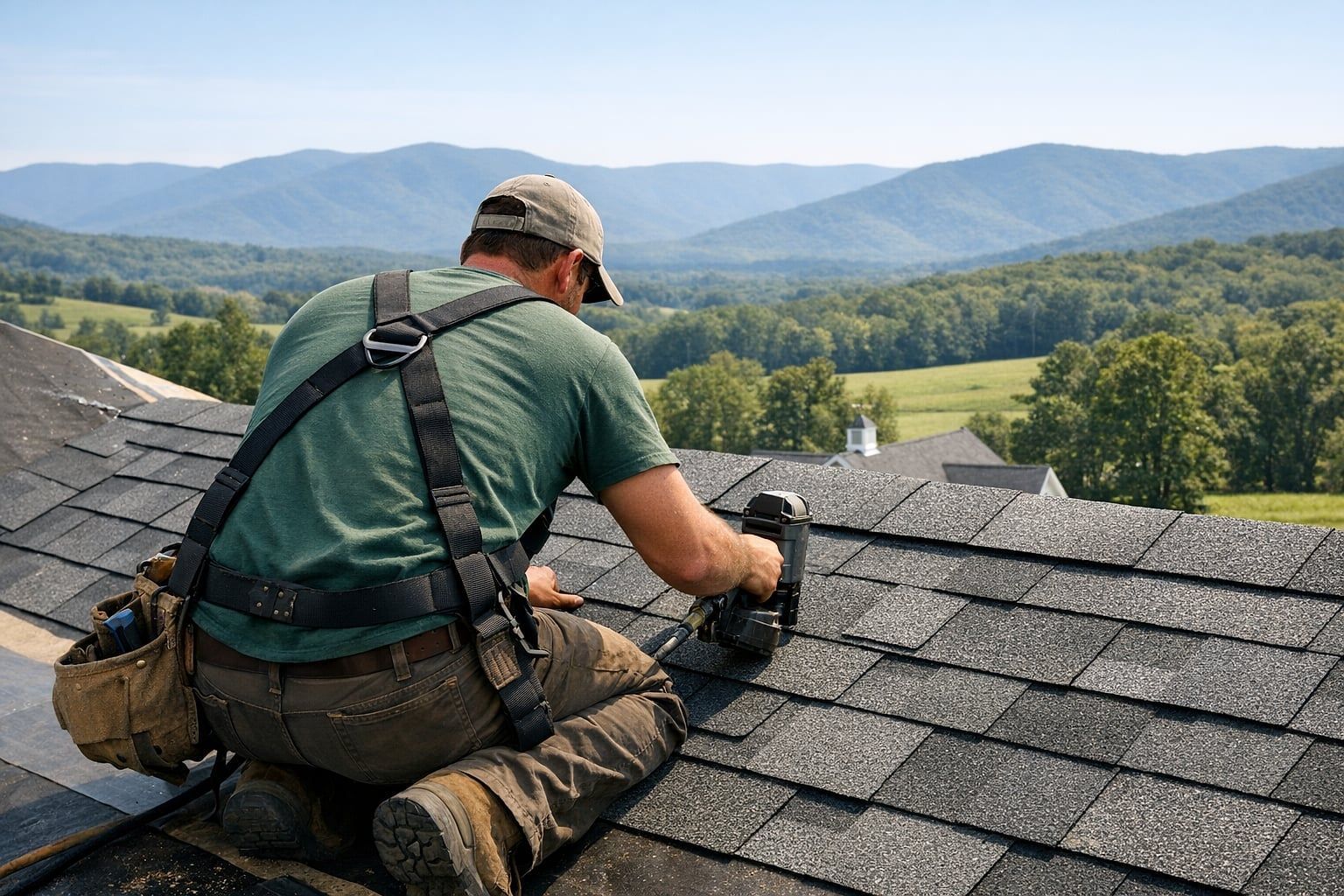
| 6 | Will your own crew do the work or a subcontractor? | Quality control and accountability |
| 7 | What happens if you find rotted decking? | Mid-project surprise costs |
| 8 | What exactly is in the estimate, line by line? | Comparing bids honestly |
| 9 | Who pulls the permit? | Code compliance and resale |
| 10 | How do you protect landscaping and handle cleanup? | Property damage |
| 11 | What is the payment schedule? | Financial risk |
| 12 | Can I see recent work in Waynesboro or Augusta County? | Actual current quality |
Questions About Credentials
"Are you licensed in Virginia, and what class of license do you hold?"
Virginia issues contractor licenses in three classes through the Department of Professional and Occupational Regulation. Class C covers the smallest projects, Class B a middle tier, and Class A the largest. A full roof replacement on a Waynesboro home generally calls for Class A or B. A good answer includes the license number without hesitation. You can verify it yourself in a few minutes on the state's public lookup.
"Can you have your insurance agent send me a certificate of insurance directly?"
The word "directly" is doing the work in this question. A PDF forwarded by the contractor proves a policy existed when the file was created. A certificate sent by the insurance agency proves the policy is active right now. Any legitimate contractor will arrange this without friction.
"Do you carry workers' compensation for everyone who will be on my roof?"
This one matters more than homeowners realize. If an uninsured worker is injured on your property, you can end up as the party with the deepest pockets. Ask specifically whether coverage extends to subcontracted crews, not just direct employees.
"Are you certified by the manufacturer whose shingles you are installing, and at what tier?"
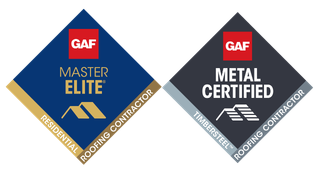
Manufacturer certification is the credential a contractor cannot simply claim. GAF, for instance, reserves its Master Elite tier for a small fraction of contractors nationwide and requires ongoing proof of licensing, insurance, and reputation. Certification also determines which warranties can be offered on your roof. You can verify it on the manufacturer's own contractor locator.
Questions About the Warranty
"What warranty covers workmanship, and how long does it run?"
There are two separate warranties on any roof and homeowners routinely conflate them. The manufacturer warranty covers defects in the shingles themselves. The workmanship warranty covers installation. The overwhelming majority of roof problems come from installation, not from defective shingles, which makes the workmanship warranty the one that actually protects you.
Ask for the length in writing and ask what it excludes. A one-year workmanship warranty is thin. Longer coverage from an established local company is meaningfully better, because the warranty is only worth as much as the company backing it. A twenty-five year promise from a contractor who has been in business two years is not a promise.
"Does my roof qualify for an enhanced manufacturer warranty, and what would that require?"
Certified contractors can often register systems for extended coverage, but eligibility usually requires installing a complete system from that manufacturer: underlayment, starter strip, shingles, ridge cap, and ventilation. Mixing components can void the enhanced coverage. Ask whether the estimate reflects a full system.
Questions About the Work Itself
"Will your own crew do the work, or will it be subcontracted?"
Neither answer is automatically wrong. Plenty of good companies use trusted subcontracted crews. What matters is transparency and accountability. If the answer is subcontractors, follow up: how long have you worked with this crew, are they covered by your insurance, and who supervises the job on site?
"What happens if you find rotted decking after the tear-off?"
This is the single most common source of unexpected cost, because nobody can see the decking until the old roof comes off. A good contractor gives you a per-sheet price in the contract before work begins. A vague answer means you will be negotiating from a weak position, with your roof open, on a Tuesday afternoon.
"Can you walk me through the estimate line by line?"
A single lump sum makes comparison impossible. A proper estimate itemizes tear-off, disposal, underlayment, ice and water shield, drip edge, starter strip, shingles, flashing, ridge vent, and cleanup. When you have three bids, the line items are what let you see whether one contractor is cheaper or simply doing less.
"Who pulls the permit?"
The contractor should. A contractor who suggests skipping the permit is proposing that you carry the risk, and unpermitted work can surface later during a home sale or an insurance claim.
"How do you protect the property, and what does cleanup include?"
Tear-off is messy. Ask about tarping landscaping, protecting siding and windows, and how nails are collected. Magnetic sweeps of the yard and driveway should be standard. If you have children, pets, or a garden you care about, raise it now rather than after.
Questions About Money
"What is the payment schedule?"
A modest deposit followed by payment on completion is normal. A demand for half the project value before materials arrive is not. Payments should be made to the business, not to an individual, and never in cash only.
"Do you offer financing?"
Worth asking even if you plan to pay outright. A roof replacement is a large expense and knowing whether the option exists gives you flexibility, particularly on a larger project. We offer financing options for qualified homeowners.
When Insurance Is Involved
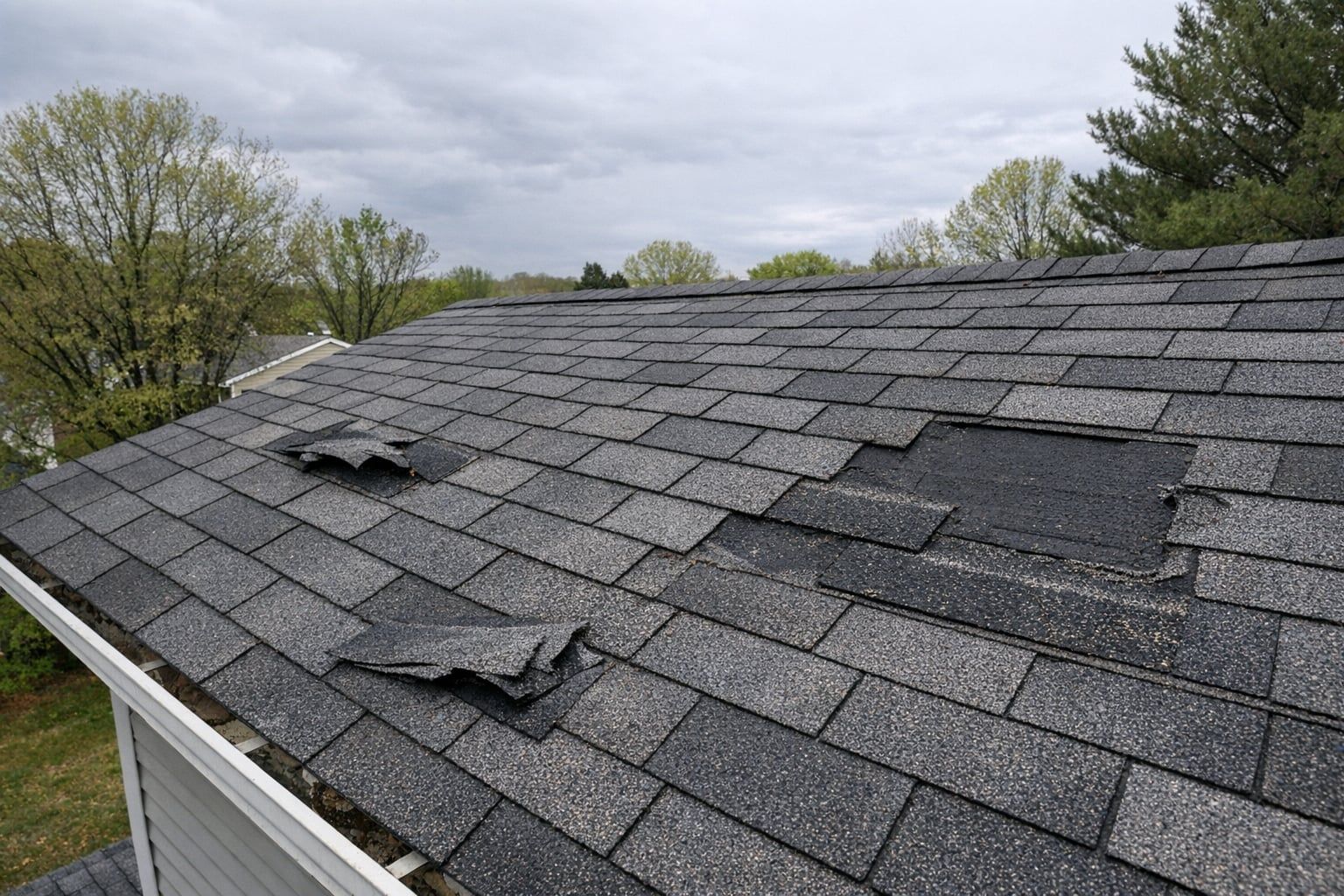
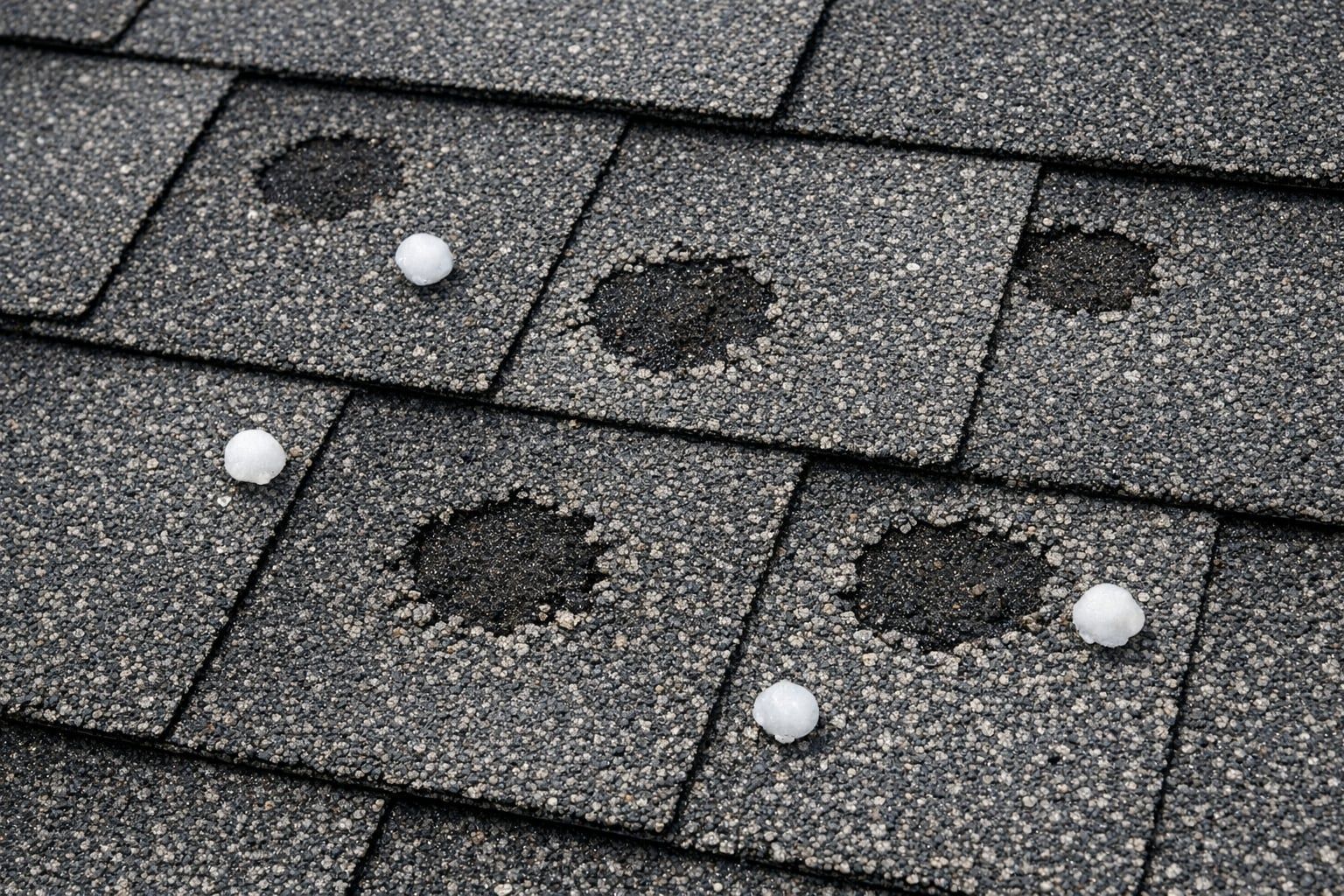
If your roof was damaged by a storm rather than by age, a few additional questions apply.
- "Will you meet my insurance adjuster on site?" This is normal, expected, and genuinely useful. An adjuster moving through many claims after a Valley storm can miss items a contractor would catch.
- "Have you handled Virginia claims before?" Familiarity with how scopes of loss are written and supplemented saves real time.
- "What do you charge if the claim is denied?" Understand this before signing anything.
One answer should end the conversation immediately: any offer to cover, waive, or absorb your insurance deductible. In Virginia that generally constitutes insurance fraud, and it puts you at risk alongside the contractor. It is not a discount and it is not a favor.
We provide free roof inspections across Waynesboro and Augusta County to help homeowners understand whether storm damage is likely to exceed their deductible before they file.
How to Compare the Answers You Get
Asking twelve questions of three contractors produces a lot of answers, and they are only useful if you can line them up. The simplest method is to write the questions down before the first appointment, ask each Waynesboro contractor the same ones in the same order, and note the answers on the same sheet.
- Specific beats general. A license number, a named shingle line and a per-sheet decking price are answers. "We are fully covered" and "top quality materials" are not.
- Written beats spoken. Anything that matters to you, from the warranty term to the cleanup plan, should appear in the estimate or the contract.
- Verifiable beats impressive. A license you can look up and a certification you can find on the manufacturer's own locator outweigh any claim you cannot check.
- Consistency matters. If the answer about subcontractors or deposits changes between the first visit and the contract, ask why.
When the answers are close, price and comfort can reasonably decide it. When they are not, the cheapest bid is often the one leaving something out. Our comparison of roofing companies near Waynesboro sets out how to weigh credentials side by side, and our guide to red flags when choosing a roofing contractor covers the answers that should end the conversation.
Why Waynesboro Homeowners Choose Baber Enterprises
With three generations of roofing experience in the Shenandoah Valley, we have been answering these questions for more than 40 years. Our crews live in the same communities they work in, which is its own form of accountability.
As a GAF Master Elite contractor, a certification held by less than two percent of roofing companies in the country, we can offer enhanced manufacturer warranties that most contractors are not authorized to provide. GAF requires ongoing proof of licensing, insurance, and installation quality to maintain that status.
- Three generations of roofing experience in the Shenandoah Valley
- GAF Master Elite certification, held by less than 2% of contractors nationwide
- Licensed and insured in Virginia
- Written workmanship warranty alongside manufacturer-backed coverage
- Itemized estimates, free and good for 30 days
- Financing options for qualified homeowners
- Honest, no-pressure inspections, including telling you when your roof can wait
We serve homeowners throughout Waynesboro, Staunton, Fishersville, Stuarts Draft, Verona, Augusta County, and the surrounding Shenandoah Valley.
Schedule Your Free Roof Inspection in Waynesboro, VA
The best way to evaluate a roofing contractor is to watch how they answer questions when there is no pressure to buy. We provide free, no-pressure roof inspections for homeowners across Waynesboro, Staunton, Fishersville, and the surrounding Valley.
We will assess the actual condition of your roof, answer every question on this list and any others you have, and give you a written, itemized estimate you can compare against anyone else's. If replacement is the right call, we will explain the costs plainly and discuss financing if spreading the investment over time would help.
Call our Waynesboro office at (540) 712-3512 to talk with someone local, or request your free inspection online.
Frequently Asked Questions
What questions should I ask a roofing contractor before hiring them?
Start with licensing class, proof of insurance sent directly by the insurer, workers' compensation coverage, and manufacturer certification tier. Then ask about the workmanship warranty, who physically does the work, how rotted decking is priced, and what the payment schedule looks like.
How do I verify a roofer's license in Virginia?
Virginia's Department of Professional and Occupational Regulation maintains a free public license lookup. Search the company name to confirm the license class, current status, and expiration date. It takes a few minutes and it is the simplest credential check available to a homeowner.
What is the difference between a material warranty and a workmanship warranty?
A material warranty comes from the shingle manufacturer and covers product defects. A workmanship warranty comes from the contractor and covers installation errors. Since most roof failures trace to installation rather than defective materials, the workmanship warranty is the one that matters most.
Should I be worried if a roofer uses subcontractors?
Not necessarily. Many reputable companies use experienced subcontracted crews. What matters is whether the contractor is upfront about it, whether those crews are covered by the company's insurance, and who supervises the job on site each day.
How much deposit is normal for a roof replacement?
A modest deposit to secure materials and scheduling is standard practice. A request for half the project value before any materials arrive is a warning sign. Payments should always be made to the business rather than to an individual.
What should a roofing estimate include?
Tear-off and disposal priced by layer, underlayment, ice and water shield, drip edge, starter strip, shingles, flashing, ventilation, cleanup, and a stated per-sheet price for any decking that needs replacing. A single lump sum with no breakdown makes honest comparison impossible.
Do I need a permit to replace a roof in Waynesboro?
Most full roof replacements in Virginia require a permit, and the contractor should pull it. A contractor who suggests skipping the permit is shifting risk onto you, and unpermitted work can create problems during a future home sale or insurance claim.