How to Tell If Your Roof Has Storm Damage (Without Climbing Up)
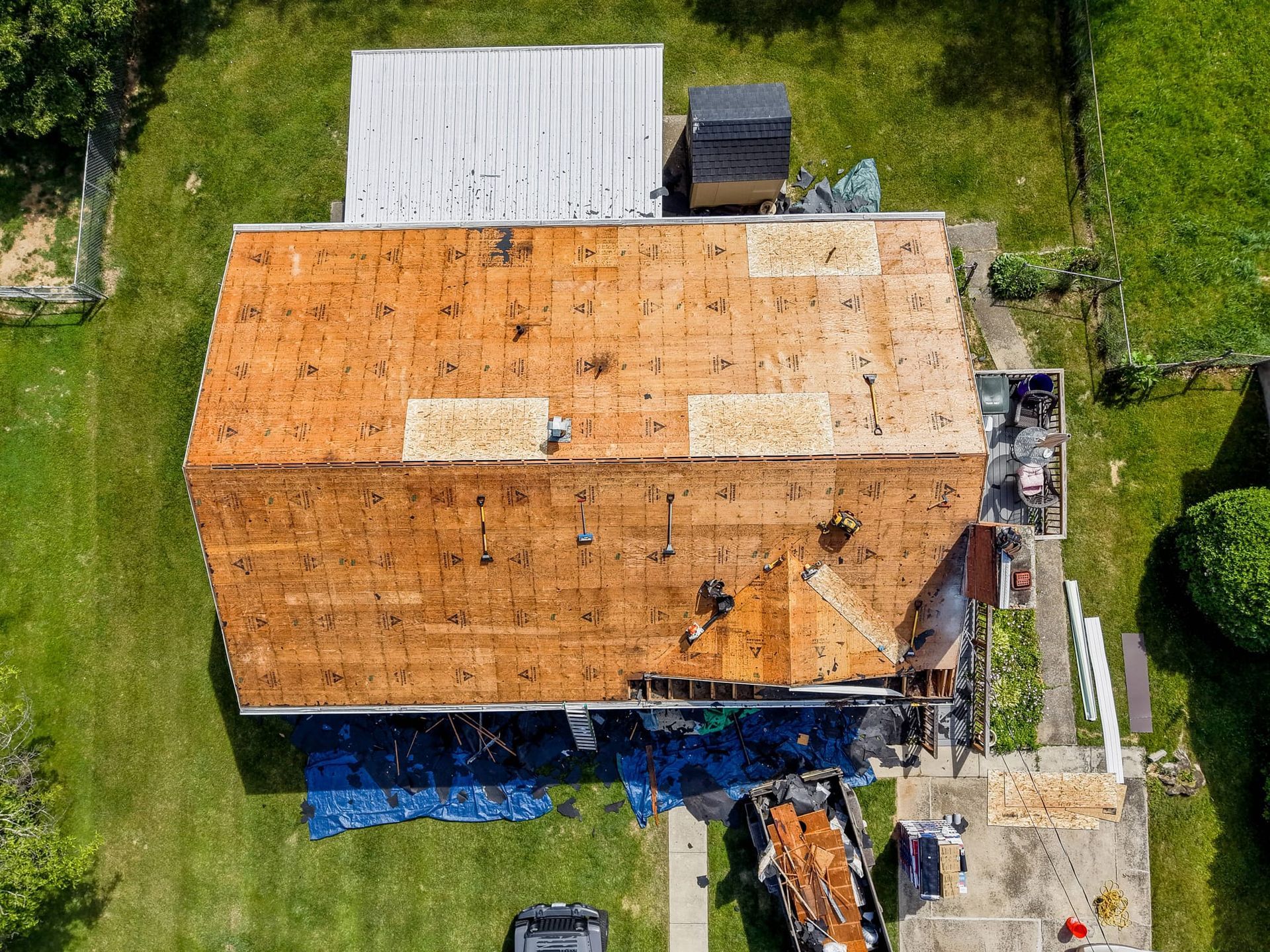
You can spot most roof storm damage without ever leaving the ground. Walk the property after the storm and look for missing or lifted shingles, granules piling up at the downspouts, dents in gutters and vents, debris on the roof, and new water stains in the attic or on ceilings. If you see any of these, have the roof inspected before you call your insurance carrier.
The reason to stay on the ground is simple. A roof after a storm is wet, sometimes damaged in ways that are not obvious, and often covered in debris. Climbing it puts you at risk and can damage shingles that were fine. And the most important evidence, the kind an adjuster relies on, is often visible from the yard, the driveway or the attic.
This guide is for homeowners in Staunton, Waynesboro, Harrisonburg and across Augusta County who have just been through a wind storm or hail and want to know whether the roof took a hit. We have been in business since 1984, and this is the same walk-around we would suggest to a neighbor.
Storm Damage Quick Answer: What to Look For From the Ground
| Sign | Where to look | What it may mean |
|---|---|---|
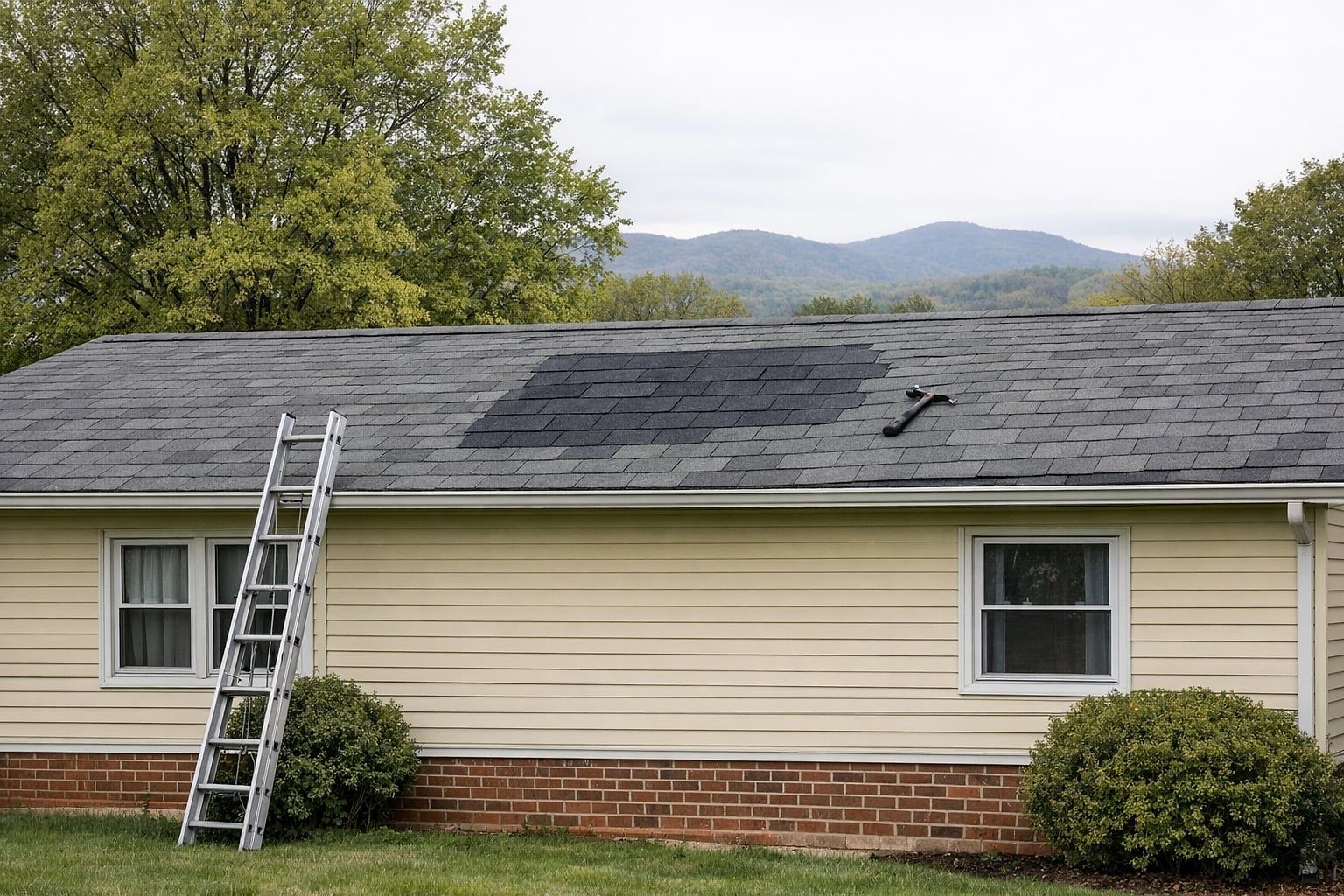
| Missing shingles or bare patches | Roof slopes, yard, flower beds | Wind lifted and tore shingles off |
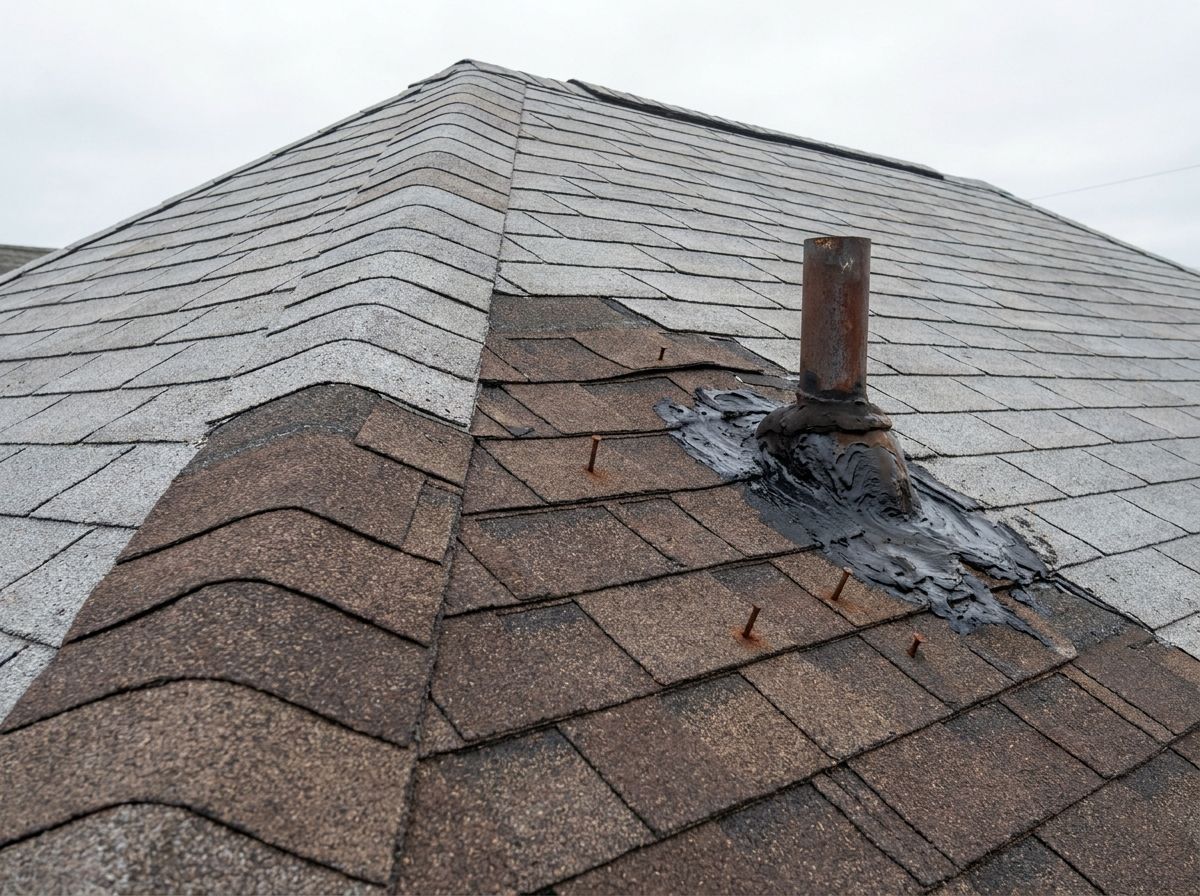
| Lifted or creased shingle tabs | Edges and ridges, with phone zoom | Wind broke the seal strip |
| Granules piled at downspouts | Splash blocks and gutter outlets | Hail or wind scoured the surface |
| Dents in gutters, vents, downspouts | Metal at the roofline and on the ground | Hail strong enough to bruise shingles |
| Limbs or debris on the roof | Roof surface and valleys | Possible punctures or cracked decking |
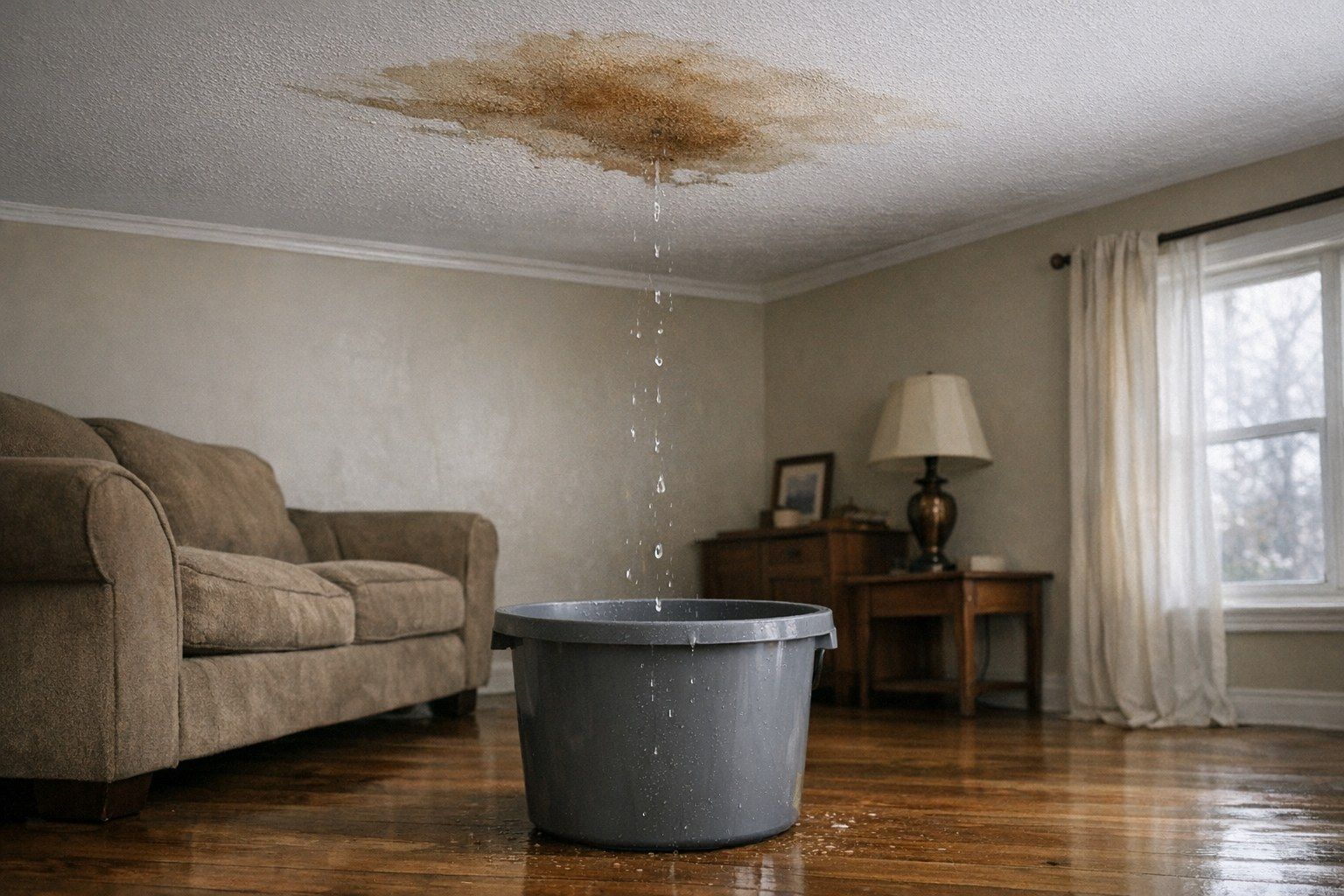
| New stains or drips inside | Attic sheathing, ceilings, walls | Water is already getting in |
What Valley Storms Do to a Roof
The Shenandoah Valley gets its storms in a recognizable pattern, and knowing which kind just passed through tells you what to look for first.
- Summer thunderstorms bring short bursts of strong wind and, on some afternoons, hail. Look for lifted shingles on the side that faced the storm and dents on soft metals.
- Straight-line wind events can drop limbs from mature trees. Check for debris and any limb that may have struck the roof.
- Remnants of tropical systems in late summer and fall bring long periods of wind-driven rain, which find any weak flashing or lifted shingle.
- Winter storms bring heavy snow and ice dams at the eaves. Look for icicles along the gutter line and new stains on exterior walls or ceilings near the eaves.
Knowing the storm type also helps when you talk to an inspector or an adjuster, because it explains the pattern of damage on the roof.
Start in the Yard: The Ground Tells You a Lot
Before you look up, look down. The first evidence of wind damage often ends up on the lawn, and it is easy to miss if you wait for the grass to be mowed or the leaves to be raked.
- Shingle pieces. Whole shingles or torn strips in the yard, flower beds or the street are a clear sign the roof lost material.
- Ridge cap fragments. The shingles along the peak of the roof take the most wind, and pieces of them on the ground point to the ridge.
- Metal debris. Bent drip edge, vent covers or flashing pieces mean wind got under the edge of the roof.
- Granules. Look at the splash blocks under downspouts. A fresh pile of dark, sand-like granules after a storm suggests the shingle surface was scoured.
- Fallen limbs. Any large limb near the house is worth tracing back to see whether it hit the roof on the way down.
Take photos of anything you find before you clean it up, with the date visible. Those photos can matter later if you file a claim, and they help your roofer know where to focus.
Look Up: What You Can See With a Phone Zoom
From the driveway, the sidewalk or across the street, a modern phone camera can show surprisingly fine detail on a roof. Walk all four sides of the house, and look at each slope in good daylight, ideally with the sun at an angle that shows texture.
- Missing shingles. Look for darker rectangles where the underlayment or an older layer is exposed.
- Lifted or creased tabs. A shingle that has been lifted by wind often shows a horizontal crease or sits slightly raised compared with its neighbors.
- Shiny or dark spots. Hail can knock granules off in small round patches, which show as dark spots on lighter shingles.
- Damaged ridge. Gaps or uneven pieces along the peak.
- Displaced flashing. Metal around the chimney or along walls that is bent, lifted or pulled away.
- Debris in valleys. Branches and leaves packed where two slopes meet can trap water and hide damage.
If you see something that looks wrong but cannot tell what it is, zoom in, take the photo, and leave the diagnosis to an inspection. The goal is not to judge the damage yourself. It is to know whether a professional needs to look.
Check the Gutters, Vents and Soft Metals
Hail damage on shingles can be hard to see from the ground, but hail leaves clearer marks on softer surfaces around the house. Adjusters look at these too, because they are a reliable record of the size and direction of the hail.
- Gutters and downspouts. Small round dents along the top edge of aluminum gutters or the face of downspouts.
- Roof vents and pipe caps. Box vents and turbine vents dent easily. Check them from the ground with zoom.
- Window screens and siding. Torn screens and marks on vinyl siding on the side of the house that faced the storm.
- Outdoor equipment. Dents on the air conditioning unit fins, the grill or a car parked outside during the storm.
- Deck and fence paint. Fresh spatter marks or chips on painted wood surfaces.
If the soft metals show clear dents, the shingles were very likely hit as well, even if the roof looks normal from the ground. Our hail damage roof repair guide for Augusta County goes deeper on what hail does to asphalt shingles.
Go Inside: The Attic and Ceilings
Some storm damage shows up indoors before it is visible outside. A careful look at the attic and top-floor ceilings in the day or two after a storm can catch a problem before it spreads.
- Daylight through the decking. In a dark attic, pinpoints or lines of light can mean punctures or displaced boards.
- Wet or stained sheathing. Dark, damp patches on the underside of the roof deck, especially around chimneys, vents and valleys.
- Damp insulation. Compressed or wet insulation below a leak.
- New ceiling stains. Yellow or brown rings, or bubbling paint, on upper-floor ceilings.
- Musty smells. A new damp odor after the storm is worth tracking down.
Only enter an attic that has a floor or safe walking boards and good light. Step only on framing or flooring, never on the insulation between joists.
Wind Damage, Hail Damage or Just Age?
Not every worn-looking roof has storm damage, and that distinction matters because insurance treats them very differently. Shingles in the Shenandoah Valley age through summer heat, winter freeze and thaw, and years of ultraviolet exposure. Age shows up gradually and evenly. Storm damage is sudden and often directional.
- Wind damage tends to show on the windward side and along edges and ridges, with missing or creased shingles.
- Hail damage shows as scattered bruises and granule loss, with matching dents on soft metals.
- Normal wear shows as even granule loss, curling or cracking across the whole roof, often on the slope that gets the most sun.
Our article on wind damage versus normal wear and what insurance covers explains how adjusters draw that line.
Before You Call Your Insurance Carrier
If the walk-around turns up signs of damage, the order of the next steps matters. Calling the carrier first, before anyone has confirmed what happened to the roof, can lead to a claim that comes in under the deductible or a damage report that misses what an adjuster needs to see.
- Photograph everything you found, inside and out, with dates.
- Get a roof inspection so the damage is confirmed and documented by someone who can safely get on the roof.
- Compare the likely repair to your deductible before you file.
- Prevent further damage. Carriers generally expect reasonable steps, such as a tarp over an opening.
- Be cautious with door-knockers. After a big storm, out-of-area crews sometimes canvass neighborhoods. Check for a local address and license before signing anything.
We offer free roof inspections, and you can read more about our storm damage roofing service. If the damage turns out to be age rather than the storm, financing is available so a needed repair or replacement can go ahead anyway.
Why Valley Homeowners Call Baber Enterprises After a Storm
We are a third-generation family roofing company with offices in Staunton and Waynesboro, serving Augusta County, Fishersville, Stuarts Draft, Verona, and north to Harrisonburg, Bridgewater, Broadway and Dayton.
- In business since 1984. Over 40 years, three generations of one family.
- GAF Master Elite certified. Master Elite is a manufacturer certification from GAF, and it is held by under 2% of roofing contractors. It is GAF's designation, earned from the manufacturer, not a title we gave ourselves. It requires rigorous training and proven quality, and it gives our customers access to GAF's Golden Pledge warranty.
- 25-year workmanship warranty on GAF shingle roofs (10 years on metal roofs).
- Free roof inspections, including after storms.
- Financing available when the damage is not covered or the budget needs time.
Schedule a Storm Damage Roof Inspection in Staunton
If your walk-around turned up anything that worries you, call our Staunton office at (540) 885-6514. We offer free roof inspections, so you do not have to climb up to find out what the storm did.
Frequently Asked Questions
How can I tell if my roof has storm damage from the ground?
Walk around the house after the storm and look for shingle pieces in the yard, missing or lifted shingles, granules piled at downspouts, and dents in gutters, vents and downspouts. Use a phone zoom on each roof slope. Then check the attic and upper ceilings for new stains or damp spots.
What does hail damage look like on a shingle roof?
Hail leaves scattered dark spots where granules have been knocked off, sometimes with a soft bruise underneath. It is often easier to confirm by checking soft metals such as gutters, downspouts and roof vents for small round dents. If the metals are dented, the shingles were very likely hit too.
Should I climb on my roof to check for storm damage?
No. A roof after a storm can be wet, slippery and structurally damaged, and walking on it can crack shingles that were fine. Most useful evidence is visible from the ground or the attic. Leave the roof itself to an inspector with proper fall protection.
How soon after a storm should I get my roof inspected?
As soon as you notice signs of damage, and within days rather than weeks. Prompt inspection limits water damage and makes documentation easier. Insurance policies also generally set time limits for reporting damage, so check your policy and keep a record of the storm date.
Will my insurance cover storm damage to my roof?
Homeowners policies in Virginia generally cover sudden damage from wind and hail, and generally exclude wear and aging. Coverage depends on your policy and deductible. Get the roof inspected and the damage documented before filing so you know whether the claim is likely to exceed your deductible.
Can storm damage be hidden even if the roof looks fine?
Yes. Wind can break the seal strip under shingles without removing them, and hail can bruise shingles without visible holes. Both shorten roof life and can lead to leaks later. Dented gutters or vents, granules at downspouts, or new attic stains are reasons to get an inspection even when the roof looks normal.
Do I need to be home for a storm damage roof inspection?
It helps but is not always required. Being there lets you point out where you found debris, stains or dents, and lets the inspector walk you through photos afterward. If you would like to go over the findings in person, it is worth arranging a time when you can be present.