Hail Damage Roof Repair: Augusta County Homeowner's Guide
Hail moves through the Shenandoah Valley most often between spring and late summer, and it does something frustrating to a roof: it causes real, warranty-shortening damage that is almost invisible from the ground. A homeowner in Fishersville or Stuarts Draft can walk the yard after a storm, see nothing but a few dented gutters, and assume the roof came through fine.
Here is the honest answer on hail damage roof repair in Augusta County: most hail-damaged asphalt roofs need replacement rather than spot repair, because hail damage is distributed across the whole roof plane rather than concentrated in one area. Repair makes sense when the impacts are confined to one slope or when the roof is relatively new. Replacement makes sense when granule loss is widespread, and that is the more common finding.
This guide covers how to identify hail damage, what your insurance is likely to cover, how the claim process actually runs in Virginia, and how to decide between repairing and replacing.
Quick Answer: Hail Damage at a Glance
| Question | Short Answer |
|---|---|
| What size hail damages a roof? | Roughly one inch and up for asphalt shingles; smaller stones can damage older or brittle roofs |
| Can I see it from the ground? | Usually not. Check gutters, downspouts, siding, and AC fins for the tell-tale dents first |
| Repair or replace? | Widespread granule loss means replacement; damage on one slope may allow repair |
| Will insurance cover it? | Often yes, since hail is a sudden covered event, unlike ordinary wear |
| How long do I have to file? | Virginia policies commonly expect prompt notice; do not wait months |
| What does an inspection cost? | We provide free roof inspections across Augusta County |
How to Tell If Hail Damaged Your Roof
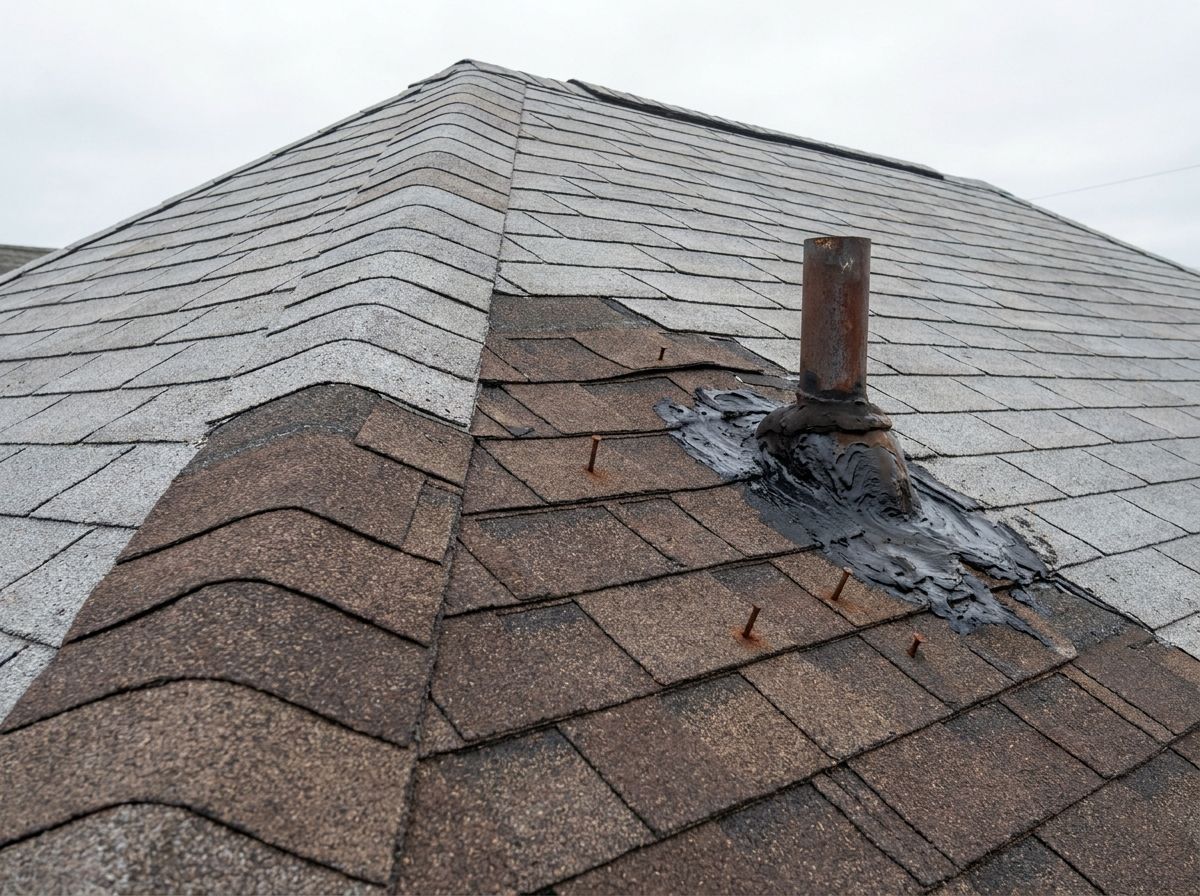
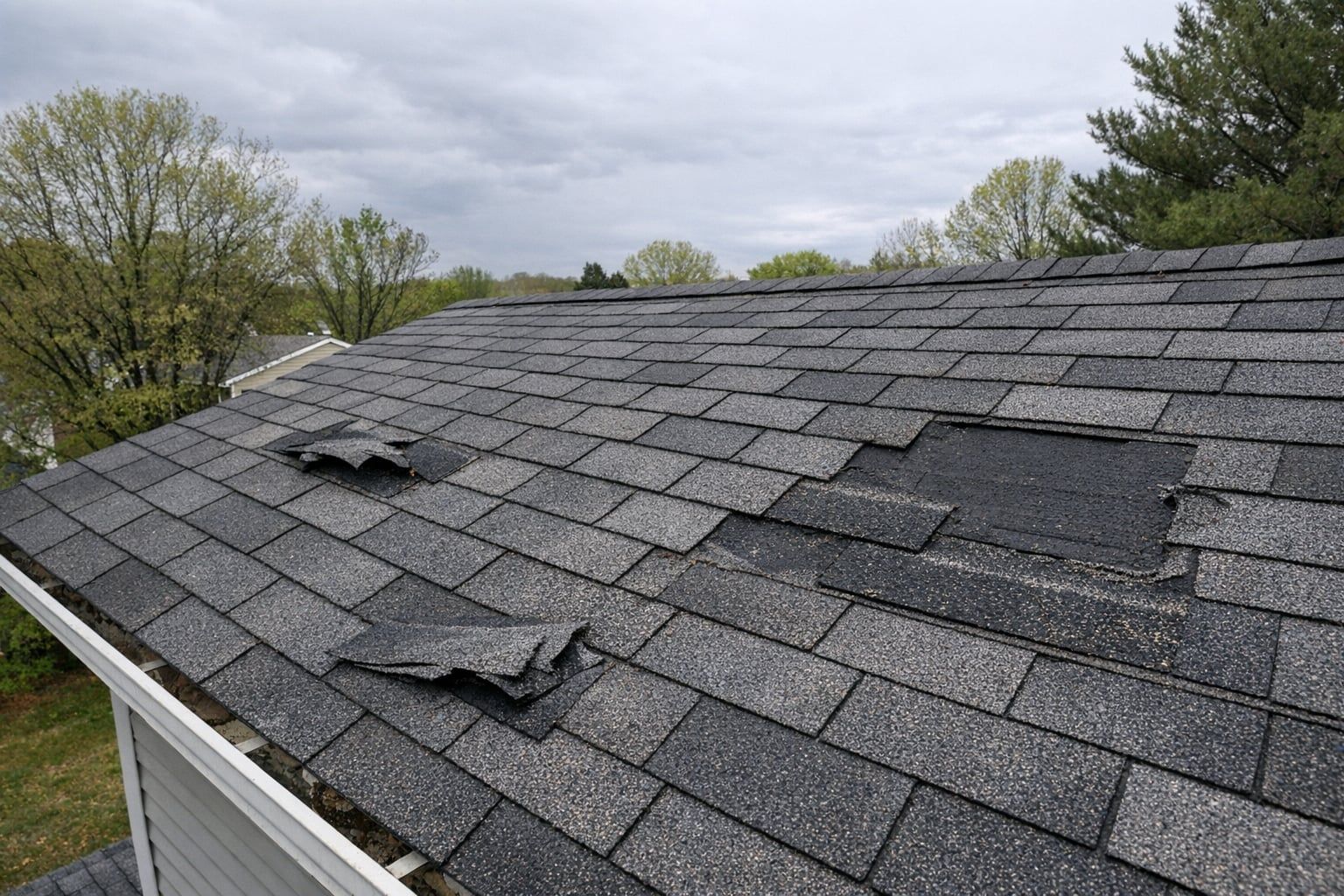
Hail damage on an asphalt shingle looks different from wind damage or age. Wind lifts and tears; age curls and cracks. Hail leaves bruises.
A hail impact knocks the protective granules off the shingle surface and can fracture the fiberglass mat underneath. The result is a soft, dark spot roughly circular, often about the size of a coin. Pressed with a thumb, a fresh hail bruise feels slightly springy, like a bruise on fruit. That mat fracture is the real problem. It exposes the asphalt to ultraviolet light, and from that point the shingle ages far faster than it should.
Before anyone climbs on the roof, check the things you can safely reach:
- Gutters and downspouts. Aluminum dents easily and records the storm honestly. Dimples here mean the roof was hit too.
- The air conditioning unit. Bent or flattened fins on the condenser are one of the clearest hail indicators on a property.
- Mailbox, grill, and metal patio furniture. Soft metal surfaces show impact well.
- Siding and window wraps. Look closely at the sides of the house that faced the storm.
- Granules in the gutter or at the downspout outlet. Some granule loss is normal on an aging roof. A sudden pile after a storm is not.
If several of those show impacts, the roof almost certainly took damage as well, even if it looks fine from the driveway. That is the point at which a professional inspection is worth scheduling.
Why Hail Damage Is So Easy to Miss
Two things make hail uniquely deceptive compared to other storm damage.
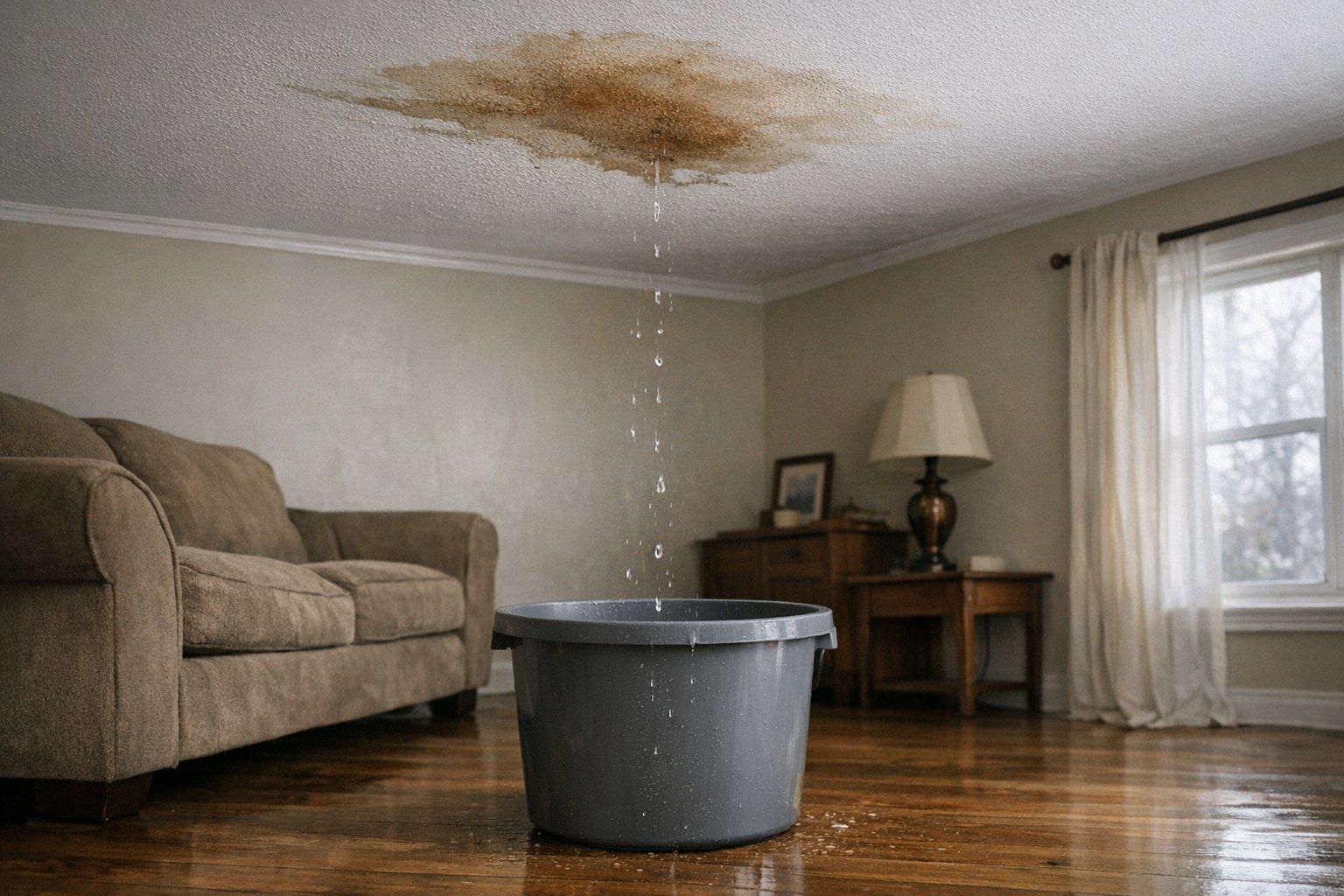
First, it rarely causes an immediate leak. Wind damage tears shingles off and water gets in that week. Hail fractures the mat but leaves the shingle in place, so the roof keeps shedding water for a while. The failure comes later, often two or three years on, when the compromised areas finally give way. By then the storm date is long past and the claim window has usually closed.
Second, the damage is scattered rather than concentrated. A hailstorm hits the entire roof plane, so there is no single obvious spot that draws the eye. An inspector evaluates it by marking off a test square, typically ten feet by ten feet, and counting impacts inside it. Insurance adjusters use the same method, which is why an inspection report from a contractor who documents test squares carries more weight than one that simply says "hail damage present."
The practical takeaway for Augusta County homeowners: if a significant hailstorm passes over Staunton, Waynesboro, or Verona, get the roof looked at within a few weeks even if nothing appears wrong. An inspection that finds nothing costs you nothing and starts a paper trail.
What Insurance Typically Covers
Hail is a covered peril under most standard homeowners policies in Virginia, and this is where hail differs meaningfully from a worn-out roof. Insurers pay for sudden, accidental damage from a specific event. They do not pay for shingles that simply reached the end of their service life. Hail falls squarely in the first category.
What matters is how your policy pays out:
- Replacement cost value (RCV). Pays what it costs to replace the roof today, usually in two payments: an initial amount, then the remaining depreciation once work is complete. This is the better coverage.
- Actual cash value (ACV). Pays replacement cost minus depreciation for the roof's age. On a fifteen-year-old roof this can be a substantially smaller check.
- Wind and hail deductible. Many Virginia policies carry a separate, higher deductible for wind and hail, often a percentage of the dwelling coverage rather than a flat dollar amount. Check this before filing.
- Cosmetic damage exclusions. Some policies exclude damage that is purely cosmetic. This matters more for metal roofs than asphalt, where hail damage is functional.
Read your declarations page before you call. Knowing your wind and hail deductible tells you immediately whether a claim is worth filing, and a professional inspection tells you roughly what the scope would be.
The Claim Process, Step by Step
The order of operations matters more than most homeowners expect. Doing this in the right sequence protects the claim.
- Document the date. Note when the storm hit. Weather records for Augusta County can corroborate it later.
- Take ground-level photos. Gutters, siding, AC unit, and any debris. Do not climb on a wet or damaged roof.
- Get a professional inspection first. Before filing. This tells you whether damage exceeds your deductible, so you are not opening a claim that goes nowhere.
- File with your insurer. Provide the storm date and your documentation.
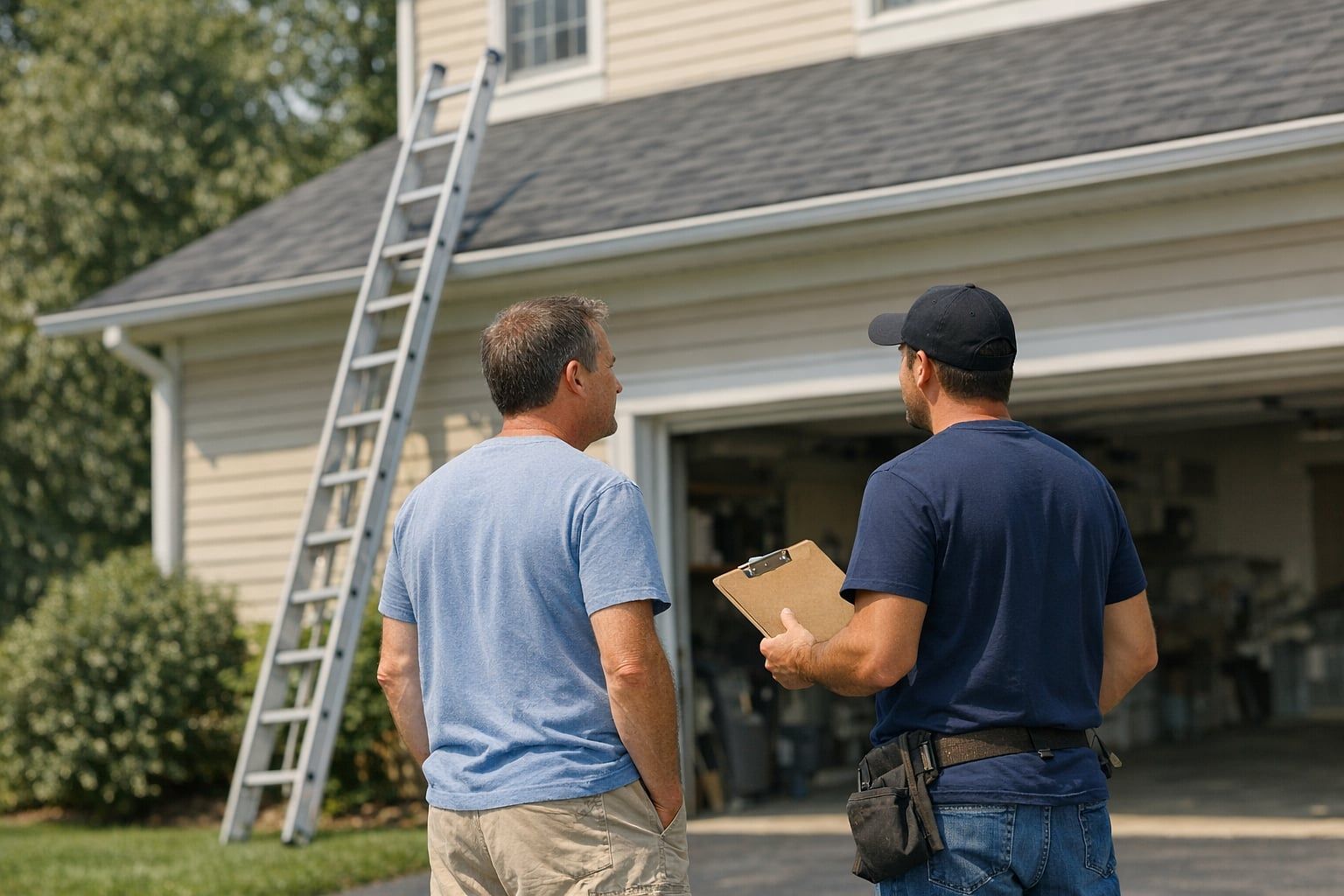
- Meet the adjuster on site, with your contractor present. This is the single most useful step. An adjuster covering a wide territory after a regional storm may spend limited time on each roof. A contractor who can walk the roof alongside them and point out marked test squares makes the assessment more complete.
- Review the scope of loss carefully. The insurer's estimate should include everything: shingles, underlayment, flashing, drip edge, ridge vent, and disposal. Items get missed, and they can be supplemented.
- Schedule the work and submit final documentation so any withheld depreciation is released.
A note on honesty here. A contractor can legitimately meet your adjuster, document damage, and request a supplement for missed items. A contractor cannot guarantee a claim outcome, and one who offers to cover your deductible is proposing something that Virginia treats as insurance fraud. That offer is a reason to end the conversation, not a discount.
Repair or Replace? How to Decide
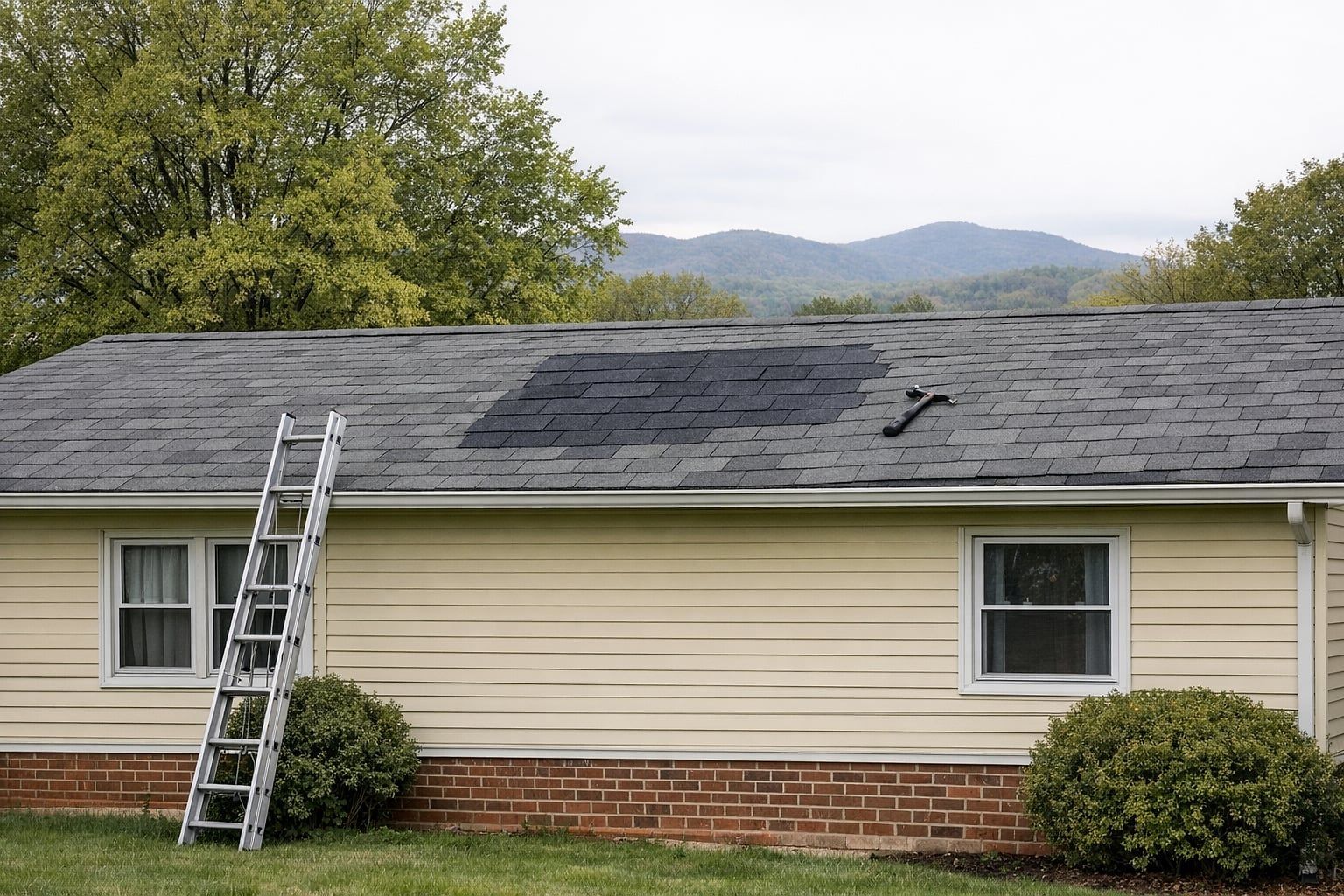
Not every hail-damaged roof needs to come off. The decision comes down to how much of the roof is affected and how much life it had left.
Repair is reasonable when:
- Damage is confined to one slope, often the side that faced the storm
- The roof is relatively young, with most of its service life ahead
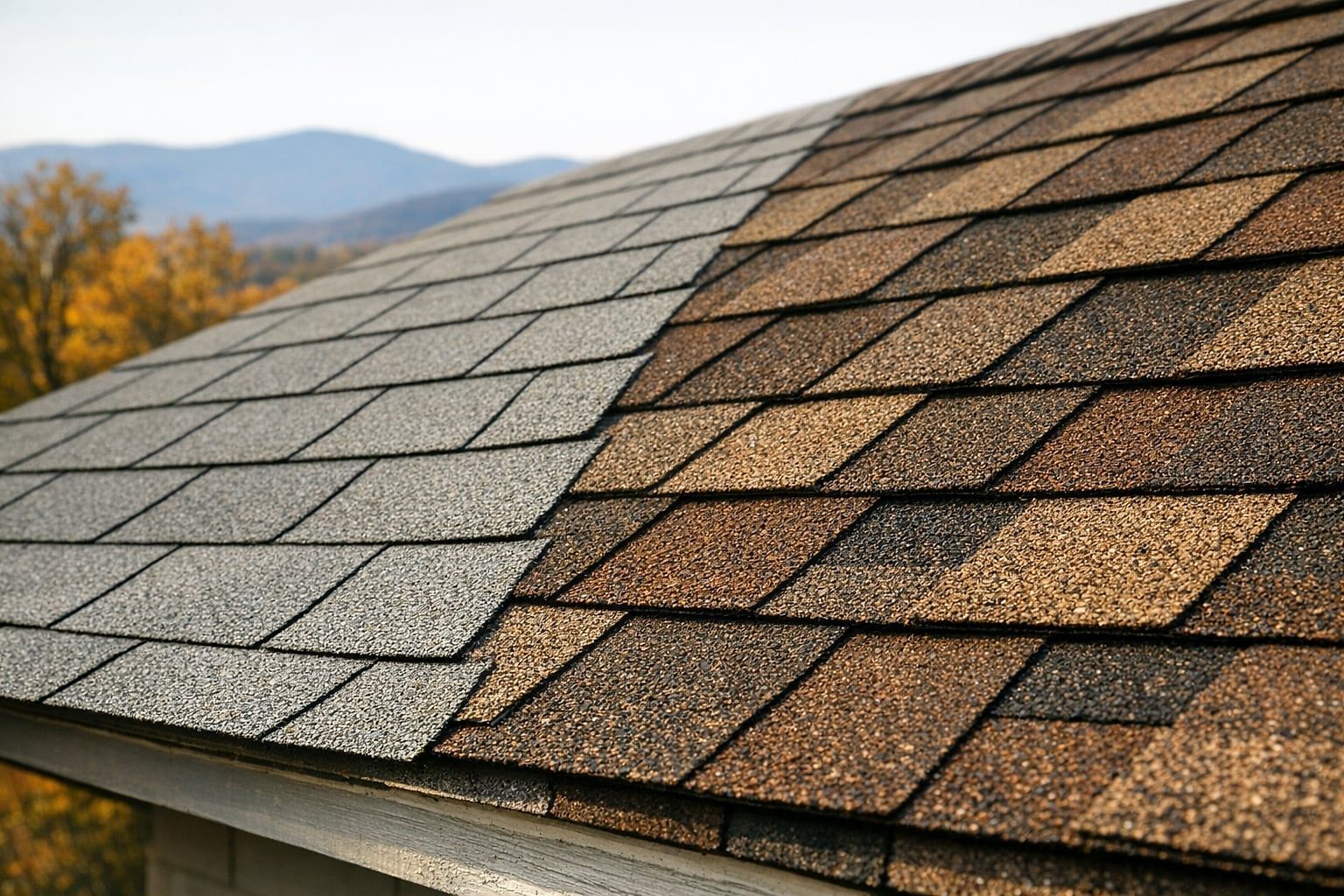
- Matching shingles are still available, so the repair does not stand out
- Impact counts fall below the threshold an adjuster would call a total loss
Replacement is the better call when:
- Granule loss and mat bruising appear across multiple slopes
- The roof is already past the midpoint of its expected life
- The shingle line has been discontinued and a repair would be visibly mismatched
- There are layered shingles, which complicate any partial repair
- The insurance scope covers replacement anyway, which is common with widespread hail
One factor homeowners underweight: a patched roof can complicate a future sale or a future claim. If an inspector during a home sale in Waynesboro flags mismatched patchwork, it becomes a negotiating point. When a claim covers replacement, taking the replacement is usually the sounder long-term decision.
For the wider claim process, our guide to roof insurance claims in Virginia explains replacement cost, actual cash value and the adjuster visit, and our guide on filing a storm damage roof claim sets out the order of steps.
Why Augusta County Homeowners Choose Baber Enterprises
For over 40 years, we have helped homeowners across Augusta County work through storm damage, insurance claims, and roof replacements. Three generations of our family have worked on Valley roofs, so our reputation is tied to the same towns our crews live in.
As a GAF Master Elite contractor, a certification held by less than two percent of roofing companies nationwide, we can offer enhanced manufacturer warranties most contractors are not authorized to provide. That certification requires maintaining proper licensing, insurance, and installation standards on an ongoing basis, and GAF can withdraw it.
- Three generations of roofing experience in the Shenandoah Valley
- GAF Master Elite certification, held by less than 2% of contractors nationwide
- Documented hail inspections using marked test squares, the same method adjusters use
- Willing to meet your insurance adjuster on site
- Manufacturer-backed warranties plus a written workmanship warranty
- Licensed and insured in Virginia
- Financing options available for qualified homeowners, with pre-qualification that does not affect your credit score
- Honest assessments, including telling you when damage will not meet your deductible
We serve homeowners across Augusta County, including Staunton, Waynesboro, Fishersville, Stuarts Draft, Verona, and the surrounding Shenandoah Valley.
Schedule Your Free Hail Damage Inspection in Augusta County, VA
If hail has come through your area recently, the useful next step is to find out what actually happened up there before the claim window narrows. We provide free, no-pressure roof inspections for homeowners throughout Augusta County, Staunton, Waynesboro, Fishersville, and the surrounding Valley.
We will document what we find with photographs and test squares, tell you honestly whether the damage is likely to exceed your deductible, and explain your options. If replacement is the right answer, we will walk through the costs plainly and discuss financing if spreading it over time would make the project more manageable.
Call our Staunton office at (540) 885-6514 to get on the inspection schedule, or request your free inspection online.
Frequently Asked Questions
How do I know if I need hail damage roof repair in Augusta County?
Check your gutters, downspouts, air conditioning fins, and siding for dents after a storm. Those surfaces show hail impacts clearly. If they are dented, the roof was very likely hit as well, and a professional inspection in Augusta County will confirm whether shingle bruising is present.
What size hail damages a roof?
Hail around one inch in diameter and larger typically damages asphalt shingles, though smaller stones can harm older or brittle roofs. Wind speed and impact angle matter too. Pea-sized hail driven by high wind can do more harm than larger stones falling straight down.
Does homeowners insurance cover hail damage in Virginia?
Usually yes. Hail is a sudden covered event under most standard Virginia policies, unlike ordinary wear. Check whether your policy carries a separate wind and hail deductible, which is often a percentage of dwelling coverage rather than a flat amount, before you file.
How long after a hailstorm can I file a claim?
Sooner is much better. Virginia policies generally expect prompt notice, and proving a link between the damage and a specific storm becomes harder as months pass. If hail moved through Staunton or Waynesboro, schedule an inspection within a few weeks.
Can hail damage be repaired instead of replacing the whole roof?
Sometimes. Repair works when damage is confined to a single slope, the roof is relatively young, and matching shingles are available. Because hail hits the entire roof plane, though, widespread granule loss and mat bruising more often call for full replacement.
Will a hail-damaged roof leak right away?
Often not, which is what makes hail deceptive. The impact fractures the shingle mat while leaving the shingle in place, so the roof keeps shedding water. Failure typically shows up a couple of years later, well after the claim window has closed.
Should I let a roofer cover my insurance deductible?
No. In Virginia, a contractor offering to absorb or waive your deductible is proposing what generally amounts to insurance fraud, and it exposes you as well as them. Treat that offer as a reason to hire someone else.