How Long Do Roofs Last in Waynesboro, VA? (2026 Guide)
How Long Do Roofs Last in Waynesboro, VA? (2026 Guide)
A well-installed architectural asphalt shingle roof in Waynesboro typically lasts 20 to 30 years, and a standing seam metal roof will usually run 40 to 70. That is the direct answer, and it is the one most homeowners are looking for. What it leaves out is the part that decides where in that range your own roof lands, which has less to do with the shingle you bought than with how the roof was built, how it breathes, and what the Shenandoah Valley climate does to it every February.
Two houses on the same street in Waynesboro, roofed in the same week with the same material, can be five or eight years apart at the end. The difference is almost always ventilation, installation quality, or the amount of shade sitting over the north slope. This guide covers the realistic lifespan of each roofing material in this climate, the local conditions that shorten it, and how to work out where your own roof currently sits.
Baber Enterprises has been roofing houses in Waynesboro, Staunton and the surrounding Augusta County communities for more than 40 years, across three generations of the same family, so the numbers below reflect what we see coming off roofs here rather than a national average.
Quick Answer: Roof Lifespan by Material in the Shenandoah Valley
| Material | Typical lifespan here | What usually ends it |
|---|---|---|
| 3-tab asphalt shingle | 15 to 20 years | Granule loss, then brittleness and wind damage |
| Architectural asphalt shingle | 20 to 30 years | Granule loss, sealant failure at the tabs |
| Standing seam metal | 40 to 70 years | Fastener and sealant maintenance, rarely the panel |
| Exposed-fastener metal | 25 to 40 years | Gasket and screw failure at the fastener points |
| Composite or synthetic tile | 40 to 50 years | Rarely the tile; usually flashing or underlayment |
| Natural slate | 75 years or more | Fastener corrosion and deck movement, not the slate |
What Waynesboro's Climate Does to a Roof
The Shenandoah Valley is harder on roofing than a mild coastal climate and easier than the upper Midwest, but it has one feature that does a disproportionate amount of damage: the freeze-thaw cycle.
Waynesboro sits at the foot of the Blue Ridge, and winter here rarely settles into a steady deep freeze. Instead the temperature crosses the freezing point repeatedly, sometimes several times in a week. Each crossing expands and contracts everything on the roof. Over years that works sealant loose, opens small gaps at flashing, and drives water into any crack that has already started.
Alongside that, roofs in this area contend with:
- Summer humidity and heat. Attic temperatures climb steeply, and a poorly ventilated attic bakes the underside of the shingle, which ages the asphalt faster than sun on the surface does.
- Spring and summer storms. Wind and hail events roll through the Valley most years, and each one costs a roof some granules even when there is no visible damage.
- Ice damming. Snow melts over a warm attic, runs to the cold eave, refreezes, and backs water up under the shingle.
- Tree cover. Waynesboro and Fishersville have plenty of mature trees. Shade keeps a slope damp, which encourages moss and algae, and overhanging limbs abrade the surface.
- Pollen and organic debris collecting in valleys and gutters, holding moisture against the roof long after the rain has stopped.
Asphalt Shingles: What to Actually Expect
Most houses in Waynesboro are shingled, and the manufacturer's warranty on a modern architectural shingle will often say 30, 40 or even lifetime. Those figures describe the material under ideal conditions, prorated, and with conditions attached. The realistic service life in this climate is 20 to 30 years for architectural shingles and 15 to 20 for the older 3-tab product.
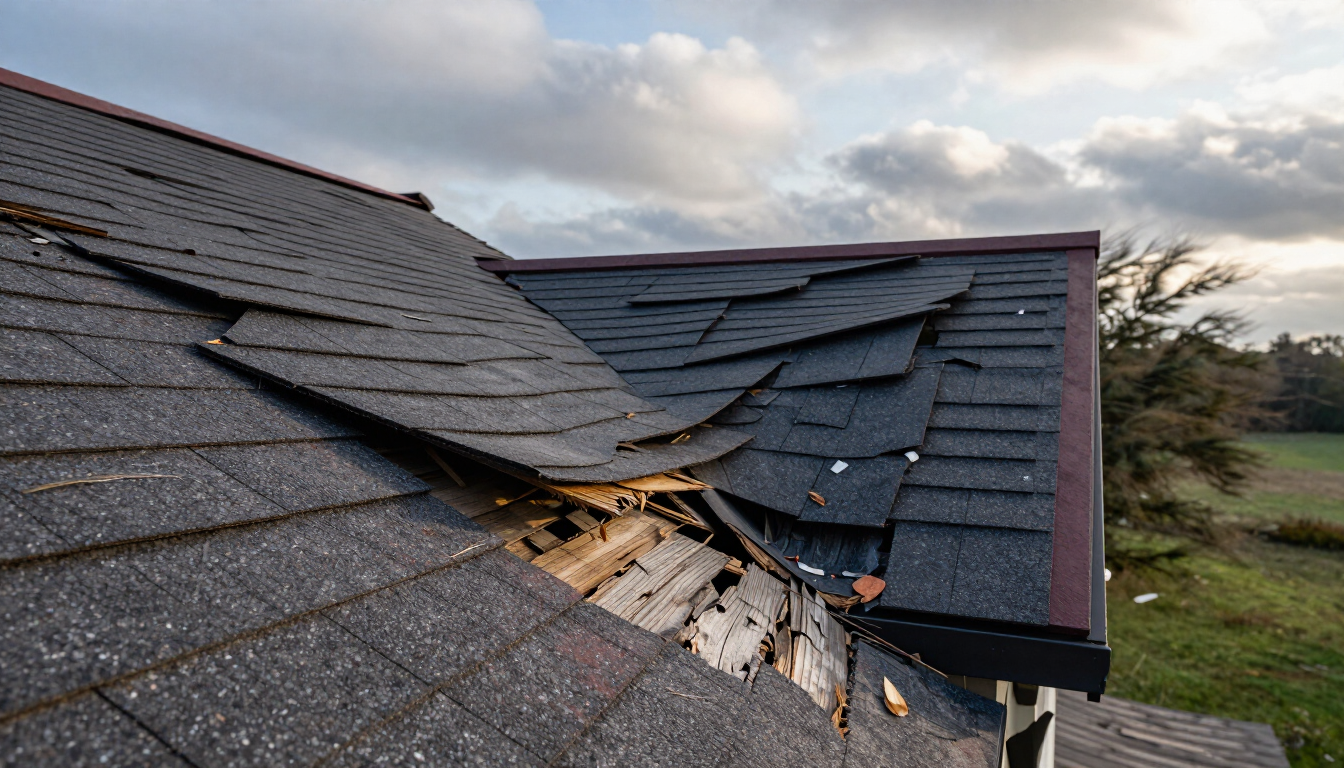
Shingles fail in a fairly predictable sequence:
- Granules wash off gradually, and you start finding them in the gutters
- The exposed asphalt below hardens and loses flexibility
- Edges begin to curl or cup, most visibly on the south and west slopes
- The factory sealant strip lets go, so tabs lift in wind that would not have moved them when new
- Cracking appears, and individual shingles start coming off in ordinary storms
Once a roof is at the fourth stage, patching becomes a holding action rather than a fix. If you are seeing several of these signs together, our guide to the signs you need a new roof goes through each one in more detail.
Metal, Tile and the Longer-Life Options
Metal has become a common choice in Augusta County, and the lifespan gap over asphalt is real. A standing seam roof, where the fasteners are concealed in the seam rather than driven through the panel, will typically outlast two asphalt roofs. Exposed-fastener metal is less expensive to install but the rubber gaskets on the screws are the weak point, and they need attention every couple of decades.
Metal also handles two of the Valley's specific problems well. It sheds snow rather than holding it, which reduces ice damming, and it does not lose granules to hail the way asphalt does, although it can dent.
Composite and synthetic tile products sit in a similar bracket, with the advantage that they carry the appearance of slate or cedar at a fraction of the weight, which matters on older houses whose framing was never designed to carry natural slate. If you are weighing the two main options against each other, our comparison of metal roof versus shingle roof cost and lifespan in Virginia covers the trade-offs properly.
Why Two Identical Roofs Age Differently
This is the part that decides whether your roof reaches the top or the bottom of its range, and none of it is visible from the street.
- Attic ventilation. The single biggest factor. A roof needs balanced intake at the soffit and exhaust at the ridge. Without it, heat and moisture build up underneath and cook the shingle from the back. Blocked soffit vents, usually buried under insulation, are extremely common and easy to fix.
- Installation quality. Nail placement, nail depth, correct starter course, ice and water shield in the valleys and at the eaves, properly formed step flashing at sidewalls. A shingle nailed too high or driven too deep will fail long before the material is worn out.
- Slope orientation. South and west faces take far more ultraviolet exposure and will visibly age ahead of the north side of the same roof.
- The deck underneath. A roof laid over damaged or previously wet sheathing, or over an existing layer of old shingles, will not last as long as one laid on a sound, stripped deck.
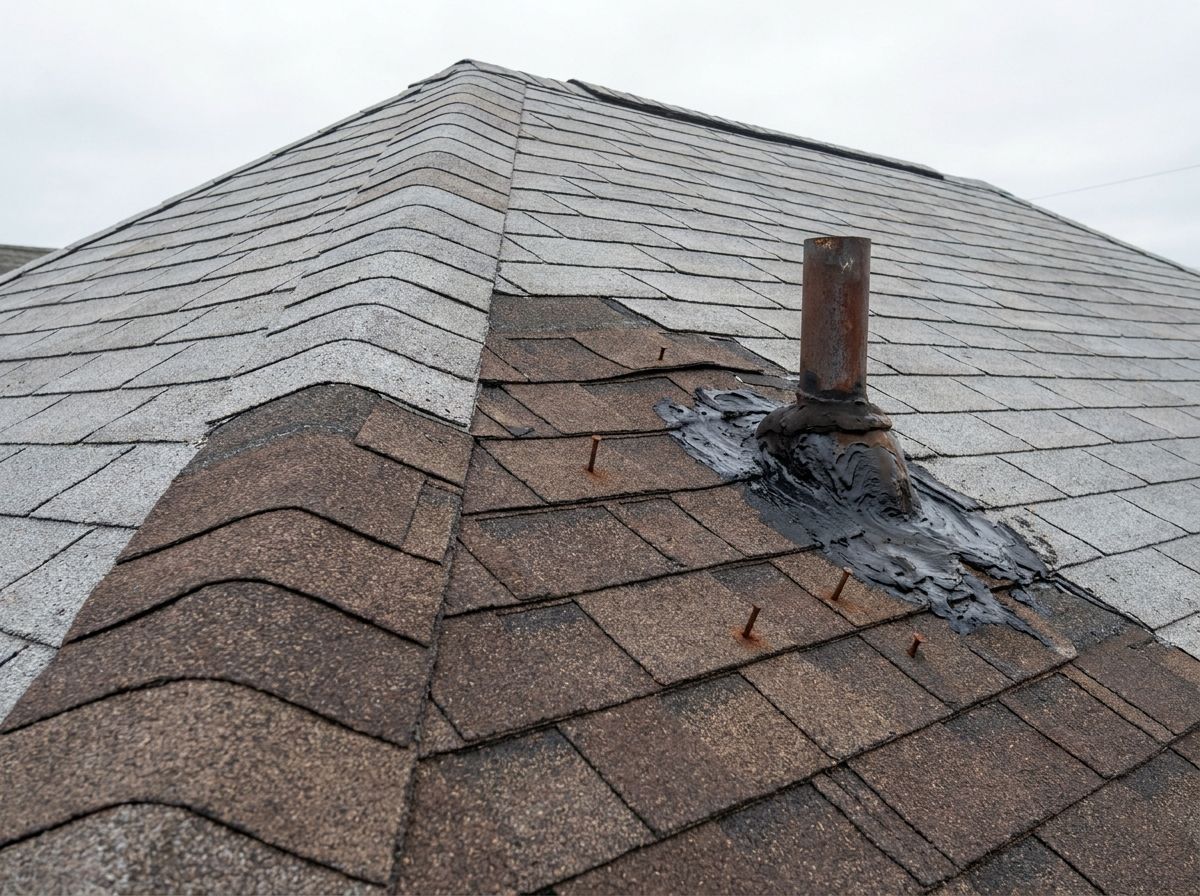
- Maintenance. Clearing gutters and valleys, trimming back overhanging limbs, and having flashing and boots checked periodically. Pipe boots in particular tend to crack and leak well before the shingles are finished.
How to Tell Where Your Roof Is in Its Life
Start with the age. If you know when the roof was installed, that is your best single indicator, and previous owners or permit records can often supply it. From there, a ground-level look tells you more than people expect.
Walk the perimeter and look for granules in the gutters and at the base of downspouts, dark patches where granules have gone, any shingle that is lifted, curled or missing, and sagging along the ridge or between rafters. Inside, check the attic on a bright day for daylight through the deck, and look for staining on the sheathing or damp insulation.
What you cannot assess from the ground is flashing, nail condition, decking soundness, or hail bruising, and those are frequently what actually determines whether you have five more years or one. Baber inspects roofs at no charge across Waynesboro, Staunton, Fishersville, Stuarts Draft and Verona, and an inspection will give you an age estimate and a realistic remaining service life rather than a sales pitch.
Replacing on Your Schedule Rather Than the Roof's
There is a practical argument for knowing your roof's age precisely, and it is financial rather than dramatic.
A roof replaced deliberately, in a dry week you chose, is a straightforward job: strip, inspect the deck, replace what needs replacing, install. A roof replaced after it fails is a different project, because by then water has usually been in the decking, sometimes the insulation, occasionally the ceiling below. Interior repairs are rarely covered when the cause is a roof that simply wore out, because insurers treat that as maintenance rather than a sudden loss.
Timing also affects the insurance question more broadly. Many carriers apply age-based schedules to roof claims, so the older the roof, the less a storm claim pays even when the storm damage is genuine. Knowing you are at year 22 rather than year 15 changes how you think about both your policy and your budget. Where the timing is inconvenient, financing is available so the decision does not have to wait for the roof to make it for you.
Why Waynesboro Homeowners Call Baber Enterprises
- More than 40 years roofing the Shenandoah Valley , across three generations of the same family, with offices in both Staunton and Waynesboro.
- GAF Master Elite certified. GAF limits this to contractors who hold proper licensing and insurance, maintain a documented record of workmanship and meet ongoing training requirements. Fewer than two percent of roofing contractors in North America qualify, and it is the tier that unlocks GAF's strongest warranty coverage.
- 25-year workmanship warranty on our installation, separate from whatever the manufacturer covers on the material itself.
- Free inspections , including honest ones that conclude your roof has years left in it.
- Financing available , so a replacement can happen when it makes sense rather than when it becomes an emergency.
- Local for the whole warranty period. A 25-year workmanship warranty is only worth what the company behind it is worth in year 20.
Find Out How Much Life Your Roof Has Left
If you are not sure how old your roof is, or you have started finding granules in the gutters and want a straight answer about how long you have, call Baber Enterprises at (540) 885-6514 for a free inspection.
We will walk the roof, check the flashing, boots, decking and attic ventilation, and give you a written assessment with photographs: how old the roof appears to be, what condition it is genuinely in, and roughly how many years remain. If the answer is that you have another decade, that is what we will tell you. We serve Waynesboro, Staunton, Fishersville, Stuarts Draft, Verona and the rest of Augusta County.
Frequently Asked Questions
How long does a shingle roof last in Waynesboro, VA?
An architectural asphalt shingle roof typically lasts 20 to 30 years in this climate, and an older 3-tab roof runs closer to 15 to 20. Where yours lands within that range depends mostly on attic ventilation, installation quality and how much sun the slope takes, rather than on the brand of shingle.
Does the Shenandoah Valley climate shorten roof lifespan?
Somewhat, mainly through freeze-thaw cycling. Winter temperatures here cross the freezing point repeatedly rather than staying steadily cold, and each cycle expands and contracts the roof, working sealant loose and opening gaps at flashing. Summer attic heat and periodic hail also take a toll on asphalt shingles.
How can I tell how old my roof is?
Permit records, the closing documents from when you bought the house, or a previous owner are the most reliable sources. Failing that, a roofing contractor can estimate the age from granule loss, shingle flexibility, the type of product used and the condition of the flashing and boots during an inspection.
Is a metal roof worth the extra cost in Virginia?
It depends how long you plan to stay. A standing seam metal roof typically lasts 40 to 70 years against 20 to 30 for architectural shingles, so it will often outlast two asphalt roofs. It also sheds snow well, which reduces ice damming. Over a shorter ownership window the economics are less clear cut.
Can I extend the life of my current roof?
Often yes, by several years. Clearing gutters and valleys, correcting blocked soffit vents so the attic breathes properly, trimming overhanging limbs, and replacing cracked pipe boots and failing flashing all help. Ventilation corrections give the biggest return, because attic heat ages shingles from underneath.
Should I replace my roof before it starts leaking?
Generally yes. A planned replacement is a straightforward strip and install, whereas replacing after failure usually means wet decking and sometimes interior damage. Insurers typically treat a roof that simply wore out as maintenance rather than a sudden loss, so those interior repairs often are not covered.
Does a new roof affect my homeowners insurance?
It can. Many carriers apply age-based schedules to roof claims, meaning an older roof receives less on a storm claim even when the damage is genuine, and some offer better terms on a newer roof. Ask your agent how your policy treats roof age, as the terms vary considerably between carriers.