Architectural vs 3-Tab Shingles for Your Virginia Home
When you sit down with a roofing estimate for a home in Staunton, Waynesboro, or anywhere in Augusta County, one of the first choices you will be asked to make is between architectural shingles and 3-tab shingles. The names mean very little to most homeowners, and the price difference is real enough to matter.
The honest answer for most Virginia homes: architectural shingles are the better choice. They typically last around ten years longer, carry substantially higher wind ratings, and cost more up front. Spread across the extra service life, the cost per year usually favors architectural. Three-tab still makes sense in specific situations, mainly rental properties, outbuildings, and homes being prepared for sale on a tight budget.
Here is what actually separates them, and how the Shenandoah Valley climate factors into the decision.
Quick Answer: Side-by-Side Comparison
| 3-Tab Shingles | Architectural Shingles | |
|---|---|---|
| Construction | Single flat layer, cut into three tabs | Multiple laminated layers |
| Typical lifespan in Virginia | About 25 to 30 years | About 30 to 50 years |
| Wind rating | Commonly around 60 to 70 mph | Commonly 110 to 130 mph |
| Relative cost | Baseline | More up front |
| Weight | Lighter | Noticeably heavier |
| Appearance | Flat, uniform, repeating pattern | Dimensional, shadowed, wood-shake look |
| Enhanced warranty eligibility | Limited | Commonly eligible through certified contractors |
| Best for | Rentals, sheds, short-horizon budgets | Primary residences, long-term ownership |
What Actually Makes Them Different
The difference is structural, not cosmetic, even though appearance is what most homeowners notice first.
A 3-tab shingle is a single flat layer of asphalt-saturated fiberglass mat, cut with two notches so it reads as three separate tabs on the roof. Every shingle is identical, which produces a flat, uniform look. Its simplicity is its appeal: less material, lighter weight, lower cost.
An architectural shingle, sometimes called laminate or dimensional, bonds two or more layers together. The extra layer adds thickness, weight, and a varied profile that casts shadows across the roof. That laminated construction is what drives the performance difference. More material at each course means more resistance to wind uplift, more mass to absorb hail impact, and a longer working life before the asphalt dries out and the mat becomes brittle.
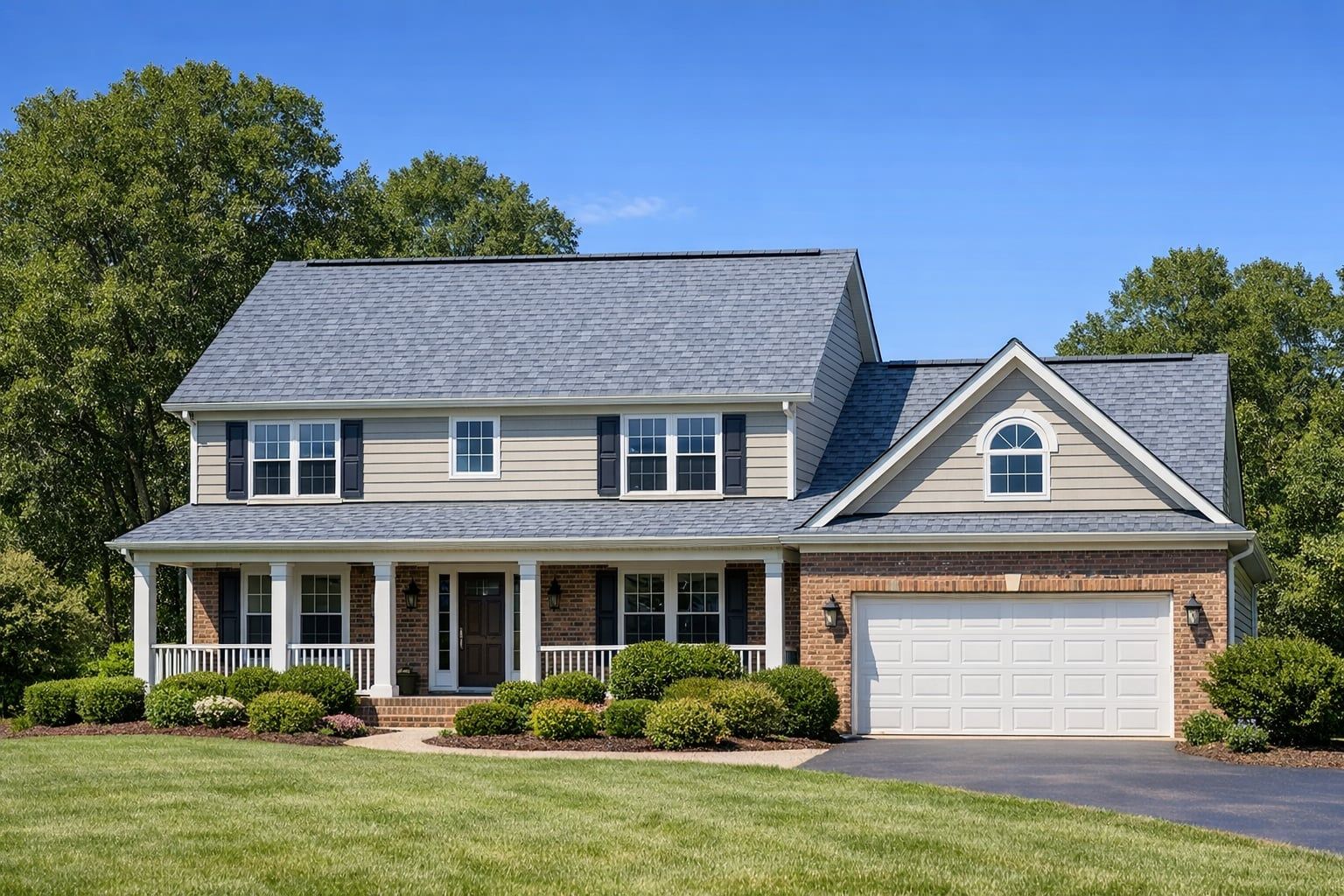
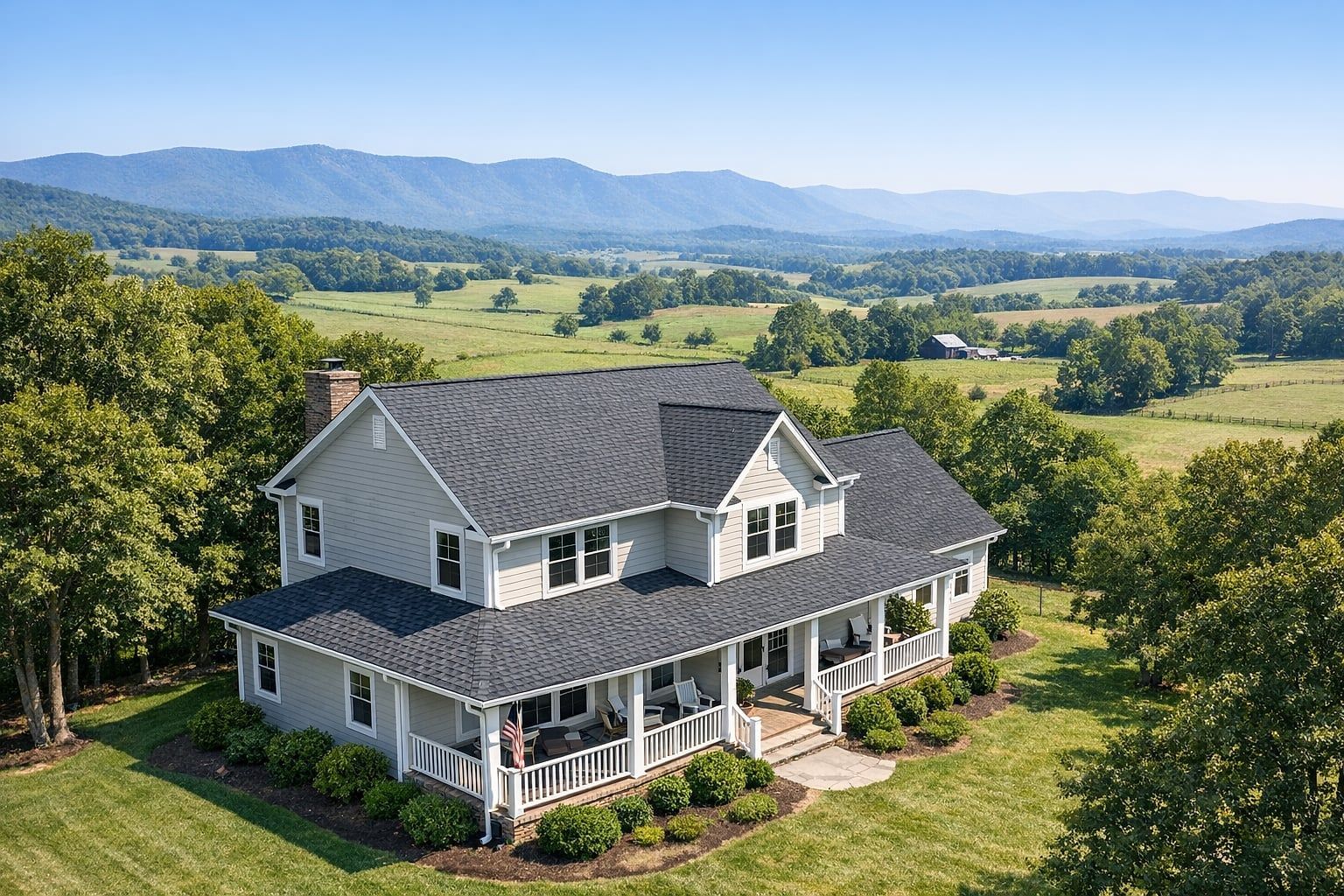
The visual difference is significant from the curb. Architectural shingles give a roof depth and texture that reads closer to wood shake. Three-tab reads flat and repetitive, and once you have noticed the difference it is difficult to unsee, which is precisely why it affects resale.
Lifespan in the Shenandoah Valley Climate
Manufacturer lifespan ratings assume moderate conditions. Virginia is not especially gentle on a roof, and local conditions shift the real numbers.
The Shenandoah Valley puts three specific stresses on asphalt:
- Freeze-thaw cycling. Valley winters swing above and below freezing repeatedly rather than holding a steady cold. Each cycle expands and contracts the shingle, working at the seal strips. This is harder on thin single-layer 3-tab than on laminated shingles.
- Summer heat and humidity. Long humid stretches accelerate the drying of asphalt oils and encourage algae growth on north-facing slopes. Dark streaking on a roof is usually algae, and thinner shingles reach brittleness sooner.
- Wind events. Storms moving over the Blue Ridge can produce significant gusts. This is where the wind rating gap matters most.
In practice, a 3-tab roof in this climate commonly delivers around twenty-five to thirty years, sometimes less on a heavily exposed slope. Architectural shingles commonly reach thirty to fifty. Ventilation matters enormously to both numbers. A poorly ventilated attic cooks shingles from underneath and can cut years off either product, which is one reason a complete roofing system, rather than shingles alone, is what determines longevity.
Wind Rating: The Difference That Matters Most
If you take one number from this comparison, take this one. Most 3-tab shingles carry wind ratings in the neighborhood of 60 to 70 mph. Most architectural shingles are rated 110 to 130 mph, and some higher when installed to enhanced nailing specifications.
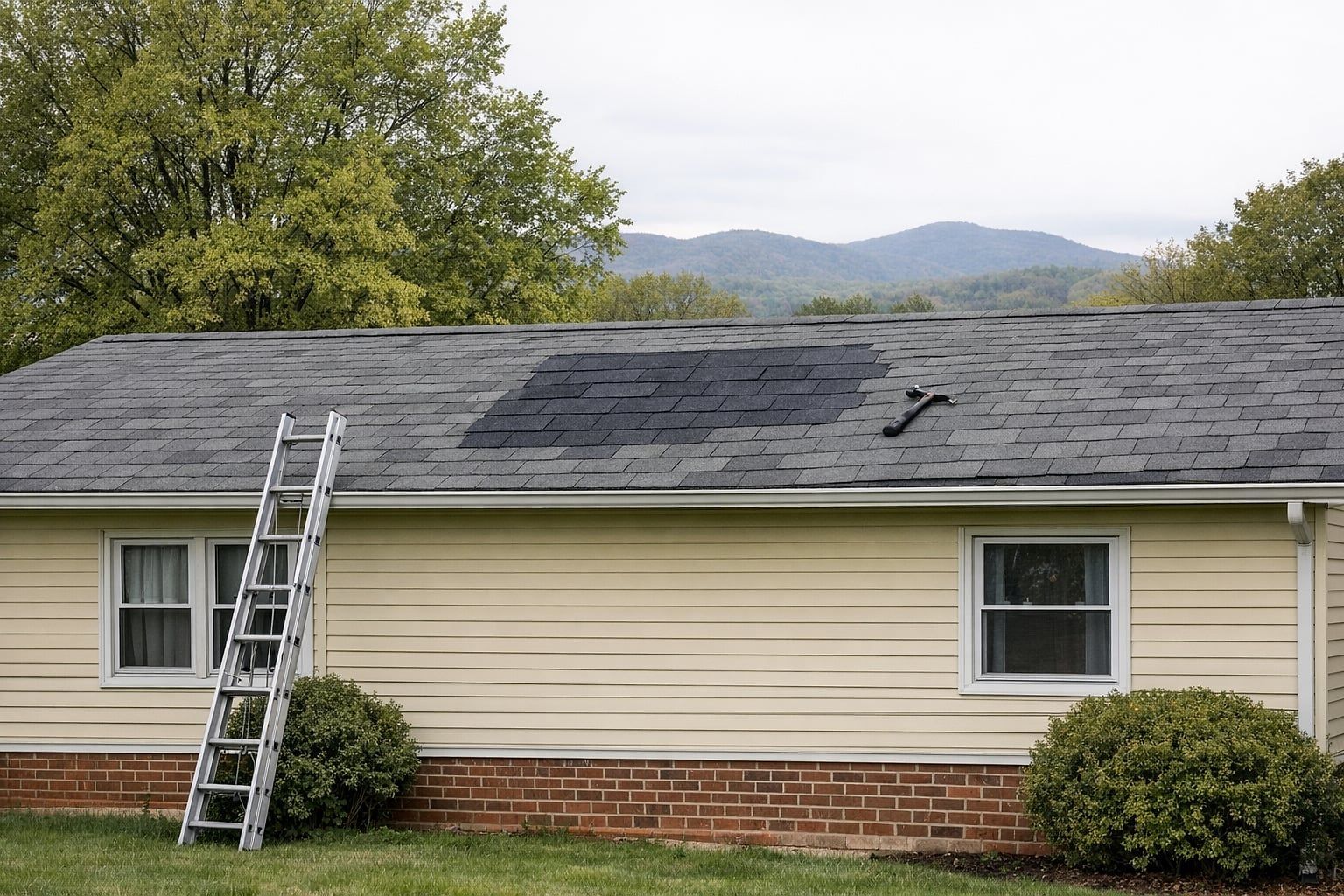
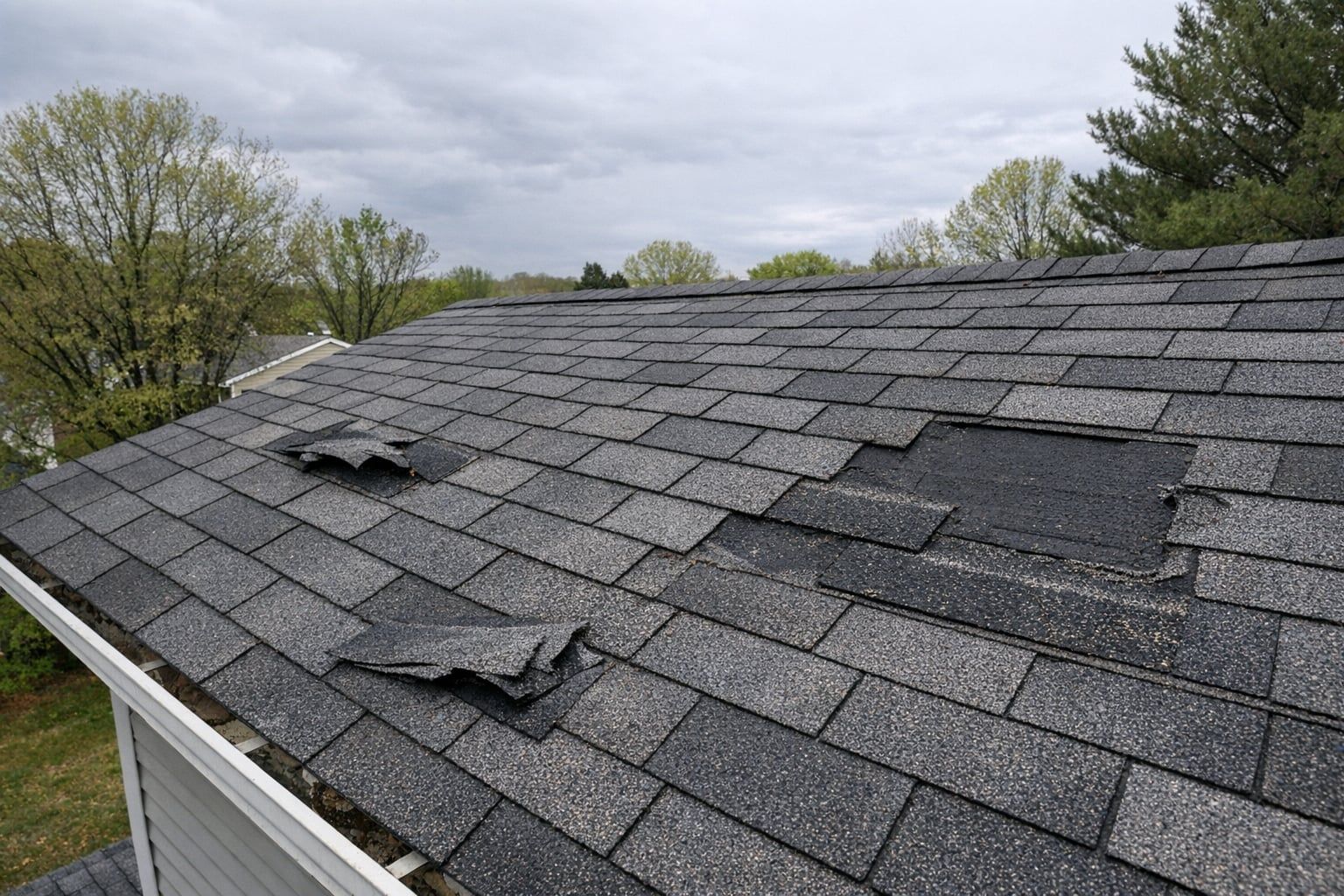
That gap is not academic in Virginia. A summer thunderstorm rolling through Fishersville can produce gusts that exceed a 3-tab rating while remaining well within what an architectural shingle handles. The failure mode is straightforward: wind gets under a tab, lifts it, breaks the seal, and from that point water has a path. A single lifted tab often becomes a leak two seasons later.
There is an insurance dimension here as well. Wind damage is a common reason for roof claims. A roof that resists a marginal wind event is a roof you never file a claim on, which keeps your claims history clean and avoids the deductible entirely.
How Cost Actually Compares
Architectural shingles cost more per square, and the labor is broadly similar since both install on the same underlying system.
The more useful way to look at it is cost per year of service. Consider two roofs on the same house:
- A 3-tab roof that lasts twenty-five years
- An architectural roof that costs more up front and lasts thirty-five years
Divide each by its years of service and the architectural roof generally comes out lower on an annual basis, before accounting for the reduced likelihood of wind repairs along the way. If you plan to own the home for more than a decade, architectural is usually the better financial decision, not just the better product.
The calculation changes if you are selling within a couple of years, roofing a detached garage, or working with a hard budget ceiling where the choice is between a 3-tab roof now and no roof at all. Those are legitimate reasons to choose 3-tab, and a contractor should say so plainly rather than upselling.
For homeowners where the gap is the obstacle, financing is worth asking about. We offer financing options for qualified homeowners, which often makes the better-performing roof reachable without stretching the household budget.
How Shingle Choice Affects Insurance Claims
Material choice has a quiet influence on how storm claims play out.
Insurers assess whether damage resulted from a covered event or from ordinary wear. On a twenty-five-year-old 3-tab roof, an adjuster looking at lifted tabs after a moderate wind event has a reasonable argument that the shingles were at the end of their service life and failed from age. The same storm on a ten-year-old architectural roof rated to 110 mph presents a clearer case for storm damage, because the product was not near the end of its life and was rated well above the conditions.
Two related points:
- Some insurers offer premium considerations for roofs with higher wind and impact ratings. It is worth asking your agent whether your policy reflects the roof you actually have.
- Enhanced manufacturer warranties, which cover more than the shingles alone, are generally available only through certified contractors installing a complete system. Architectural shingles are usually the qualifying product.
We provide free roof inspections across Augusta County to help homeowners understand the age, condition, and storm exposure of the roof they currently have.
What to Check on the Estimate, Whichever Shingle You Choose
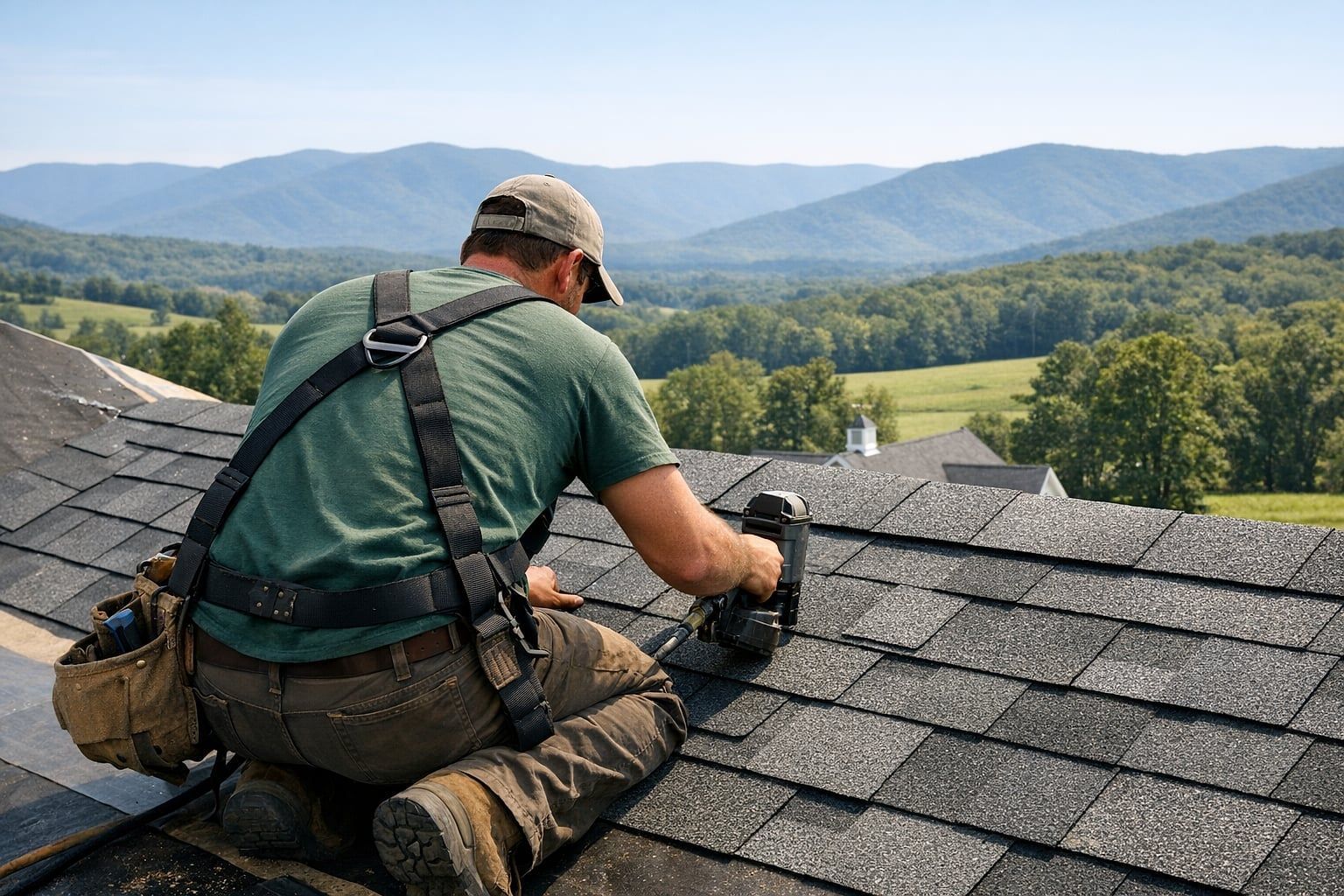
The shingle line on an estimate gets most of the attention, but a 3-tab roof installed well will often outlast an architectural roof installed carelessly. When you compare bids for a home in Staunton, Waynesboro or Stuarts Draft, look past the product name and check that each estimate covers the parts of the system that decide how long either shingle lasts.
- Full tear-off. Removing the old layer lets the crew see and replace soft decking instead of nailing new shingles over it.
- Ice and water shield. Valleys and eaves are where freeze-thaw cycles push water backward, so the estimate should say where the membrane goes.
- Starter strip and nailing pattern. Wind ratings assume the manufacturer's starter course and nail count. A shingle rated for 130 mph and nailed short will not perform like one.
- Ventilation. Balanced intake at the soffit and exhaust at the ridge, so attic heat does not cook the shingles from below.
- Flashing. New step and counter flashing at walls and chimneys rather than reused metal.
If two bids name the same shingle and differ sharply in price, the difference is usually somewhere in this list. Our guide to the questions to ask before hiring a roofer covers how to compare line items, and if you are also weighing metal, our comparison of metal roof versus shingle roof cost and lifespan sets out that decision.
Why Shenandoah Valley Homeowners Choose Baber Enterprises
We have been protecting Virginia homes for more than four decades. Three generations of our family have installed roofs in this Valley, which means we have watched how both shingle types actually age under Shenandoah conditions rather than relying on manufacturer literature.
As a GAF Master Elite contractor, a certification held by less than two percent of roofing companies in the country, we can offer enhanced manufacturer warranties that most contractors are not authorized to provide. Those warranties generally require a complete system installed to specification, which is exactly the kind of detail that determines whether a roof reaches its rated life.
- Three generations of roofing experience in the Shenandoah Valley
- GAF Master Elite certification, held by less than 2% of contractors nationwide
- Complete system installation, including ventilation, that protects rated lifespan
- Manufacturer-backed warranties plus a written workmanship warranty
- Licensed and insured in Virginia
- Financing options for qualified homeowners
- Honest recommendations, including when 3-tab is genuinely the right call
We serve homeowners throughout Staunton, Waynesboro, Fishersville, Stuarts Draft, Verona, Augusta County, and the surrounding Shenandoah Valley.
Schedule Your Free Roof Inspection in Augusta County, VA
Choosing between architectural and 3-tab shingles is easier once someone has looked at your actual roof: its pitch, its exposure, its ventilation, and how much life the current one has left.
We provide free, no-pressure roof inspections for homeowners across Augusta County, Staunton, Waynesboro, Fishersville, and the surrounding Valley. We will show you both options with real numbers for your specific roof, explain what each would cost and how long it should last, and talk through financing if spreading the investment over time would make the better product reachable.
Call our Staunton office at (540) 885-6514 to speak with someone local, or request your free inspection online.
Frequently Asked Questions
Are architectural shingles worth the extra cost in Virginia?
For most primary residences, yes. Architectural shingles typically last around ten years longer and carry far higher wind ratings than 3-tab, which usually makes the cost per year of service lower despite the higher up-front price. The exception is short-term ownership or outbuildings.
What is the difference between architectural and 3-tab shingles?
A 3-tab shingle is a single flat layer notched to look like three tabs. An architectural shingle laminates two or more layers together, adding thickness, weight, and a dimensional appearance. That extra material drives the difference in lifespan and wind resistance.
How long do 3-tab shingles last in the Shenandoah Valley?
Commonly around twenty-five to thirty years in this climate, sometimes less on heavily exposed slopes. Freeze-thaw cycling, summer humidity, and poor attic ventilation all shorten that range. Architectural shingles in the same conditions generally reach thirty to fifty years.
Do architectural shingles hold up better in wind?
Substantially better. Most 3-tab shingles are rated around 60 to 70 mph while most architectural shingles are rated 110 to 130 mph. When a summer storm produces strong gusts, that difference can determine whether a roof loses shingles.
Can I put architectural shingles over an existing 3-tab roof?
It is sometimes permitted, but a full tear-off is almost always the better decision. Layering hides deck damage, adds weight, shortens the life of the new shingles by trapping heat, and can affect warranty eligibility with the manufacturer.
Do architectural shingles increase home value?
They generally help. The dimensional appearance reads as a higher-quality roof from the curb, and buyers and home inspectors both notice a roof with more remaining service life. A flat 3-tab roof nearing the end of its life often becomes a negotiating point during a sale.
Which shingle type is better for a rental property?
Three-tab can be the reasonable choice on a rental or an outbuilding, where the shorter horizon and lower up-front cost matter more than maximum lifespan. For a home you intend to own long term, the economics generally favor architectural.